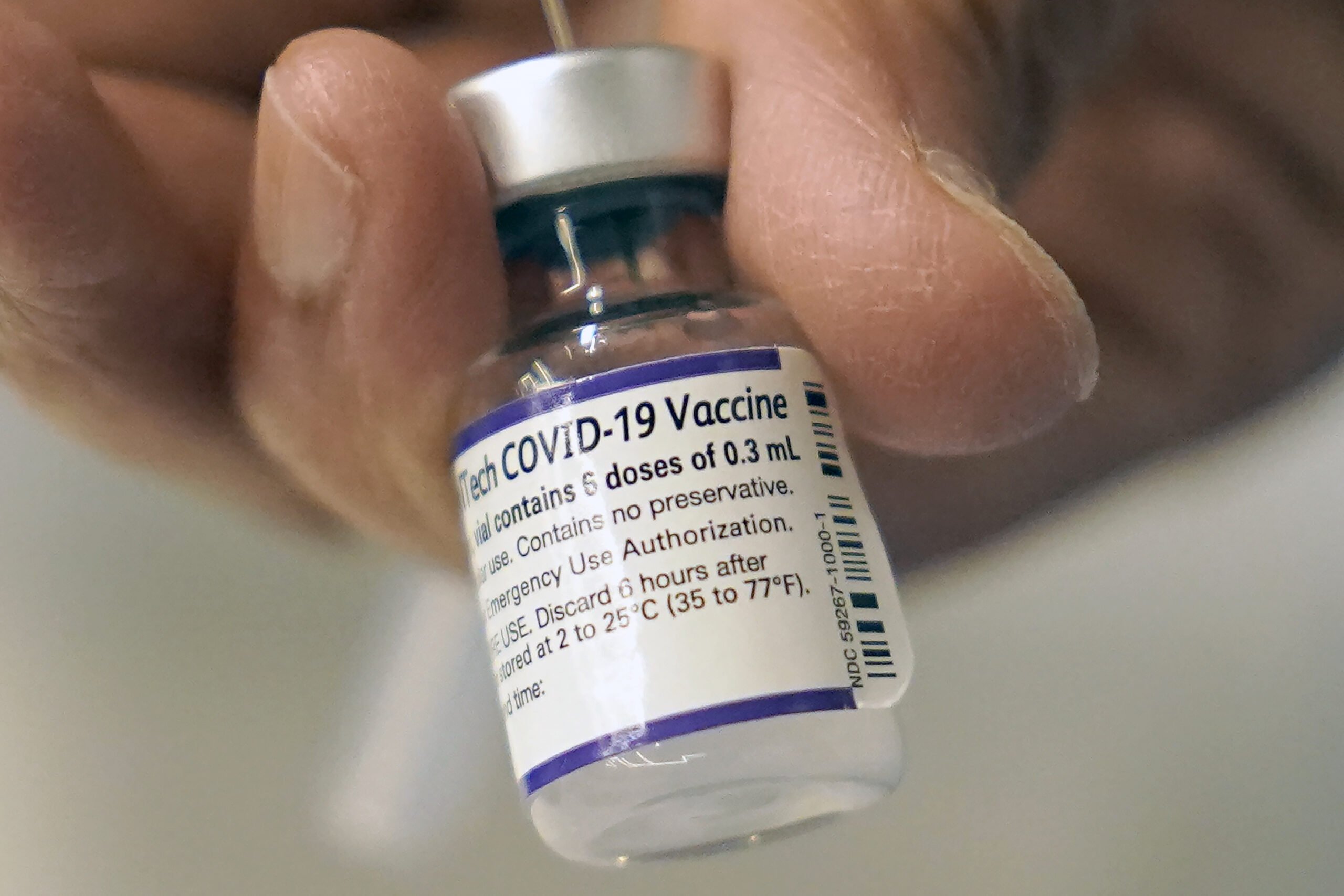
Fight Against Omicron: The U.S. is urging that everyone 12 and older get a COVID-19 booster as soon as they’re eligible, to help fight back the hugely contagious omicron mutant that’s ripping through the country.
Boosters already were encouraged for all Americans 16 and older, but Wednesday the Centers for Disease Control and Prevention endorsed an extra Pfizer shot for younger teens—those 12 to 15—and strengthened its recommendation that 16- and 17-year-olds get it, too.
“It is critical that we protect our children and teens from COVID-19 infection and the complications of severe disease,” Dr. Rochelle Walensky, the CDC’s director, said in a statement Wednesday night.
“This booster dose will provide optimized protection against COVID-19 and the Omicron variant. I encourage all parents to keep their children up to date with CDC’s COVID-19 vaccine recommendations,” she said.
Vaccines still offer strong protection against serious illness from any type of COVID-19, including omicron—what experts say is their most important benefit. But the newest mutant can slip past a layer of the vaccines’ protection to cause milder infections. Studies show a booster dose at least temporarily revs up virus-fighting antibodies to levels that offer the best chance at avoiding symptomatic infection, even from omicron.
Earlier Wednesday, the CDC’s independent scientific advisers wrestled with whether a booster should be an option for younger teens, who tend not to get as sick from COVID-19 as adults, or more strongly recommended.
Giving teens a booster for a temporary jump in protection against infections is like playing whack-a-mole, cautioned CDC adviser Dr. Sarah Long of Drexel University. But she said the extra shot was worth it to help push back the omicron mutant and shield kids from the missed school and other problems that come with even a very mild case of COVID-19.
More important, if a child with a mild infection spreads it to a more vulnerable parent or grandparent who then dies, the impact “is absolutely crushing,” said panelist Dr. Camille Kotton of Massachusetts General Hospital.
Earlier Wednesday, the CDC’s independent scientific advisers wrestled with whether a booster should be an option for younger teens, who tend not to get as sick from COVID-19 as adults, or more strongly recommended.
Giving teens a booster for a temporary jump in protection against infections is like playing whack-a-mole, cautioned CDC adviser Dr. Sarah Long of Drexel University. But she said the extra shot was worth it to help push back the omicron mutant and shield kids from the missed school and other problems that come with even a very mild case of COVID-19.
More important, if a child with a mild infection spreads it to a more vulnerable parent or grandparent who then dies, the impact “is absolutely crushing,” said panelist Dr. Camille Kotton of Massachusetts General Hospital.
Wednesday’s decision means about 5 million of the younger teens who had their last shot in the spring are eligible for a booster right away. New U.S. guidelines say anyone who received two Pfizer vaccinations and is eligible for a booster can get it five months after their last shot, rather than the six months previously recommended.
But one committee member, Dr. Helen Keipp Talbot of Vanderbilt University, worried that such a strong recommendation for teen boosters would distract from getting shots into the arms of kids who have not been vaccinated at all.
The advisers saw U.S. data making clear that symptomatic COVID-19 cases and hospitalizations are between seven and 11 times higher in unvaccinated adolescents than vaccinated ones.
While children do tend to suffer less serious illness from COVID-19 than adults, child hospitalizations are rising during the omicron wave—the vast majority of them unvaccinated.
During the public comment part of Wednesday’s meeting, Dr. Julie Boom of Texas Children’s Hospital said a booster recommendation for younger teens “cannot come soon enough.”
The chief safety question for adolescents is a rare side effect called myocarditis, a type of heart inflammation seen mostly in younger men and teen boys who get either the Pfizer or Moderna vaccines. The vast majority of cases are mild — far milder than the heart inflammation COVID-19 can cause — and they seem to peak in older teens, those 16 and 17.
The FDA decided a booster dose was as safe for the younger teens as the older ones based largely on data from 6,300 12- to 15-year-olds in Israel who got a Pfizer booster five months after their second dose. Israeli officials said Wednesday that they’ve seen two cases of mild myocarditis in this age group after giving more boosters, 40,000.
Earlier this week, FDA vaccine chief Dr. Peter Marks said the side effect occurs in about 1 in 10,000 men and boys ages 16 to 30 after their second shot. But he said a third dose appears less risky, by about a third, probably because more time has passed before the booster than between the first two shots.