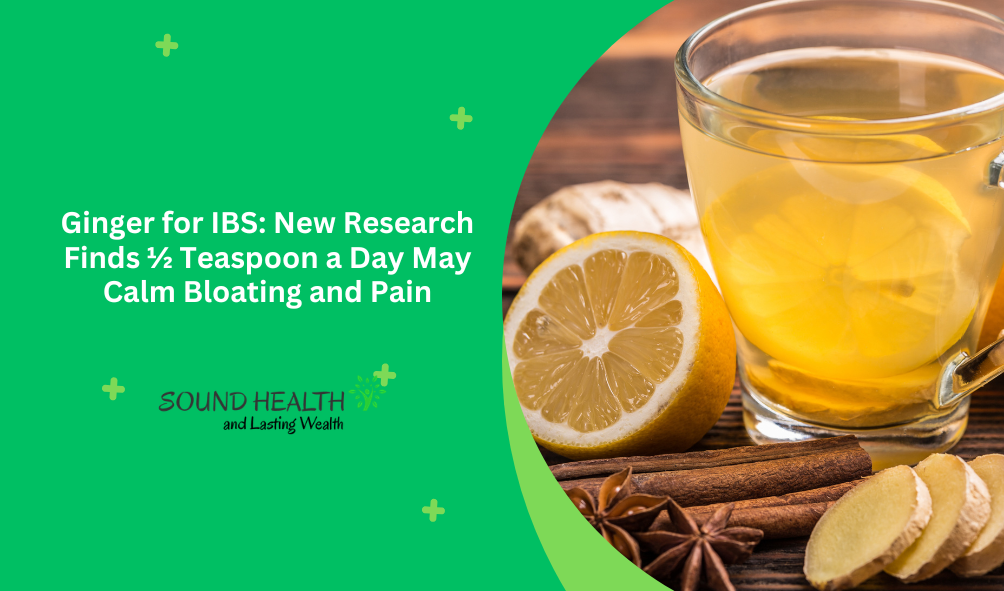

Multiple clinical trials and two systematic reviews have found that 1 to 2 grams of ginger daily (roughly ½ to 1 teaspoon of dried powder) reduced bloating, abdominal pain, and gas in IBS patients compared to placebo. A 2025 study in Nature Communications identified a specific ginger compound that targets gut inflammation at the molecular level. However, not all evidence agrees, and one 2024 study raised concerns that certain ginger compounds could worsen IBS symptoms at the same doses. This article breaks down what the research actually shows, where the gaps are, and how to use ginger safely if you have IBS.

A Spice Jar Remedy With Thousands of Years Behind It
Ginger has been used to settle stomachs for at least 5,000 years. Traditional Chinese medicine, Ayurveda, and folk remedies across Southeast Asia have all reached for the same knobby root when digestion goes sideways.
But IBS is not a simple stomachache. Irritable bowel syndrome is a chronic functional gastrointestinal disorder defined by recurring abdominal pain linked to changes in bowel habits, and it affects roughly 1 in 7 people worldwide. A 2025 meta-analysis published in the European Journal of Gastroenterology & Hepatology put the global prevalence at 14.1% using Rome III and IV diagnostic criteria, with women affected at higher rates than men (Arif et al., 2025).
In the United States alone, IBS accounts for between 2.4 and 3.5 million physician visits annually, and about 40% of patients turn to complementary or alternative medicine because standard treatments often fall short (Van Tilburg et al., 2008). Among those alternatives, ginger is the single most popular choice (Van Tilburg et al., 2008).
The question is whether tradition and popularity hold up under clinical testing. The answer, as of 2026, is: partially yes, with important caveats.
Also Read | Home Blood Pressure Monitoring: What Your Readings Mean and Why It Matters
What Ginger Does Inside the Gut
Ginger (Zingiber officinale) contains more than 400 chemical compounds, but the ones most relevant to digestion are the gingerols and shogaols. These are the bioactive components responsible for ginger’s pungent taste and most of its studied pharmacological effects.
How It Affects Digestion
Research has identified several mechanisms by which ginger influences the gastrointestinal tract:
- Prokinetic effect. Ginger accelerates gastric emptying, meaning food moves from the stomach into the small intestine more quickly. A systematic review published in Food Science & Nutrition confirmed this effect and noted that it can reduce the feeling of uncomfortable fullness and nausea (Nikkhah Bodagh et al., 2019).
- Anti-inflammatory action. Gingerols inhibit the production of prostaglandins and leukotrienes, both of which are chemical mediators of inflammation. A 2020 study in BMC Complementary Medicine and Therapies found that ginger reduced pro-inflammatory markers (TNF-alpha, IL-6, NF-kB) in a rat model of diarrhea-predominant IBS (IBS-D), and that these reductions correlated with decreased visceral pain and diarrhea frequency (Ginger relieves intestinal hypersensitivity, 2020).
- Antispasmodic effect. Ginger has been shown to reduce intestinal smooth muscle spasms, which contribute to the cramping pain that many IBS patients experience.
- Anti-nausea effect. Ginger is classified as a broad-spectrum antiemetic and has strong evidence for reducing nausea associated with pregnancy, surgery, and chemotherapy. This effect may also benefit IBS patients who experience nausea as part of their symptom profile.
The Furanodienone Discovery (2025)
A 2025 study published in Nature Communications added a new piece to the puzzle. Researchers at the University of Toronto identified a ginger compound called furanodienone (FDN) that selectively binds to the pregnane X receptor (PXR) in the colon. When FDN activated PXR in mice with induced colitis, it suppressed pro-inflammatory cytokine production and strengthened the intestinal barrier by increasing tight junction proteins (Wang et al., 2025).
This was the first study to trace a specific ginger compound to a specific molecular target in the gut wall and confirm that the anti-inflammatory effect depended entirely on that target. When the PXR gene was removed from mice, FDN’s protective effects disappeared entirely, confirming a causal relationship rather than a general anti-inflammatory effect (Wang et al., 2025).
Important context: this study was conducted in mice with colitis (an inflammatory bowel disease model), not IBS. IBS and IBD are different conditions. But because IBS increasingly appears to involve low-grade mucosal inflammation in some patients, the finding opens a potential avenue for future human research.
What the Clinical Trials Show
The Positive Evidence
A 2024 systematic review published in ScienceDirect (Preventive and therapeutic effects of ginger on bowel disease) compiled clinical trial data and found that a daily dose of approximately 2,000 mg of ginger was beneficial for reducing IBS symptoms including abdominal pain, bloating, and gas. Across randomized controlled trials involving 452 participants, ginger significantly outperformed placebo on symptom intensity. The review also noted no serious adverse effects (Aregawi & Zoltan, 2025).
A separate meta-analysis of 12 randomized controlled studies, published in Evidence-Based Complementary and Alternative Medicine (2018), included 811 IBS patients. The pooled results showed ginger significantly reduced bloating, diarrhea, and stool frequency compared to placebo, again with no notable side effects.
A 2019 systematic review of ginger in gastrointestinal disorders, published in Food Science & Nutrition, concluded that ginger at 1,000 mg per day was useful for a range of digestive symptoms and could be used without significant side effects (Nikkhah Bodagh et al., 2019).
A 2022 randomized, double-blind, placebo-controlled trial published in PLOS One tested a supplement containing standardized gingerol (from ginger), menthol, and limonene in 56 IBS patients over 30 days. The group receiving the active supplement showed significant improvement in overall IBS symptom severity compared to the placebo group, alongside positive changes in gut microbiota composition (Efficacy and safety of a food supplement, 2022).
Also Read | Why Am I Always Bloated? Doctors Reveal Common Causes and Proven Fixes That Actually Work
The Conflicting Evidence
Not all trials point in the same direction.
A 2014 pilot study published in Complementary Therapies in Medicine remains one of the best-designed individual trials. Forty-five IBS patients were randomly assigned to receive placebo, 1 gram of ginger, or 2 grams of ginger daily for 28 days. The results: 57.1% of placebo patients responded, compared to 46.7% on 1 gram and 33.3% on 2 grams. Ginger did not outperform placebo. The study was well tolerated (fewer side effects in the ginger groups than placebo), but the authors concluded that larger trials were needed before drawing definitive conclusions (Van Tilburg et al., 2014).
More striking is a 2024 study published in the journal Research (SPJ Science), which found that 6-shogaol, a compound formed when ginger is dried or cooked, inhibited intestinal crypt stem cell differentiation and, in mouse models of IBS, appeared to worsen symptoms at doses equivalent to 0.6 to 2 grams per day in humans. The researchers observed increased abdominal withdrawal reflex scores, higher stool frequency, and elevated fecal water content in mice receiving ginger at those doses (6-Shogaol Derived from Ginger, 2024).
This finding matters because 0.6 to 2 grams per day is the exact dosage range used in most positive IBS trials. The 2024 study suggests that the balance between beneficial and harmful effects may depend on which compounds dominate in a given ginger preparation and, potentially, on the subtype of IBS.
What ½ Teaspoon Actually Means
Half a teaspoon of dried ginger powder weighs approximately 1 gram. That aligns with the lower end of the dosage range used in most clinical trials (1 to 2 grams per day).
One gram of dried ginger powder contains roughly 8 to 10 mg of gingerols, the primary active compounds. By comparison, 2 grams of fresh ginger root (about a thumbnail-sized piece) contains approximately 10 mg of gingerols because of its higher water content (Dr. Brad Stanfield, 2026).
The FDA classifies ginger as “Generally Recognized as Safe” (GRAS), and the National Center for Complementary and Integrative Health (NCCIH) considers it safe when consumed in amounts commonly found in food. Most clinical guidelines suggest staying under 4 grams of ginger per day from all sources combined.
How to Use Ginger for IBS: Forms, Dosage, and Timing
Best Forms
| Form | Gingerol Content | Practical Notes |
|---|---|---|
| Dried ginger powder | ~8–10 mg per gram | Easiest to dose accurately; widely available |
| Fresh ginger root | ~5 mg per gram (due to water content) | Can be grated into meals or steeped as tea |
| Ginger capsules/supplements | Varies by product; check label for gingerol standardization | Convenient; look for third-party testing |
| Ginger tea (from powder) | Depends on amount used | Steep 1g powder in hot water for 5–10 minutes |
| Ginger tea (from fresh root) | Lower and less consistent | Slice 1-inch piece; steep 10 minutes |
| Commercial ginger ale | Very low; often contains mostly sugar | Not recommended for IBS; high sugar content can worsen symptoms |
Suggested Dosage
Based on the clinical trial data, a reasonable starting point is 1 gram of dried ginger powder per day (approximately ½ teaspoon), divided into two doses taken with meals. Some trials used up to 2 grams per day.
Starting low and increasing gradually allows you to monitor for any worsening of symptoms, which some individuals do experience.
Timing
Taking ginger approximately 30 minutes before a meal may help with gastric motility and reduce post-meal bloating. For IBS patients who experience nausea, taking a dose at the onset of symptoms can provide faster relief.
Also Read | How To Release Trapped Gas and Reduce Bloating Fast — Plus Warning Signs To Never Ignore
Who Should Be Careful
Ginger is safe for most adults in the amounts described above, but certain groups need to take extra precautions.
- People taking blood thinners. Ginger can inhibit platelet aggregation, which means it may increase the risk of bleeding when combined with anticoagulant medications such as warfarin. The NCCIH advises anyone taking medication to consult a healthcare provider before adding ginger supplements.
- People with GERD or acid reflux. Ginger can relax the lower esophageal sphincter in some individuals, potentially worsening heartburn. Approximately 10 to 15% of people experience heartburn at doses as low as 1 gram.
- Pregnant individuals. While ginger is often recommended for morning sickness, supplemental ginger beyond food-level amounts is generally not recommended before 14 weeks of gestation. Always consult an OB-GYN.
- People with gallbladder disease. Ginger stimulates bile production, which can be problematic for individuals with gallstones.
- IBS patients with diarrhea-predominant symptoms (IBS-D). Given the 2024 study suggesting that 6-shogaol may worsen IBS symptoms in certain models, IBS-D patients should start with the lowest possible dose and monitor carefully.
Ginger vs. Other Natural IBS Remedies
| Remedy | Evidence Level | Primary Benefit | Key Limitation |
|---|---|---|---|
| Ginger (1–2g/day) | Moderate (multiple RCTs, conflicting results) | Bloating, pain, gas, nausea | Mixed results in individual trials; possible risk from shogaols |
| Peppermint oil (enteric-coated) | Strong (multiple meta-analyses) | Abdominal pain, bloating | Heartburn in ~15% of users; must be enteric-coated |
| Low-FODMAP diet | Strong (multiple RCTs, umbrella review 2026) | Overall IBS symptom reduction | Restrictive; requires dietitian guidance |
| Probiotics (strain-specific) | Moderate to strong (strain-dependent) | Bloating, gas, bowel regularity | Effectiveness varies by strain; not all brands are tested |
| Psyllium fiber | Moderate | Constipation-predominant IBS (IBS-C) | Can worsen bloating if introduced too quickly |
Peppermint oil in enteric-coated capsules currently has the strongest evidence base among herbal IBS treatments, supported by multiple meta-analyses. Ginger has promising but more mixed evidence and should be viewed as a potential complementary approach rather than a first-line treatment.
What This Means for IBS Patients
The collective weight of the clinical evidence suggests that ginger, particularly at doses around 1 gram of dried powder per day, can reduce bloating, abdominal pain, and gas in some IBS patients. It is well tolerated, affordable, widely available, and classified as safe by the FDA.
At the same time, the evidence is not conclusive. The positive findings come from studies that are often small, heterogeneous, and sometimes conflicting. The strongest individual trial (Van Tilburg et al., 2014) found no advantage over placebo. And the 2024 research on 6-shogaol raises questions about whether certain ginger preparations could actually worsen symptoms in some patients.
The honest summary: ginger is a reasonable thing to try for IBS, but it is not a guaranteed treatment. It works best as one piece of a broader management plan that may include dietary changes (such as a low-FODMAP approach), stress management, exercise, and, when necessary, medication prescribed by a gastroenterologist.
When to See a Doctor
Ginger is not a substitute for medical evaluation. See a healthcare provider if you experience:
- Persistent abdominal pain that does not respond to dietary or lifestyle changes
- Blood in your stool
- Unexplained weight loss
- Symptoms that started after age 50
- Severe or worsening diarrhea or constipation
- Symptoms that wake you from sleep at night
- A family history of inflammatory bowel disease, celiac disease, or colorectal cancer
IBS is a diagnosis of exclusion, meaning other conditions need to be ruled out before it can be confirmed. Self-treating with ginger or any other supplement without a proper evaluation may delay diagnosis of a more serious condition.
Also Read | Who should avoid eating cruciferous vegetables? These group of people
Myths vs. Facts About Ginger and IBS
| Myth | Fact |
|---|---|
| Ginger cures IBS. | Ginger may reduce certain symptoms, but IBS is a chronic condition with no single cure. |
| Ginger ale is a good source of ginger for IBS. | Most commercial ginger ales contain little real ginger and high amounts of sugar, which can worsen IBS symptoms. |
| More ginger is always better. | Doses above 2 grams per day increase the risk of heartburn and other side effects. A 2024 study found that higher doses may actually worsen IBS symptoms. |
| Ginger works for every type of IBS. | The evidence is stronger for bloating and nausea than for constipation-predominant IBS. Results vary between individuals. |
| Because ginger is natural, it cannot interact with medications. | Ginger can affect blood clotting and may interact with anticoagulants, blood pressure medications, and diabetes drugs. |
Frequently Asked Questions
Does ginger help with IBS bloating?
Several clinical trials have found that ginger at doses of 1 to 2 grams per day reduced bloating in IBS patients compared to placebo. A meta-analysis of 12 studies with 811 patients confirmed significant improvement in bloating scores. However, results vary between individuals and some trials have not found a benefit over placebo.
How much ginger should I take for IBS?
The dosage used in most clinical trials ranges from 1 to 2 grams of dried ginger powder per day. Half a teaspoon of dried powder equals roughly 1 gram. Starting at the lower end and dividing it into two doses taken with meals is a reasonable approach.
Is ginger safe to take every day for IBS?
For most adults, 1 to 2 grams of ginger daily is considered safe. The FDA classifies ginger as Generally Recognized as Safe. However, daily use should be discussed with your doctor if you take blood thinners, have GERD, or are pregnant.
What form of ginger is best for IBS?
Dried ginger powder is the easiest to dose accurately and is the form most commonly used in clinical trials. Ginger capsules standardized for gingerol content are another option. Fresh ginger root can also be used, but the active compound concentration is lower and less consistent.
Can ginger make IBS worse?
Yes, for some people. About 10 to 15% of individuals experience heartburn from ginger at standard doses. A 2024 study also found that 6-shogaol (formed when ginger is dried or cooked) may worsen IBS symptoms in certain cases by interfering with intestinal stem cell function. If your symptoms get worse after starting ginger, stop and consult your doctor.
Is ginger low FODMAP?
Fresh ginger root in typical culinary amounts (up to about 1 teaspoon grated) is generally considered low FODMAP and is often well tolerated by people following a low-FODMAP diet. However, large quantities or concentrated supplements may not be suitable for everyone on this protocol.
Expert Tips
- Start small. Begin with ½ teaspoon of dried ginger powder per day (about 1 gram) for at least a week before considering an increase. Watch for any symptom changes, positive or negative.
- Take it with food. Ginger on an empty stomach increases the likelihood of heartburn and nausea. Taking it with or shortly before meals also aligns with its prokinetic effect.
- Choose your form wisely. If you are using capsules, look for products that specify gingerol content and have third-party testing (USP, NSF, or ConsumerLab verified). If you are using powder, food-grade dried ginger from a reputable source is sufficient.
- Track your symptoms. Keep a simple log of your IBS symptoms for two to four weeks before starting ginger, then continue logging for the same period after. Gut symptoms fluctuate naturally, and without a baseline you cannot tell whether the ginger made a difference.
- Do not treat ginger as a standalone solution. The best outcomes in IBS typically come from a combination of dietary management, stress reduction, physical activity, and, when needed, medical treatment. Ginger may be one helpful piece, not the whole picture.
Key Takeaways
- IBS affects approximately 1 in 7 people worldwide, and ginger is the most commonly used complementary remedy among IBS patients.
- Systematic reviews of clinical trials have found that 1 to 2 grams of ginger daily can significantly reduce bloating, abdominal pain, and gas in IBS patients compared to placebo.
- A 2025 Nature Communications study identified a specific ginger compound (furanodienone) that targets gut inflammation through a defined molecular pathway, though this work was done in mice with colitis, not human IBS patients.
- Conflicting evidence exists: one well-designed pilot trial found no advantage over placebo, and a 2024 study raised concerns that 6-shogaol may worsen IBS symptoms at standard doses.
- Half a teaspoon of dried ginger powder (about 1 gram) per day is a reasonable starting dose, taken with meals.
- Ginger is not a cure for IBS. It is one potential tool in a broader management plan and should not replace medical evaluation.
- Consult your doctor before starting ginger supplements if you take blood thinners, have GERD, or are pregnant.
Conclusion: Worth Trying, but Not a Magic Fix
The evidence on ginger for IBS is real, but it is also incomplete. Several well-conducted trials support its use for bloating and pain at low doses. The 2025 furanodienone research adds a plausible biological explanation for how ginger works in the gut. And its safety profile is strong enough that the FDA has given it a blanket pass for food use.
But the picture is not simple. The best individual trial found no benefit over placebo. A recent study flagged a specific compound in dried ginger that may worsen the very symptoms patients are trying to relieve. And the overall body of evidence, while encouraging, remains small and inconsistent enough that no major gastroenterology organization has issued a formal recommendation for ginger in IBS treatment.
What that means in practice: if you have IBS and you are looking for something safe, inexpensive, and easy to try alongside your existing management plan, half a teaspoon of dried ginger in your food or tea each day is a reasonable experiment. Monitor your symptoms. If things improve, continue. If things do not change or get worse, stop.
And if your IBS symptoms are severe, persistent, or accompanied by warning signs like blood in your stool or unexplained weight loss, see a gastroenterologist. A spice jar is no substitute for a diagnosis.
If you found this article useful, share it with someone managing IBS who is looking for evidence-based options. You can also sign up for our newsletter for more research-backed health content delivered to your inbox.
Also Read | Why Do My Farts Smell Bad? 4 Fast Remedies to Stop Smelly Farts
References
Aregawi, L. G., & Zoltan, C. (2025). Ginger’s nutritional implication on gastrointestinal health. Clinical Nutrition Open Science, 59, Article S2667268525000233. https://doi.org/10.1016/j.nutos.2025.02.003
Arif, T. B., Ali, S. H., Bhojwani, K. D., Sadiq, M., Siddiqui, A. A., & Ur-Rahman, A. (2025). Global prevalence and risk factors of irritable bowel syndrome from 2006 to 2024 using the Rome III and IV criteria: A meta-analysis. European Journal of Gastroenterology & Hepatology. https://doi.org/10.1097/MEG.0000000000002994
Nikkhah Bodagh, M., Maleki, I., & Hekmatdoost, A. (2019). Ginger in gastrointestinal disorders: A systematic review of clinical trials. Food Science & Nutrition, 7(1), 96–108. https://doi.org/10.1002/fsn3.807
Van Tilburg, M. A. L., Palsson, O. S., Ringel, Y., & Whitehead, W. E. (2014). Is ginger effective for the treatment of irritable bowel syndrome? A double blind randomized controlled pilot trial. Complementary Therapies in Medicine, 22(1), 17–20. https://doi.org/10.1016/j.ctim.2013.12.015
Van Tilburg, M. A. L., Palsson, O. S., Levy, R. L., Feld, A. D., Turner, M. J., Drossman, D. A., & Whitehead, W. E. (2008). Complementary and alternative medicine use and cost in functional bowel disorders: A six month prospective study in a large HMO. BMC Complementary and Alternative Medicine, 8, 46. https://doi.org/10.1186/1472-6882-8-46
Wang, X., Zhang, G., Bian, Z., Chow, V., Grimaldi, M., Carivenc, C., … Liu, J. (2025). An abundant ginger compound furanodienone alleviates gut inflammation via the xenobiotic nuclear receptor PXR in mice. Nature Communications, 16(1), 1280. https://doi.org/10.1038/s41467-025-56624-0
6-Shogaol derived from ginger inhibits intestinal crypt stem cell differentiation and contributes to irritable bowel syndrome risk. (2024). Research (SPJ Science). https://doi.org/10.34133/research.0524
Ginger relieves intestinal hypersensitivity of diarrhea predominant irritable bowel syndrome by inhibiting proinflammatory reaction. (2020). BMC Complementary Medicine and Therapies, 20, 279. https://doi.org/10.1186/s12906-020-03059-3
Efficacy and safety of a food supplement with standardized menthol, limonene, and gingerol content in patients with irritable bowel syndrome: A double-blind, randomized, placebo-controlled trial. (2022). PLOS One, 17(2), e0263880. https://doi.org/10.1371/journal.pone.0263880
Paudel, K. R., Orent, J., & Penela, O. G. (2025). Pharmacological properties of ginger (Zingiber officinale): What do meta-analyses say? A systematic review. Frontiers in Pharmacology, 16, 1619655. https://doi.org/10.3389/fphar.2025.1619655