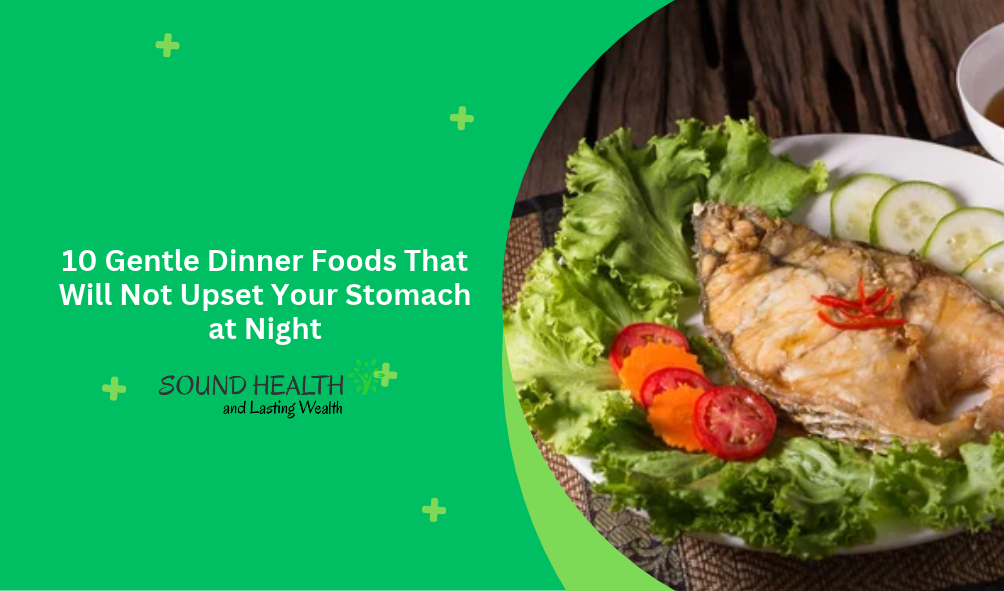
The best foods to eat at night are lean proteins such as fish and chicken, whole grains such as rice and oatmeal, cooked vegetables, and non-citrus fruits such as bananas and melon. Grilled, boiled, or baked, and served in a modest portion, they digest comfortably and are far less likely to cause heartburn or bloating when you lie down.
What upsets the stomach at night is usually fat, pepper, acid, and sheer volume. So this list is about building a dinner plate that avoids all four. Here are ten foods to choose from, along with how to cook them and what to leave off the plate.

Key Takeaways
- Lean protein, whole grains, vegetables, and non-citrus fruit are the foundation of a stomach-friendly dinner.
- Grilling, boiling and baking are gentler than frying.
- Fatty, spicy and acidic foods, including tomato-based dishes, are the most common night-time triggers.
- Smaller meals eaten three to four hours before bed cause fewer problems.
- Food triggers are personal, so pay attention to what your own stomach tolerates.
Why Evening Meals Cause More Trouble
The evening meal is often the largest of the day and the closest to bedtime, which is a difficult combination. A full stomach takes hours to empty, and lying down makes it easier for acid to travel upward. Fatty food slows the process further.
Registered dietitian Beth Czerwony of Cleveland Clinic gives a simple rule: giving your stomach less work to do can save you from heartburn later. The foods below were chosen with that in mind. They come from the lists Cleveland Clinic and Johns Hopkins Medicine recommend for people prone to acid reflux, which is the most common reason for an upset stomach at night.
1. Grilled or Boiled Fish
Fish is one of the leanest proteins you can put on a dinner plate, and Cleveland Clinic lists it among the proteins least likely to trigger reflux. It cooks quickly and feels light in the stomach. Grill, steam, bake, or boil it. Fried fish loses the advantage.
2. Skinless Chicken
Chicken is also on the recommended list, provided it is prepared without much fat. Remove the skin, and boil, grill, or bake it. A piece of chicken in a light broth is a better night-time choice than fried or heavily peppered chicken.
3. Rice
Rice is mild and easy to digest. Brown rice appears on both the Cleveland Clinic and Johns Hopkins lists as a high-fiber whole grain. A moderate serving with a light sauce works well in the evening. The stew matters more than the rice, so keep the oil and pepper down.
4. Oatmeal
Oatmeal is not only for breakfast. It is a high-fiber whole grain recommended for reflux, and a warm bowl makes a simple, filling dinner on nights when you want something light. Whole wheat bread is another whole grain option on the same list.
5. Beans and Lentils
Beans and lentils are named as good low-fat protein sources. They are filling and rich in fiber. Because they can cause gas, soak them well, cook them until soft, and keep the evening portion moderate. If beans leave you bloated at night, have them at lunch instead.
6. Egg Whites
Egg whites supply protein with almost no fat, which is why they are singled out. Boiled eggs or eggs scrambled with very little oil are suitable for dinner. If whole eggs give you no trouble, a boiled egg is still a far lighter choice than a fried one.
7. Cooked Vegetables
Vegetables are recommended across the board for their fiber. Johns Hopkins names green beans, broccoli, asparagus, and carrots among the helpful ones. At night, cooked vegetables are usually easier than raw. Steam or boil them, and season lightly.
8. Sweet Potatoes
Sweet potatoes are a high-fiber root vegetable on the Johns Hopkins list. Boiled or baked, they are soft, naturally sweet, and satisfying. They make a good base for a light dinner with vegetables and fish.
9. Bananas and Melon
Non-citrus fruits are the safe fruits at night. Bananas and melons are low in acid, and melons also have a high water content. Either makes a good finish to a meal in place of a sweet or fatty dessert.
10. Low-Fat Yogurt
Lower-fat dairy is recommended, and Johns Hopkins notes that nonfat yogurt may act as a temporary buffer against stomach acid while supplying probiotics. A small bowl of plain low-fat yogurt can round off dinner. Full-fat dairy can have the opposite effect, and anyone who reacts to milk products should skip it.
How You Cook It Matters
The same food can be gentle or troublesome depending on how it is prepared. Cleveland Clinic recommends lower-fat methods such as grilling, broiling, and baking in place of frying. Boiling and steaming work just as well.
Watch the seasoning too. Spicy foods are a listed trigger, and so are tomatoes and tomato-based sauces. Onions and garlic also appear on Cleveland Clinic’s list of foods that can provoke reflux, which is worth knowing if your stews rely on them heavily. You may not need to remove them, but reducing them at dinner is a fair experiment.
Foods To Avoid at Night
- Fried foods and fatty meats such as bacon and sausage
- Heavily peppered dishes
- Tomato-based stews and sauces
- Citrus fruits and juices
- Chocolate and rich desserts
- High-fat dairy and cheese
- Coffee, alcohol, and fizzy drinks
- Peppermint
- Potato chips and similar snacks
Sample Stomach-Friendly Dinners
- Grilled fish with rice and steamed vegetables
- Boiled sweet potato with a light vegetable sauce and boiled egg
- Skinless chicken in a mild broth with carrots and green beans
- Well-cooked beans with a small portion of rice and a little oil
- Oatmeal with sliced banana
Portion and Timing
Even the right foods cause trouble in the wrong amounts. Eat a smaller dinner than you think you need and stop before you feel full. The NHS advises people with ulcers to have the evening meal three to four hours before bed, and Cleveland Clinic advises against lying down after eating, since sitting, standing, or walking helps keep stomach contents down.
If you are hungry again close to bedtime, a small low-fat snack such as a banana or a little yogurt is better than a second meal.
What This List Does NOT Mean
These foods do not treat any condition. They are less likely to provoke symptoms, which is different from healing reflux, gastritis, or an ulcer.
The list is also not the same for everyone. As Czerwony puts it, a food that is a problem for one person may not be for you, and it is very individualized. The recommendations here are drawn mainly from acid reflux guidance, so people with other conditions, such as irritable bowel symptoms or food intolerances, may need a different approach.
When To See a Doctor
See a doctor if you have heartburn or stomach pain at night two or more times a week, if symptoms continue after you have changed what and when you eat, or if pain wakes you from sleep.
Get urgent care for vomiting blood, black or tarry stools, sudden severe stomach pain, difficulty swallowing, or unexplained weight loss.
The Bottom Line
A stomach-friendly dinner is built from lean protein, whole grains, cooked vegetables and non-citrus fruit, prepared with little fat and little pepper. Fish, chicken, rice, oatmeal, beans, eggs, vegetables, sweet potatoes, bananas and low-fat yogurt all fit.
Keep the portion moderate, eat a few hours before bed, and stay upright afterward. If your stomach still protests most nights, the problem is probably not the menu, and it is time to see a doctor.
Also Read | Gentle Bedtime Snacks That Will Not Upset a Sensitive Stomach
References
- Cleveland Clinic. (n.d.). GERD diet: Foods to eat and avoid. https://health.clevelandclinic.org/gerd-diet
- Johns Hopkins Medicine. (n.d.). GERD diet: Foods that help with acid reflux (heartburn). https://www.hopkinsmedicine.org/health/wellness-and-prevention/gerd-diet-foods-that-help-with-acid-reflux-heartburn
- National Health Service. (n.d.). Stomach ulcer: Treatment. https://www.nhs.uk/conditions/stomach-ulcer/treatment/