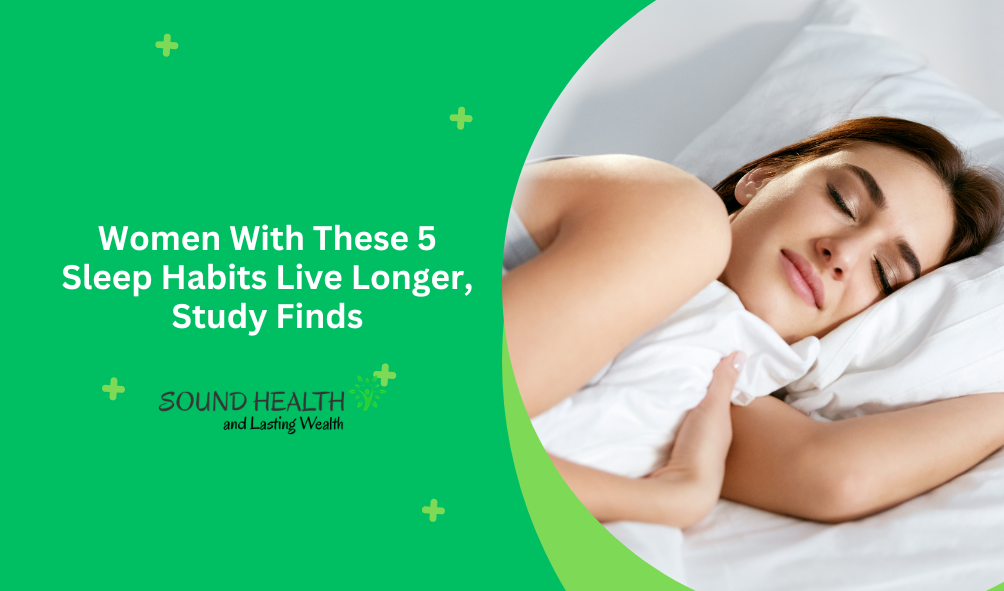
A large study of US adults found that women who consistently met five markers of good sleep had an estimated life expectancy at age 30 that was 2.4 years longer than women who met one or none of them. Men in the same study gained an estimated 4.7 years (Li et al., 2024).
The finding matters because the five habits are not exotic. They involve sleeping seven to eight hours, falling asleep without much struggle, staying asleep, waking up feeling rested, and not relying on sleep medication.
One caveat deserves attention up front: this was an observational study using self-reported sleep, and the life expectancy figures are statistical projections rather than observed lifespans. Better sleep is strongly linked with living longer. Whether it directly causes those extra years is a separate question the study cannot settle.

What you will learn:
- What the research actually measured and found
- The five sleep habits linked to lower mortality
- How sleep influences women’s long-term health
- Why the benefit appeared smaller for women than men
- Why sleep apnea is missed so often in women
- Practical steps to improve sleep quality
What the Research Found
The analysis was led by Haibin Li of Capital Medical University in Beijing and Frank Qian, then at Beth Israel Deaconess Medical Center and Harvard Medical School. The team used data from the National Health Interview Survey, an annual survey run by the CDC and the National Center for Health Statistics, and linked participants to National Death Index records through 31 December 2019 (Li et al., 2024).
The study included 172,321 adults, roughly half of them women, with an average age of about 47. Over a median follow-up of 4.3 years, 8,681 participants died.
Researchers built a “low-risk sleep score” from five factors and compared people who met all five against those who met one or none.
| Outcome | Result for people meeting all five sleep factors |
|---|---|
| All-cause mortality | 30% lower risk (HR 0.70, 95% CI 0.63 to 0.77) |
| Cardiovascular mortality | 21% lower risk (HR 0.79, 95% CI 0.67 to 0.93) |
| Cancer mortality | 19% lower risk (HR 0.81, 95% CI 0.66 to 0.98) |
| Estimated life expectancy gain at age 30, women | 2.4 years |
| Estimated life expectancy gain at age 30, men | 4.7 years |
| Deaths attributable to suboptimal sleep patterns | About 7.9% (95% CI 5.5 to 10.4) |
The relationship was graded rather than all-or-nothing. Each additional favourable sleep factor was associated with a stepwise reduction in mortality risk, which is one reason researchers found the pattern persuasive (American College of Cardiology, 2023).
A Note on Sourcing
You may see this study described as published in the Journal of the American College of Cardiology. That reference points to a conference abstract presented at the ACC’s 2023 Scientific Session and printed in a JACC supplement (Li & Qian, 2023). The full peer-reviewed paper appeared in QJM: An International Journal of Medicine in 2024 (Li et al., 2024).
The two versions also differ on survey years. The abstract described National Health Interview Survey data from 1997 to 2018. The peer-reviewed paper specifies 2013 to 2018, which is consistent with the reported median follow-up of 4.3 years. This article uses the peer-reviewed figures.
Also Read | Sleep Problems Linked to Higher Heart Disease Risk After 45
How Does Sleep Affect Women’s Life Expectancy?
Sleep is not downtime. It is an active maintenance window, and several systems depend on it.
- Cardiovascular repair. Blood pressure normally dips during deep sleep, giving the heart and arteries a nightly recovery period. Disrupted sleep blunts that dip and is associated with higher blood pressure over time. The American Heart Association added sleep duration to its cardiovascular health framework, Life’s Essential 8, in 2022, placing it alongside diet, activity, and blood pressure as a core measure (American Heart Association, 2022).
- Metabolic regulation. Short or fragmented sleep affects appetite-regulating hormones and insulin sensitivity, which influences weight and diabetes risk over years.
- Immune function. Sleep supports immune signalling and the response to infection and vaccination.
- Brain clearance and cognition. Sleep supports memory consolidation and the clearance of metabolic waste from brain tissue, an area of active research relevant to long-term cognitive health (National Institute of Neurological Disorders and Stroke, 2024).
- Mental health. Insomnia and depression each raise the risk of the other, and both influence long-term health outcomes.
For women specifically, sleep quality is shaped by biological transitions that men do not experience: menstrual cycles, pregnancy, the postpartum period, and perimenopause. Each can disrupt sleep architecture, and the menopause transition in particular is associated with a marked increase in sleep complaints.
What Are the Five Healthy Sleep Habits Linked to a Longer Life?
The researchers defined the low-risk group for each factor as follows (Li et al., 2024):
1. Sleeping Seven to Eight Hours per Night
This matches the CDC recommendation of at least seven hours nightly for adults (Centers for Disease Control and Prevention, 2024). The study treated seven to eight hours as the low-risk window. Notably, both short and long sleep have been linked with higher mortality in population research, though very long sleep often reflects underlying illness rather than causing harm itself.
2. Difficulty Falling Asleep No More Than Twice a Week
Occasional trouble drifting off is normal. Persistent difficulty most nights is a defining feature of insomnia and is worth addressing.
3. Trouble Staying Asleep No More Than Twice a Week
Waking briefly at night is normal. Repeatedly waking and struggling to return to sleep fragments the restorative stages of sleep.
4. Not Using Sleep Medication
This factor requires care in interpretation. People who use sleep aids often have insomnia, chronic pain, anxiety, or other conditions that independently affect mortality. The association may reflect those underlying conditions rather than the medication itself. Do not stop a prescribed sleep medication based on this study. Discuss it with your prescriber.
5. Waking Up Feeling Rested at Least Five Days a Week
This was the study’s measure of restorative quality. Someone can spend eight hours in bed and still wake unrefreshed, which is often a signal of fragmented sleep or an undiagnosed sleep disorder.
| Sleep factor | Low-risk definition | What it measures |
|---|---|---|
| Duration | 7 to 8 hours per night | Quantity |
| Sleep onset | Difficulty falling asleep ≤ 2 nights/week | Ease of getting to sleep |
| Sleep maintenance | Trouble staying asleep ≤ 2 nights/week | Continuity |
| Medication | No sleep medication use | Independence from sleep aids |
| Restfulness | Waking rested ≥ 5 days/week | Restorative quality |
Expert tip: Qian noted that getting enough hours is not sufficient on its own. Restful, uninterrupted sleep mattered in the analysis, not just time in bed (American College of Cardiology, 2023).
How Strong Is This Evidence?
Responsible reporting requires naming the limits. This study is well conducted and the sample is large and nationally representative, but several constraints apply.
- It is observational, not experimental. Nobody was assigned to sleep well or poorly. The study shows association, not proof of cause.
- Sleep was self-reported. Participants answered survey questions. No polysomnography, actigraphy, or wearable data was used, so misreporting is possible.
- Reverse causation is plausible. Serious illness disrupts sleep. Some people who slept badly may have already been unwell in ways that were not fully captured, which would inflate the apparent effect of poor sleep.
- The life expectancy numbers are modelled. Median follow-up was 4.3 years. The 2.4-year and 4.7-year figures come from a flexible parametric survival model projecting life expectancy from age 30, not from tracking people across a lifetime. They are best read as estimates of potential gain, not guarantees.
- Residual confounding is likely. The researchers adjusted for demographics, lifestyle factors, and comorbidities, but unmeasured factors such as socioeconomic stress or shift work may still play a role.
None of this makes the finding unimportant. It sits alongside a substantial body of research linking sleep to cardiovascular and metabolic health. It does mean that “sleep well and add 2.4 years” is a headline, not a prescription.
Also Read | Coffee Side Effects: From Addiction, To Insomnia – Will This Happen To You?
Why Did Men Appear to Gain More Than Women?
Men gained roughly double the estimated years. The researchers were direct that they do not know why and called for further study (American College of Cardiology, 2023).
Several explanations have been proposed:
- Different baseline risk. Men in the cohort may have had more room for improvement, since they tend to have higher cardiovascular mortality at younger ages.
- Under-recognition of sleep disorders in women. If sleep apnea and other disorders are diagnosed less often in women, the self-reported measures may capture women’s sleep problems less accurately.
- Different symptom reporting. Women and men describe sleep problems differently, which affects survey-based classification.
- Statistical modelling. Life expectancy differences between sexes at baseline influence how gains are calculated.
This remains an open question rather than a settled finding.
Why Is Sleep Apnea Often Underdiagnosed in Women?
Obstructive sleep apnea (OSA) involves repeated collapse of the upper airway during sleep, causing pauses in breathing and drops in oxygen. Untreated, it is associated with high blood pressure, heart disease, stroke, type 2 diabetes, and daytime accidents (Johns Hopkins Medicine, n.d.).
It is diagnosed far more often in men, and there are good reasons to think women are being missed.
Symptoms Present Differently
The classic picture that prompts a referral is loud snoring, witnessed breathing pauses, and heavy daytime sleepiness. Women more often report:
- Persistent fatigue rather than sleepiness
- Insomnia and difficulty staying asleep
- Morning headaches
- Low mood, anxiety, or irritability
- Trouble with memory and concentration
- Night sweats
- Waking frequently to urinate
These are easy to attribute to stress, depression, or menopause, so testing is not always ordered.
Risk Rises Sharply Around Menopause
Premenopausal women have lower OSA rates than men, but the gap narrows considerably after menopause. Falling estrogen and progesterone are thought to contribute, partly through effects on upper airway muscle tone and changes in fat distribution (Cleveland Clinic, n.d.).
The timing creates a diagnostic trap. Fatigue, poor sleep, night sweats, and mood changes at age 52 are frequently assumed to be menopause alone, when sleep apnea may be present as well or instead.
Screening Tools Were Built Around Male Presentations
Widely used questionnaires weight snoring, observed apneas, neck circumference, and male sex. A woman with genuine OSA can score below the referral threshold.
What to Do
If several of the symptoms above apply to you, ask your doctor directly about a sleep study. Home sleep apnea testing is now widely available. Effective treatments exist, including CPAP, oral appliances, positional therapy, and weight management where relevant (Mayo Clinic, n.d.).
How Can Women Improve Their Sleep for Better Health?
Start With Consistency
A regular sleep and wake time, including weekends, is one of the strongest levers available. Irregular timing disrupts circadian rhythm even when total hours look adequate.
Use Light Deliberately
- Get outdoor daylight within an hour of waking, ideally 10 to 30 minutes
- Dim indoor lighting in the two hours before bed
- Keep the bedroom genuinely dark
Set the Environment
- Cool room, roughly 16 to 19°C (60 to 67°F)
- Dark and quiet, with blackout curtains or a white noise source if needed
- Reserve the bed for sleep and sex, not work or scrolling
Address Chronic Insomnia Properly
If difficulty sleeping has persisted for three months or more, cognitive behavioural therapy for insomnia (CBT-I) is the recommended first-line treatment, ahead of medication. It is more durable than sleeping pills and does not carry their side effects. The NHS and major sleep medicine bodies recommend it as the initial approach (NHS, 2024). Digital CBT-I programmes have made it far more accessible.
Manage Menopause-Related Disruption
Night sweats and hot flashes fragment sleep. Treating the underlying vasomotor symptoms, whether through hormone therapy, non-hormonal medication, or CBT, often improves sleep more than sleep-specific measures alone. This is a conversation to have with your clinician.
Also Read | Insomnia Relief Found: One Woman’s Red Light Therapy Success Story
Diet, Exercise, and Sleep
Foods and Drinks That Support Sleep
- Regular meals at consistent times
- Adequate protein and fibre across the day
- A light snack in the evening if hunger interferes with sleep
- Water spread through the day rather than loaded in the evening
What to Limit
| Substance | Why it matters | Practical guidance |
|---|---|---|
| Caffeine | Has a half-life of roughly five to six hours in most adults | Stop by early afternoon |
| Alcohol | Shortens time to sleep onset but fragments the second half of the night | Avoid within three hours of bed |
| Large meals | Digestion and reflux disturb sleep | Finish eating two to three hours before bed |
| Nicotine | A stimulant that also causes overnight withdrawal | Avoid in the evening |
| Excess evening fluid | Increases night-time waking to urinate | Front-load hydration |
Exercise
Regular physical activity improves sleep quality and reduces the time it takes to fall asleep. The WHO recommends at least 150 to 300 minutes of moderate activity weekly for adults, plus muscle-strengthening on two or more days (World Health Organization, 2020). Timing is largely a matter of individual response. Some people sleep worse after late vigorous exercise; many are unaffected.
Myths vs. Facts
| Myth | Fact |
|---|---|
| You can catch up on sleep at the weekend | Weekend recovery sleep does not fully reverse the metabolic and cognitive effects of chronic weeknight restriction. |
| Older adults need much less sleep | Adults over 65 generally still need seven to eight hours. Sleep becomes lighter and more fragmented, which is different from needing less. |
| Alcohol is a good sleep aid | It shortens sleep onset but reduces sleep quality and increases waking later in the night. |
| Snoring is harmless | Loud, habitual snoring can indicate sleep apnea and warrants assessment. |
| This study proves sleep adds 2.4 years | It shows a strong association and a modelled estimate. It does not establish cause and effect. |
| Sleep apnea is a man’s condition | It is underdiagnosed in women, and risk increases substantially after menopause. |
Common Mistakes to Avoid
- Treating time in bed as the only target. Quality mattered as much as quantity in this research.
- Blaming everything on menopause. Sleep apnea, thyroid disease, iron deficiency, and depression all cause similar symptoms and are treatable.
- Starting sleep medication first. CBT-I has better long-term evidence for chronic insomnia.
- Stopping prescribed medication because of a headline. The study cannot support that decision. Speak to your prescriber.
- Chasing a perfect sleep score from a wearable. Anxiety about tracker data can itself worsen sleep.
- Keeping wildly different weekend and weekday schedules. Irregularity undermines otherwise good habits.
When to See a Doctor
Book an appointment if you experience:
- Difficulty falling or staying asleep at least three nights a week for three months or longer
- Waking unrefreshed despite adequate time in bed
- Loud snoring, gasping, or witnessed pauses in breathing
- Daytime sleepiness that affects driving, work, or safety
- Persistent morning headaches
- An uncomfortable urge to move the legs at night
- Sleep problems alongside low mood, anxiety, or unexplained weight change
Seek prompt care if sleepiness has caused you to fall asleep while driving, or if you have chest pain, breathlessness, or significant swelling alongside disturbed sleep.
Action Steps
- Track your sleep for two weeks using a simple diary: time to bed, estimated time asleep, night wakings, and how rested you felt.
- Score yourself against the five low-risk factors.
- Pick the single weakest factor and address it first.
- Fix your wake time before anything else. It anchors the rest.
- If you meet the criteria for chronic insomnia, ask about CBT-I.
- If any sleep apnea symptoms apply, request a sleep study specifically.
Also Read | Herbal Tea Cured Her Insomnia When Nothing Else Worked
Frequently Asked Questions
Can healthy sleep habits really help women live 2.4 years longer?
The study estimated a 2.4-year gain in life expectancy at age 30 for women meeting all five sleep factors compared with those meeting one or none (Li et al., 2024). This is a modelled projection from an observational study, so it indicates a strong association rather than a guaranteed outcome.
What are the five sleep habits?
Seven to eight hours of sleep, difficulty falling asleep no more than twice a week, trouble staying asleep no more than twice a week, no sleep medication use, and waking rested at least five days a week.
Why did men gain more years than women?
The researchers did not identify a cause and called for more study. Proposed explanations include different baseline risk and the under-recognition of sleep disorders in women.
Is it too late to benefit if I am already over 50?
The model estimated gains from age 30, but sleep quality is associated with health outcomes at every age. Improving sleep in midlife supports cardiovascular, metabolic, and cognitive health regardless of starting point.
Should I stop taking my sleeping tablets?
No, not based on this study. The association likely reflects underlying conditions in people who use sleep aids. Any change should be planned with your prescriber, as some medications require tapering.
How do I know if I have sleep apnea?
Only a sleep study can diagnose it. Raise it with your doctor if you have fatigue, unrefreshing sleep, morning headaches, night sweats, snoring, or frequent night waking, particularly around or after menopause.
Does napping count toward the seven to eight hours?
The study measured nightly sleep. Short naps of 20 to 30 minutes can help with alertness, but long or late naps often make night-time sleep worse.
What is CBT-I?
Cognitive behavioural therapy for insomnia is a structured, short-term programme addressing the thoughts and behaviours that maintain insomnia. It is the recommended first-line treatment for chronic insomnia (NHS, 2024).
Key Takeaways
- Women meeting five markers of healthy sleep had an estimated 2.4 additional years of life expectancy at age 30; men had 4.7 (Li et al., 2024).
- Those meeting all five factors had a 30% lower risk of death from any cause during follow-up.
- Roughly 8% of deaths in the cohort were attributed to suboptimal sleep patterns.
- Quality mattered as much as duration. Waking rested was one of the five factors.
- The study is observational and used self-reported sleep, so it demonstrates association rather than causation.
- Sleep apnea is underdiagnosed in women because symptoms differ from the classic male presentation and risk climbs after menopause.
- CBT-I, not medication, is the recommended first-line treatment for chronic insomnia.
The Bottom Line
The headline that healthy sleep habits could potentially help women live 2.4 years longer is supported by real research, and the underlying message holds up: sleep quality is a measurable health behaviour, not a luxury.
What the study cannot tell you is whether improving your sleep will add a specific number of years to your life. What it does show, alongside a wider evidence base, is that people who sleep well die less often from cardiovascular disease and cancer during follow-up, and that the relationship strengthens with each additional good sleep habit.
The practical takeaway is modest and useful. Score yourself against the five factors. Fix the weakest one. If you wake unrefreshed despite enough hours in bed, treat that as a signal worth investigating rather than a personal failing, particularly if you are approaching or past menopause.
Also Read | Why Do I Sweat So Much After 50? Causes and Fixes
References
American College of Cardiology. (2023, February 23). Getting good sleep could add years to your life. https://www.acc.org/About-ACC/Press-Releases/2023/02/22/21/35/Getting-Good-Sleep-Could-Add-Years-to-Your-Life
American Heart Association. (2022). Life’s Essential 8. https://www.heart.org/en/healthy-living/healthy-lifestyle/lifes-essential-8
Centers for Disease Control and Prevention. (2024). About sleep. https://www.cdc.gov/sleep/about/
Cleveland Clinic. (n.d.). Sleep apnea. https://my.clevelandclinic.org/health/diseases/8718-sleep-apnea
Johns Hopkins Medicine. (n.d.). Obstructive sleep apnea. https://www.hopkinsmedicine.org/health/conditions-and-diseases/obstructive-sleep-apnea
Li, H., & Qian, F. (2023). Low-risk sleep patterns, mortality, and life expectancy at age 30 years: A prospective study of 172,321 US adults [Abstract]. Journal of the American College of Cardiology, 81(8, Suppl.), 1675. https://doi.org/10.1016/S0735-1097(23)02119-8
Li, H., Qian, F., Han, L., Feng, W., Zheng, D., Guo, X., & Zhang, H. (2024). Association of healthy sleep patterns with risk of mortality and life expectancy at age of 30 years: A population-based cohort study. QJM: An International Journal of Medicine, 117(3), 177–186. https://doi.org/10.1093/qjmed/hcad237
Mayo Clinic. (n.d.). Obstructive sleep apnea: Diagnosis and treatment. https://www.mayoclinic.org/diseases-conditions/obstructive-sleep-apnea/diagnosis-treatment/drc-20352095
National Health Service. (2024). Insomnia. https://www.nhs.uk/conditions/insomnia/
National Institute of Neurological Disorders and Stroke. (2024). Brain basics: Understanding sleep. https://www.ninds.nih.gov/health-information/public-education/brain-basics/brain-basics-understanding-sleep
World Health Organization. (2020). WHO guidelines on physical activity and sedentary behaviour. https://www.who.int/publications/i/item/9789240015128