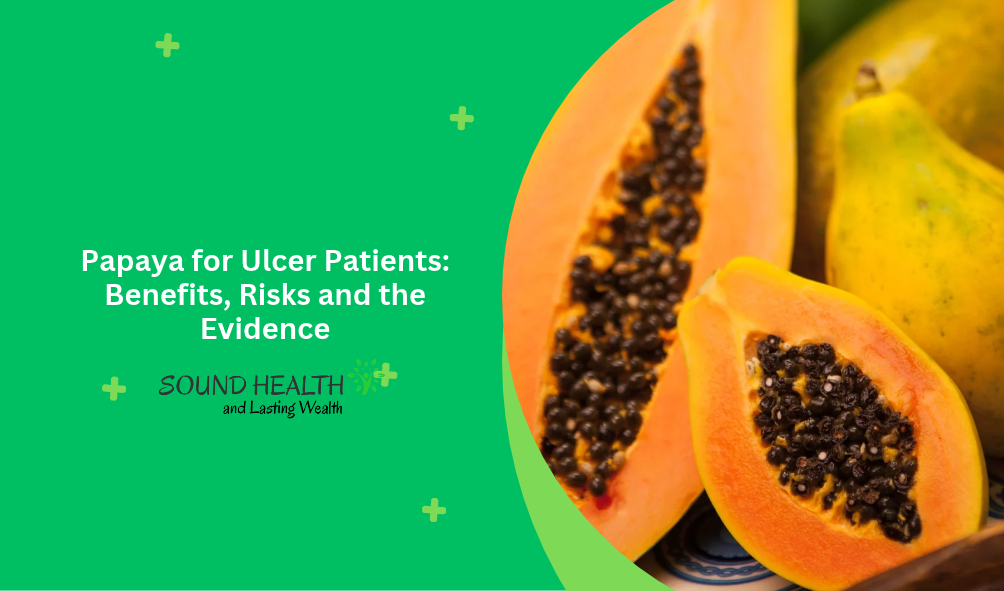
Ripe papaya, known to many as pawpaw, is a good fruit to eat when you have a stomach ulcer. It is soft, mild, and rich in fiber and vitamins, and most people with ulcers tolerate it well. What it cannot do is heal the ulcer. The studies suggesting papaya protects the stomach were done in rats, using extracts of the seeds, leaves, and unripe fruit, and no human trial has shown that eating papaya treats an ulcer.
So papaya belongs on your plate, not in place of your prescription. Here is what the fruit offers, what the research has and has not found, and who should be careful with it.

Key Takeaways
- Ripe papaya is gentle, nutritious, and generally safe for people with stomach ulcers.
- It supplies fiber, vitamin C, and vitamin A, nutrients that fit well in an ulcer-friendly diet.
- Rat studies report that papaya extracts reduce ulcer damage, but this has not been tested in people with ulcers.
- Unripe papaya, papaya seeds, and papain supplements carry more risk than the ripe fruit.
- Ulcers heal with medical treatment, usually antibiotics for H. pylori and acid-reducing medicine.
Why People With Ulcers Ask About Papaya
Papaya has a long reputation as a stomach-soothing fruit. In many homes, ripe pawpaw is the first thing offered to someone with indigestion, and unripe pawpaw soaked in water is a popular home remedy for ulcers.
The interest is understandable. Papaya is soft and easy to eat when your stomach is sore, and it contains papain, an enzyme that breaks down protein. The real question is whether any of this translates into ulcer healing, and that is where the evidence needs a careful look.
What Papaya Offers Nutritionally
According to Cleveland Clinic, one small papaya of about 157 grams contains 67 calories, 2.6 grams of fiber, and 95.6 milligrams of vitamin C, which is more than the recommended daily amount. A cup of sliced papaya also provides about a third of the daily value for vitamin A, along with potassium and magnesium.
Registered dietitian Julia Zumpano describes papayas as having a melon-like texture and being packed with beta-carotene, vitamin C, and other nutrients. Fiber and vitamin A are worth noting for ulcer patients, because large studies have linked diets high in both to a lower risk of developing ulcers.
What the Scientific Evidence Shows
Animal studies are encouraging. Several laboratory studies have tested papaya extracts in rats with drug-induced ulcers. In one study, published in the Journal of Integrative Medicine in 2015, researchers gave 30 rats a water extract of papaya seed for 14 days before triggering ulcers with the painkiller indomethacin. The treated rats had lower stomach acidity and fewer ulcers than untreated rats, with results similar to the ulcer drug cimetidine. Other rat studies have reported protective effects from extracts of unripe papaya fruit and papaya leaves.
Human evidence for ulcers is missing. These are small animal experiments using concentrated extracts, not people eating fruit. No clinical trial has shown that papaya heals stomach ulcers or clears H. pylori in humans.
Human digestive research is limited. The best-known human study tested a concentrated papaya preparation called Caricol for 40 days in people with irritable bowel symptoms and indigestion, and participants reported less constipation and bloating. That study did not involve ulcers, and a later review found the evidence for papain in heartburn and reflux too limited to show a meaningful benefit. As GoodRx notes, most research has looked at papain supplements, not whole papaya.
How Ripe Papaya May Help in Practice
Even without proof of healing, ripe papaya has practical advantages for someone with an ulcer.
- It is gentle. The soft flesh is easy to chew and digest, and most people find it less irritating than citrus fruits.
- It adds fiber. Fiber supports regular digestion and belongs to the group of foods linked to lower ulcer risk.
- It supplies vitamins A and C. Both support the body’s normal tissue repair.
- It makes a light snack. A few slices between meals can keep you from going long hours on an empty stomach.
These are the benefits of a healthy fruit, not a medicine.
Unripe Papaya, Seeds and Supplements Are Different
Most of the caution around papaya applies to forms other than the ripe fruit.
- Unripe papaya. Green papaya contains high levels of latex, which carries papain. Zumpano warns that the latex enzymes can irritate and damage the esophagus and gums. There is no human evidence that unripe papaya or water soaked with it heals ulcers.
- Papaya seeds. The rat study used a measured seed extract. Chewing seeds at home is not the same thing, and Cleveland Clinic notes that eating too many can cause stomach upset and diarrhea.
- Papain supplements. These may irritate the mouth, throat, or esophagus, especially at high doses, and supplements are not checked for quality the way medicines are.
Who Should Be Careful With Papaya
- People with a latex allergy. Papaya can trigger allergic reactions, which may be severe.
- Pregnant women. Some evidence suggests unripe papaya may harm a developing baby, so it is best avoided in pregnancy. Ripe papaya in normal food amounts is a separate matter to discuss with your doctor or midwife.
- People taking blood thinners. Papaya can strengthen the effect of drugs such as warfarin and raise the risk of bleeding.
- People taking diabetes medication. Papaya, particularly fermented forms, may lower blood sugar further.
- People on thyroid or heart rhythm medicines. Cleveland Clinic lists possible interactions with these drugs.
If any of these apply to you, check with your doctor or pharmacist before eating papaya regularly.
How To Eat Papaya When You Have an Ulcer
- Choose fully ripe fruit, with yellow to orange skin that gives slightly when pressed.
- Start with a small portion, such as a few slices, and see how your stomach responds.
- Eat it plain or with oatmeal or plain yogurt.
- Skip added lime juice or pepper while your ulcer is healing.
- Treat it as part of a varied diet, alongside other gentle, high-fiber foods.
What the Evidence Does NOT Prove
The research does not prove that papaya cures ulcers, kills H. pylori, or can replace ulcer medication. The positive findings come from rats given purified extracts under laboratory conditions, and results in animals often fail to carry over to people.
It also does not show that more is better. Eating large amounts of papaya, or turning to unripe fruit, seeds, or supplements, adds risk without any proven gain. Ulcers heal when their cause is treated, which usually means antibiotics for H. pylori, acid-reducing medicine, and stopping the painkillers that damage the stomach.
When To See a Doctor
See a doctor if you have upper stomach pain that keeps returning, pain that comes back after antacids, or indigestion lasting more than a couple of weeks. Do not rely on papaya or any other home remedy to manage these symptoms.
Get emergency care for black or tarry stools, blood in your stool, vomiting blood or material that looks like coffee grounds, sudden severe stomach pain, or dizziness and fainting.
The Bottom Line
Ripe papaya is a safe, gentle, and nutritious choice for most people with stomach ulcers. It provides fiber and vitamins that suit an ulcer-friendly diet, and it is easy on a sore stomach. The science behind its reputation as an ulcer remedy, however, comes from rat studies of extracts, not from people eating the fruit.
Enjoy ripe papaya as part of your meals, avoid unripe papaya and home-made seed remedies, and let proper medical treatment do the healing.
Also Read | Stomach Ulcer or Gastritis: Symptoms, Causes and Treatment Compared
References
- Cleveland Clinic. (n.d.). Papaya benefits. https://health.clevelandclinic.org/papaya-benefits
- Foley, J. (n.d.). Papaya and stomach, gut and digestive health. GoodRx. https://www.goodrx.com/well-being/gut-health/papaya-stomach-gut-digestive-health
- Anti-ulcerogenic activity of aqueous extract of Carica papaya seed on indomethacin-induced peptic ulcer in male albino rats. (2015). Journal of Integrative Medicine. https://search.bvsalud.org/gim/resource/en/wpr-317100