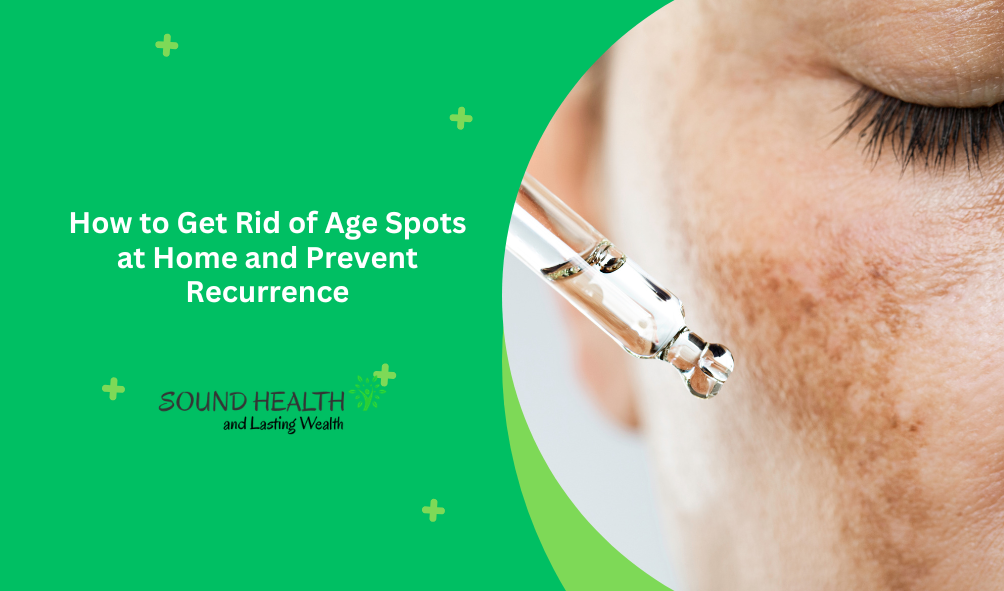

Age spots are flat, brown patches caused by decades of UV exposure. They are harmless, but many people want them gone. The good news is that several over-the-counter ingredients, including vitamin C, retinol, niacinamide, glycolic acid, and kojic acid, have clinical evidence supporting their ability to fade existing spots over weeks to months of consistent use. The critical factor most people miss: no treatment works long-term without daily sunscreen. UV exposure is what created the spots in the first place, and it will bring them back unless you block it. This article covers what actually works at home, what doesn’t, when a spot needs a dermatologist’s evaluation, and how to prevent new spots from forming.

What Age Spots Actually Are (And Why That Matters for Treatment)
Age spots go by several names: liver spots, sun spots, solar lentigines. Despite the variety, they all describe the same thing: flat, oval, tan-to-dark-brown areas of increased pigmentation that appear on skin that has received the most cumulative sun exposure over a lifetime. They show up most commonly on the face, backs of the hands, shoulders, forearms, and upper chest.
They are not caused by aging alone. They are caused by years of ultraviolet radiation triggering melanocytes (the cells that produce melanin, the pigment responsible for skin color) to overproduce and cluster in specific areas. The UV damage accumulates invisibly for decades, and the spots appear once the skin’s ability to distribute melanin evenly breaks down (Mayo Clinic, 2025; AAD, n.d.).
This mechanism matters for treatment because it determines which approaches can actually reach the problem. The excess melanin sits in the epidermis (outer skin layer) and sometimes in the upper dermis (deeper layer). Any product or ingredient that cannot penetrate to where the pigment lives cannot fade the spot.
Age spots are clinically benign. They are not cancerous. But because they can resemble early melanoma, particularly a subtype called lentigo maligna melanoma, getting any new, changing, or irregularly colored spot evaluated by a dermatologist before treating it at home is a critical first step (U.S. Dermatology Partners, 2025).
The Five OTC Ingredients With Clinical Evidence
1. Vitamin C (Ascorbic Acid)
Vitamin C is a tyrosinase inhibitor, meaning it blocks the enzyme responsible for melanin production. It also has antioxidant properties that protect skin cells from further UV-induced oxidative damage.
A 2023 systematic review published in the Journal of Cosmetic Dermatology found that topical vitamin C was effective for reducing hyperpigmentation, including age spots, in multiple clinical trials (Correia et al., 2023). A 2025 study in the Journal of Oral and Maxillofacial Pathology confirmed that vitamin C inhibits both tyrosinase and tyrosinase-related protein-1, the two enzymes most directly involved in melanin synthesis (Sanadi et al., 2025).
What to look for: Products containing L-ascorbic acid at concentrations of 10 to 20%. Vitamin C is unstable and degrades when exposed to light and air, so look for opaque, airtight packaging. Serums tend to penetrate better than creams.
Timeline: Visible fading typically begins after 8 to 12 weeks of daily application.
2. Retinol (Vitamin A Derivative)
Retinol accelerates cell turnover, pushing pigmented cells out of the epidermis faster and replacing them with newer, less pigmented cells. It also stimulates collagen production, which improves overall skin texture alongside spot fading.
The AAD notes that both prescription-strength retinoids (tretinoin) and over-the-counter retinol are effective for treating hyperpigmentation, though prescription strength works faster (AAD, 2021). A 2011 clinical study in the Journal of Drugs in Dermatology found that topical retinoids produced significant improvement in age spots across all skin types (Geria et al., 2011).
What to look for: Start with a lower concentration (0.25 to 0.5%) to build tolerance, then increase to 1% if tolerated. Apply at night, since retinol increases sun sensitivity. Always pair with daily sunscreen.
Timeline: 12 to 24 weeks for visible improvement. Retinol works gradually, and the first few weeks may cause mild redness and peeling as skin adjusts.
3. Niacinamide (Vitamin B3)
Niacinamide works through a different mechanism than vitamin C or retinol. It does not inhibit melanin production. Instead, it blocks the transfer of melanin from melanocytes to surrounding skin cells (keratinocytes), reducing the visible darkening at the surface.
A double-blind, randomized clinical trial found that 4% niacinamide performed comparably to 4% hydroquinone (the prescription gold standard for skin lightening) for treating hyperpigmentation, but with fewer side effects (Navarrete-Solis et al., cited in Yahoo Health, 2026).
What to look for: Products containing 4 to 5% niacinamide. It is well tolerated by most skin types, including sensitive skin, and can be combined with vitamin C and retinol in a layered routine.
Timeline: 8 to 12 weeks with consistent daily use.
4. Alpha-Hydroxy Acids (AHAs), Especially Glycolic Acid
AHAs work by exfoliating the outer layer of dead skin cells, which accelerates the removal of pigmented cells from the surface. Glycolic acid is the most studied AHA for pigmentation.
A 2026 comprehensive review published in the Journal of Dermatologic Science and Cosmetic Technology confirmed the efficacy of AHAs, particularly glycolic acid, for improving hyperpigmentation and overall skin texture (Zhang et al., 2026). A 2024 clinical and legal review in Clinical, Cosmetic and Investigational Dermatology found that glycolic acid at concentrations of 8 to 15% was effective for at-home use, with higher concentrations (20 to 70%) reserved for professional peels (Almeman, 2024).
What to look for: Glycolic acid at 8 to 12% for at-home products. Start with the lower concentration and use every other night to assess tolerance. AHAs increase sun sensitivity.
Timeline: 4 to 8 weeks for improved texture; 8 to 16 weeks for visible spot fading.
5. Kojic Acid
Kojic acid is derived from several types of fungi and works as a tyrosinase inhibitor, similar to vitamin C. The Mayo Clinic lists it alongside hydroquinone and glycolic acid as an ingredient to look for in OTC fade creams (Mayo Clinic, 2025).
Kojic acid is less studied than vitamin C or retinol but has consistent clinical support for mild to moderate hyperpigmentation. It is sometimes combined with other lightening agents for enhanced effect.
What to look for: Concentrations of 1 to 4%. Can cause contact dermatitis in some individuals, so patch testing is recommended.
Timeline: 8 to 12 weeks.
How to Build an Effective At-Home Routine
A common mistake is using too many active ingredients at once, which causes irritation that can actually worsen pigmentation, particularly in darker skin tones. Start simple and build gradually.
Morning Routine
- Gentle cleanser
- Vitamin C serum (10 to 20% L-ascorbic acid) applied to clean, dry skin
- Moisturizer
- Broad-spectrum sunscreen, SPF 30 or higher, applied generously as the final step
Evening Routine
- Gentle cleanser
- Active treatment (choose one to start): retinol OR glycolic acid (alternate nights if using both)
- Niacinamide serum (can be layered with either retinol or glycolic acid)
- Moisturizer
Rules for the Routine
- Introduce one new active at a time. Wait two to three weeks before adding a second product to confirm your skin tolerates the first.
- Sunscreen is non-negotiable. Every active ingredient on this list increases sun sensitivity. Without daily SPF 30 or higher, the spots will darken faster than the products can lighten them.
- Be patient. Skin cell turnover takes roughly 28 days. Most lightening ingredients require two to three full turnover cycles (8 to 12 weeks) to show visible results.
What About Natural Home Remedies?
Lemon juice, apple cider vinegar, turmeric, aloe vera, and green tea extract are all widely promoted online for fading age spots. Here is what the evidence actually supports:
| Remedy | Evidence Level | Notes |
|---|---|---|
| Aloe vera | Limited but promising | Contains aloesin, a depigmenting compound. A 2022 study found melanogenic inhibitory effects from aloe extracts. Results are mild and slow. |
| Turmeric (curcumin) | Limited | A 2011 study in Phytotherapy Research found curcumin inhibits melanogenesis in human melanocytes. Topical application is messy and stains skin yellow. Evidence is primarily from cell studies, not large clinical trials. |
| Lemon juice | Very limited; risk of harm | Contains citric acid and vitamin C, but at unpredictable concentrations. Can cause phytophotodermatitis (chemical burns when exposed to sunlight), leading to worse pigmentation. Cleveland Clinic warns against citrus on sun-exposed skin. |
| Apple cider vinegar | Anecdotal only | No controlled clinical trials support its use for age spots. The acetic acid can cause irritation and chemical burns at improper concentrations. |
| Green tea extract | Limited but promising | Contains EGCG, which has antioxidant and mild tyrosinase-inhibiting properties. More effective as a preventive ingredient than as a treatment for existing spots. |
The honest assessment: Natural remedies are unlikely to remove established age spots. They may provide very mild fading over extended periods, but they do not match the efficacy of the five OTC ingredients above. Lemon juice and apple cider vinegar carry real risks of skin irritation and worsening pigmentation and are not recommended by dermatologists.
When You Need a Dermatologist, Not a Cream
For Treatment
Over-the-counter products work best on mild, superficial age spots. If your spots are deep, widespread, or have not responded to 12 weeks of consistent OTC treatment, professional options include:
- Prescription hydroquinone (4%): The most effective topical lightening agent. Requires medical supervision due to risk of ochronosis (paradoxical darkening) with prolonged use.
- Prescription tretinoin: A stronger form of retinol that accelerates cell turnover more aggressively.
- Chemical peels (TCA, glycolic acid at clinical concentrations): Remove the outer layers of pigmented skin in a controlled setting.
- Cryotherapy: Freezing individual spots with liquid nitrogen.
- Laser therapy (IPL, Q-switched): Targets melanin with light energy, breaking down pigment deposits.
For Safety
See a dermatologist before starting any home treatment if a spot shows any of the following features:
- Very dark color or multiple colors within the same spot
- Irregular, ragged, or blurred borders
- Rapid growth or change in shape
- Itching, bleeding, or crusting
- Size larger than 6mm (the diameter of a pencil eraser)
- Any spot that is new and appeared in adulthood
These features overlap with the ABCDE criteria for melanoma. A dermatologist can distinguish between a harmless age spot and something that requires biopsy in minutes. Do not self-treat a spot that has not been evaluated.
How to Prevent Age Spots From Coming Back
Fading existing spots is only half the battle. Without consistent prevention, UV exposure will create new spots in the same areas, often faster than before because the skin’s melanocyte population is already primed to overproduce.
Daily Sunscreen (This Is the Entire Foundation)
The AAD recommends broad-spectrum, water-resistant sunscreen with SPF 30 or higher, applied every day to all exposed skin, regardless of weather (AAD, n.d.). Sunscreen prevents new age spots and prevents treated spots from returning. Without it, every other intervention in this article is compromised.
Application tips:
- Apply 15 minutes before going outside
- Use enough: a nickel-sized amount for the face, a shot glass for the full body
- Reapply every two hours during outdoor exposure
- Use a separate lip balm with SPF 30
- UVA rays pass through window glass, so daily application matters even for indoor workers near windows
Protective Clothing
UPF-rated clothing, wide-brimmed hats, and UV-blocking sunglasses provide physical barriers that do not require reapplication. For hands (one of the most common sites for age spots), lightweight UPF driving gloves are available and effective.
Avoid Peak Sun Hours
UV intensity peaks between 10 AM and 4 PM. When possible, schedule outdoor activities outside this window.
Continue Using Antioxidants
Daily vitamin C serum serves double duty: it fades existing spots and protects against the oxidative damage that creates new ones. Think of it as sunscreen’s partner, not its replacement.
Common Mistakes That Make Age Spots Worse
| Mistake | Why It Backfires | What to Do Instead |
|---|---|---|
| Using lemon juice on sun-exposed skin | Citrus compounds cause phytophotodermatitis (chemical burns) in sunlight, leading to worse pigmentation | Use OTC vitamin C serum (stable, controlled concentration) instead |
| Skipping sunscreen while using lightening products | Every active ingredient increases sun sensitivity; unprotected UV exposure darkens spots faster than products lighten them | Apply SPF 30+ every morning as the final step of your routine |
| Applying too many actives at once | Over-irritation triggers post-inflammatory hyperpigmentation (PIH), creating new dark patches | Introduce one product at a time and wait two to three weeks between additions |
| Stopping treatment when spots start to fade | The pigment pathway is still active; stopping allows melanin to rebuild | Continue maintenance use (reduced frequency) even after spots fade |
| Treating a spot without a diagnosis | Self-treating a melanoma as an age spot delays life-saving diagnosis | Get any new, changing, or irregular spot checked by a dermatologist first |
Frequently Asked Questions
Can you really get rid of age spots at home?
You can significantly fade most age spots at home with consistent use of evidence-based OTC ingredients such as vitamin C, retinol, niacinamide, glycolic acid, or kojic acid. Complete removal of deeper spots may require professional treatment. Results typically take 8 to 12 weeks of daily application.
What is the fastest way to fade age spots?
Among OTC options, glycolic acid tends to show the earliest visible improvement (4 to 8 weeks for texture, 8 to 16 weeks for pigment). For faster results, prescription hydroquinone or professional treatments (laser, chemical peel, cryotherapy) are more effective but require medical supervision.
Does vitamin C really work on age spots?
Yes. Multiple clinical studies and a 2023 systematic review confirm that topical vitamin C (L-ascorbic acid at 10 to 20%) inhibits the enzyme responsible for melanin production and reduces hyperpigmentation over 8 to 12 weeks of daily use.
Are home remedies like lemon juice safe for age spots?
Lemon juice is not recommended. While it contains citric acid and vitamin C, its concentration is inconsistent, and it can cause phytophotodermatitis (chemical burns triggered by sunlight) that worsen pigmentation. OTC vitamin C serums are safer, more effective, and more predictable.
How do I prevent age spots from coming back after treatment?
Daily broad-spectrum sunscreen (SPF 30 or higher) is the single most important prevention measure. UV exposure is the cause of age spots, and no treatment is permanent if the skin continues receiving unprotected sun. Pair sunscreen with a daily antioxidant serum (vitamin C) and protective clothing.
When should I see a dermatologist about an age spot?
See a dermatologist if a spot is very dark or multicolored, has irregular borders, is growing or changing, is itching or bleeding, or if it appeared suddenly in adulthood. These features can overlap with melanoma. Any spot that has not been evaluated should not be self-treated.
Expert Tips
- Start with vitamin C in the morning and retinol at night. This combination addresses two different mechanisms (melanin production inhibition and accelerated cell turnover) without the irritation risk of layering them together.
- Apply sunscreen to the backs of your hands every morning. The hands are one of the most common sites for age spots and one of the most commonly neglected areas for sun protection.
- Do not expect overnight results. The skin takes approximately 28 days to complete one cell turnover cycle. Visible spot fading requires multiple cycles. If you do not see improvement at 12 weeks, increase concentration or add a second active ingredient.
- Patch test every new product. Apply a small amount behind your ear or on your inner wrist and wait 48 hours. This is especially important for products containing retinol, AHAs, or kojic acid.
- Keep a photo log. Take a photo of your spots in the same lighting once a month. Spot fading happens gradually, and without a visual reference, you may not notice the improvement that is occurring.
Key Takeaways
- Age spots are caused by cumulative UV damage to melanocytes and are clinically harmless, but they should be evaluated by a dermatologist to rule out melanoma before home treatment.
- Five OTC ingredients have clinical evidence for fading age spots: vitamin C (10 to 20%), retinol (0.25 to 1%), niacinamide (4 to 5%), glycolic acid (8 to 12%), and kojic acid (1 to 4%).
- Most OTC treatments require 8 to 12 weeks of consistent daily use to produce visible fading. Patience and consistency are more important than product price.
- Natural remedies (lemon juice, apple cider vinegar, turmeric) have limited or no clinical evidence and can cause irritation that worsens pigmentation. OTC actives are safer and more effective.
- Daily sunscreen (SPF 30+) is the foundation of both treatment and prevention. Without it, faded spots return and new ones form.
- For deep, widespread, or treatment-resistant spots, professional options (prescription hydroquinone, laser, chemical peel, cryotherapy) are available and more effective than OTC products.
The One Thing That Matters Most
Every ingredient, routine, and professional treatment described in this article has one thing in common: none of them work long-term without sunscreen.
Age spots are UV damage made visible. The melanocytes that created them are still there, still responsive to sunlight, still ready to overproduce melanin the next time UV radiation reaches them. You can fade a spot with 12 weeks of vitamin C serum, and a single week of unprotected sun exposure can bring it back.
The most effective age spot treatment is also the least glamorous one: a broad-spectrum SPF 30 applied to your face and hands every single morning, rain or shine, January through December, for the rest of your life.
Everything else is a complement to that foundation. Start there, add the actives that match your skin, give them time, and the spots will fade. Skip the sunscreen, and nothing else you do will stick.
If you found this article useful, share it with someone dealing with stubborn spots. You can also sign up for our newsletter for more evidence-based health content delivered to your inbox.
Related Articles on Sound Health and Lasting Wealth:
- Skin Cancer Is the Most Common Cancer: How Families Can Protect Their Skin
- Melanoma Warning Signs Every Adult Should Recognize
- What Your Nails Can Tell You About Your Health After 50
- How Menopause Affects Skin, Hair, and Nails
- How to Choose Sunscreen: SPF, Ingredients, and What Actually Matters
- Vitamin C for Skin: What the Research Shows About Anti-Aging Benefits
- Retinol vs. Retinoid: What’s the Difference and Which Do You Need?
- Chemical Peels: Types, Benefits, and What to Expect
References
American Academy of Dermatology. (n.d.). What can get rid of age spots? https://www.aad.org/public/cosmetic/age-spots-marks/get-rid-spots
American Academy of Dermatology. (2021). Retinoid or retinol? https://www.aad.org/public/everyday-care/skin-care-secrets/anti-aging/retinoid-retinol
Almeman, A. A. (2024). Evaluating the efficacy and safety of alpha-hydroxy acids in dermatological practice: A comprehensive clinical and legal review. Clinical, Cosmetic and Investigational Dermatology, 17, 289-302. https://doi.org/10.2147/CCID.S449375
Correia, G., et al. (2023). Efficacy of topical vitamin C in melasma and photoaging: A systematic review. Journal of Cosmetic Dermatology, 22(7), 1831-1845. https://doi.org/10.1111/jocd.15748
Geria, A. N., et al. (2011). Topical retinoids for pigmented skin. Journal of Drugs in Dermatology, 10(5), 483-489.
Mayo Clinic. (2025). Age spots (liver spots): Diagnosis & treatment. https://www.mayoclinic.org/diseases-conditions/age-spots/diagnosis-treatment/drc-20355864
Tu, C. X., et al. (2011). Curcumin inhibits melanogenesis in human melanocytes. Phytotherapy Research, 26(2), 174-179. https://doi.org/10.1002/ptr.3517
U.S. Dermatology Partners. (2025). How to treat age spots: When to be concerned. https://www.usdermatologypartners.com/blog/how-to-get-rid-of-age-spots/
Yahoo Health. (2026). Can at-home and OTC remedies really remove age spots? https://health.yahoo.com/your-body/dermatology/articles/home-otc-remedies-really-remove-193010788.html
Zhang, X., et al. (2026). Applications of alpha hydroxy acids in cosmetics: A literature review. Journal of Dermatologic Science and Cosmetic Technology. https://doi.org/10.1016/j.jdsct.2026.100021