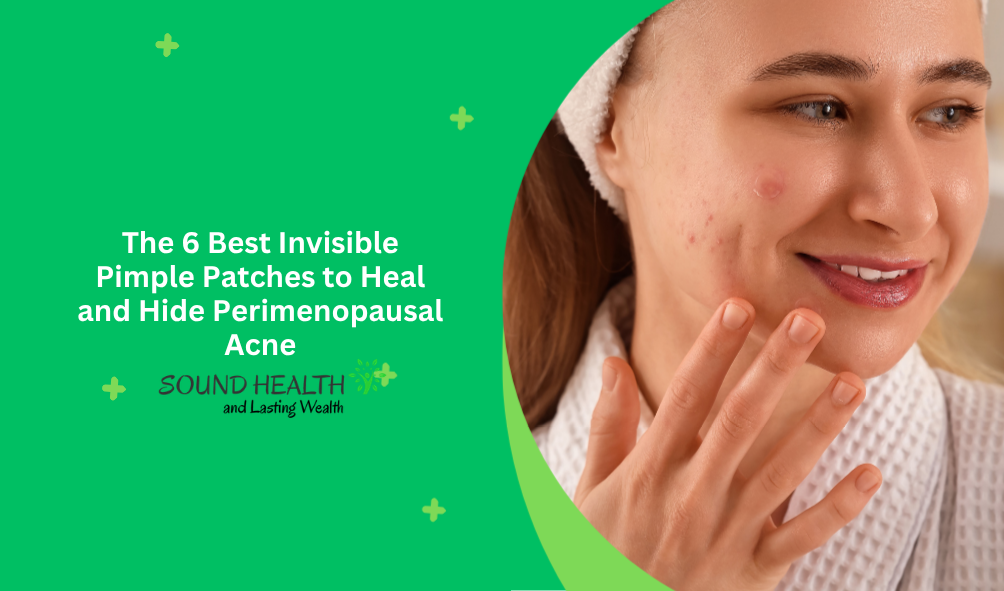

Breaking out in your 40s or 50s can feel deeply unfair, especially when you thought your acne days ended decades ago. Yet perimenopausal acne is common, driven by the same hormonal shifts behind so many midlife changes, and it tends to show up as tender, stubborn spots along the jawline and chin. When a blemish does appear, an invisible pimple patch can be a genuinely useful little tool: it can help heal a surface spot faster, stop you from picking, and quietly hide the blemish under makeup or even bare skin.
Here is the honest part, though, which most roundups skip. Pimple patches work best on surface pimples that have come to a head, while perimenopausal acne is often deeper and more cystic, where patches help far less. So think of them as excellent spot managers and camouflage, not a cure for hormonal acne. With that realistic framing, here are six of the best invisible pimple patches, what each does well, and what actually treats the underlying breakouts.

Key Takeaways
- Perimenopausal acne is hormonal, caused by falling estrogen relative to androgens, and typically appears as deeper spots along the jawline and chin.
- Invisible pimple patches are thin, matte hydrocolloid stickers that heal surface pimples, protect against picking, and blend in under makeup.
- Patches work best on pimples with a visible head, so they help less with the deep, cystic spots common in perimenopause.
- Medicated and microdart patches can help with early, tender bumps, but no patch treats the hormonal cause.
- The real fix for perimenopausal acne is a gentle, consistent routine and, often, prescription treatment from a dermatologist.
- See a dermatologist for persistent, painful, cystic, or scarring acne, or if you are unsure whether it is acne at all.
Why perimenopausal acne happens, and why it’s different
Perimenopausal acne is a type of adult hormonal acne. As you approach menopause, estrogen levels decline while testosterone and other androgens stay relatively higher, and that shift stimulates your oil glands to produce more sebum. The excess oil, combined with slower skin cell turnover, clogs pores and triggers breakouts, sometimes for the first time ever, even in women who had clear skin as teenagers.
It also tends to look and behave differently from teenage acne. It usually appears on the lower face, along the jawline, chin, and mouth, an area sometimes called the U-zone that is a hallmark of hormonal acne. The spots are often deeper, more cystic, and more painful, they can be slow to heal, and they carry a higher risk of scarring and dark marks because aging skin repairs more slowly. To complicate things, midlife skin is often drier, thinner, and more sensitive from lower estrogen while still producing excess oil, which is exactly why you cannot treat it with the harsh, drying products you might have used as a teen. One more note worth knowing: not every midlife breakout is acne, since conditions like rosacea and perioral dermatitis can look similar, which is another reason a professional opinion helps.
How pimple patches work, and what “invisible” means
Most pimple patches are made of hydrocolloid, a gel-like material originally used in medical wound dressings. Placed over a blemish, it absorbs fluid and pus, flattens the spot, and creates a physical barrier that protects the skin and stops you from picking. As it draws out fluid, a clear patch usually turns opaque white. There are three main types: classic hydrocolloid dots, which are best for surface whiteheads; microdart patches, which have tiny self-dissolving needles that deliver active ingredients a little deeper for early, tender bumps; and active-infused hydrocolloid patches, which add ingredients like salicylic acid, tea tree oil, niacinamide, or retinol.
“Invisible” simply means the patch is designed to be nearly undetectable. The best ones are ultra-thin, with tapered edges and a matte finish that blends into the skin and disappears under makeup and in bright light. It is worth steering clear of thick, domed, glossy dots, which tend to lift at the edges, catch the light, and collect lint, exactly what you do not want if you are wearing one through the day.
The honest part: patches heal and hide spots, they don’t cure hormonal acne
This is the most important thing to understand before you buy. Hydrocolloid patches work best on pimples that have come to a head, meaning you can see the white fluid trapped inside. On those surface spots, they are genuinely effective and fast. The trouble is that perimenopausal acne is frequently deep and cystic, and these blemishes often never come to a head, so a plain patch has little fluid to draw out and does much less. In fact, the brand behind one of the most popular patches openly advises that if you have cystic acne, you should see a dermatologist.
That does not make patches useless for perimenopausal skin, far from it. Medicated and microdart patches can help calm and shrink early, tender bumps before they fully surface, and any patch can protect a spot from picking, which reduces the risk of scarring and post-inflammatory dark marks that midlife skin is prone to. And invisible patches are excellent for simply hiding a blemish while it heals. The key is to use them for what they do well, which is managing and camouflaging individual spots, while treating the underlying hormonal acne separately. Dermatologists themselves often recommend patches as a helpful add-on rather than a standalone fix.
The 6 best invisible pimple patches for perimenopausal acne
The picks below are well-regarded invisible or near-invisible options, each with a different strength. Prices are approximate at the time of writing, so check current pricing before buying.
1. Hero Cosmetics Mighty Patch Invisible+ (best overall invisible)
These are a standout for daytime wear: ultra-thin with tapered, matte edges that blend seamlessly into the skin, made from medical-grade, allergy-tested hydrocolloid that suits sensitive skin. They turn opaque as they absorb fluid, usually within about six hours, and they hold up well under makeup. Often priced around 10 to 15 dollars for a pack, they are a reliable everyday choice for surface spots.
2. COSRX Clear Fit Master Patch (best value)
COSRX’s hydrocolloid patches are a longtime favorite for their staying power and value, with a thin, blend-in fit that works overnight or through the day. They come in multiple sizes to match different spots and are frequently praised for how much they draw out of a surface pimple, all at a budget-friendly price.
3. ZitSticka Hyperfade (best for early, under-the-skin bumps)
For those deep, tender spots you can feel coming before they surface, a microdart patch is the better tool, and ZitSticka Hyperfade is a leading invisible option. Its tiny self-dissolving microdarts deliver soothing, clarifying actives a little deeper, while the patch stays discreet on the skin. These are pricier per patch but useful for the early-stage bumps common in perimenopause.
4. Rael Miracle Invisible Spot Cover (best medicated)
Rael’s invisible patches are infused with active ingredients such as salicylic acid, and some versions include additional soothing and clarifying ingredients, giving them a bit more treatment power than plain hydrocolloid while remaining thin and discreet. They are worn for around four to six hours and are a favorite among some dermatologists for hormonal, breakout-prone skin.
5. Peace Out Acne Healing Dots (best with salicylic acid)
These translucent dots pair hydrocolloid with salicylic acid to help clear the pore while absorbing fluid, making them a good pick when you feel a surface spot budding. They are thin enough to wear discreetly and are widely recommended for early and surface blemishes.
6. Nexcare Acne Absorbing Covers (best for sensitive skin and budget)
Made by 3M, these are a simple, affordable, 100 percent hydrocolloid option in a large count, with thin, translucent coverage that suits sensitive skin. One thing to note, per the brand, is not to combine them with other acne treatments applied to the same spot. They are a no-frills, gentle, cost-effective choice.
How to get the most from a pimple patch
A patch only works well if you use it correctly:
- Start with clean, dry skin, since the adhesive will not grip damp areas or work well over serums and creams.
- Apply it to a surface pimple, ideally one that has come to a head, and leave it on for at least six hours or overnight, or four to six hours for daytime and medicated patches.
- Use one patch per spot, and replace it once it turns opaque and has done its job.
- Resist the urge to squeeze or pop the pimple first, which can worsen inflammation and scarring.
- Do not layer a plain patch over strong active treatments on the same spot unless the product is designed for it, and avoid broken skin.
What actually treats perimenopausal acne
Because patches manage spots rather than the cause, lasting improvement comes from a proper routine and, often, professional help. Dermatologists generally recommend a gentle, consistent approach suited to more mature skin, using proven ingredients like retinoids or retinol to boost cell turnover, salicylic acid, azelaic acid, and benzoyl peroxide, along with a non-comedogenic moisturizer and daily sunscreen, since these treatments can increase sun sensitivity. The emphasis is on being gentle, not harshly drying, because over-stripping thin midlife skin tends to backfire.
For stubborn or clearly hormonal acne, prescription options are often the most effective. These can include androgen-blocking medication such as spironolactone, a combined oral contraceptive, or in some cases hormone therapy, which may help acne while addressing other perimenopausal symptoms, though some formulations can occasionally trigger breakouts. A dermatologist can also prescribe stronger treatments when needed and confirm that what you are treating is actually acne. Within this bigger plan, pimple patches are a handy adjunct, not the foundation.
What to avoid
- Do not rely on pimple patches to clear deep, cystic, or hormonal acne, since they mainly help surface spots.
- Do not treat midlife acne like teenage acne with harsh, drying products, which can damage a thinner, more sensitive skin barrier.
- Do not squeeze or pick at spots, which raises the risk of scarring and dark marks that aging skin heals slowly.
- Do not overuse strong actives on delicate skin, and introduce new treatments gradually.
- Do not ignore persistent, painful, cystic, or scarring acne, and remember that not all breakouts are acne, so get an accurate diagnosis if you are unsure.
When to see a dermatologist
Consider seeing a dermatologist if your acne is persistent, painful, cystic, or leaving scars or dark marks, if over-the-counter products are not helping, or if your breakouts are affecting your confidence. A professional is also the right call if you want to explore prescription or hormonal treatment, or if you are not sure whether your skin issue is acne or something that looks similar, like rosacea or perioral dermatitis. Perimenopausal acne is very treatable with the right plan, so there is no need to simply put up with it.
The bottom line
Perimenopausal acne is a common, hormonally driven nuisance that tends to strike the jawline and chin with deeper, stubborn spots, and it deserves gentler care than teenage breakouts. Invisible pimple patches are a smart tool within that care: they heal and hide surface pimples, protect against picking and scarring, and let you get on with your day without a red spot on show. Good options range from the reliably invisible Hero Mighty Patch Invisible+ and value-friendly COSRX to microdart and medicated choices for early or tougher bumps.
Just keep your expectations realistic. Patches are excellent for individual surface spots, but they will not clear deep cystic acne or address the hormones behind it. For that, build a consistent, skin-barrier-friendly routine and see a dermatologist if breakouts persist, so you can treat the cause while your patches quietly handle the spots.
Also Read | Pelvic Organ Prolapse: 7 Important Things Every Woman Should Know