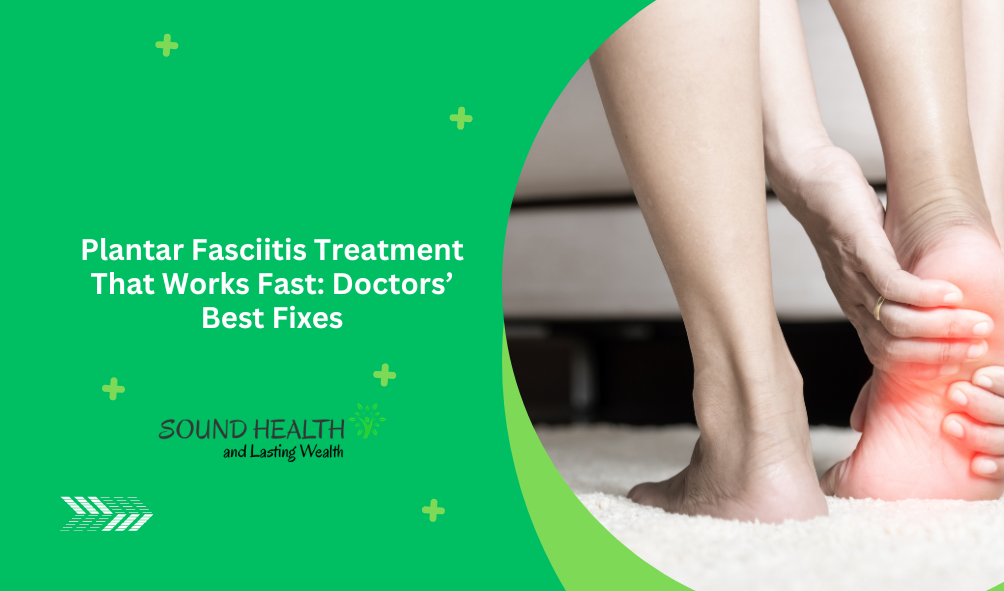

Heel pain can stop your morning in its tracks, but plantar fasciitis often responds well to a few simple, targeted steps. The fastest relief usually comes from a combination of stretching, supportive footwear, and a splint that keeps the foot from tightening overnight.

What is plantar fasciitis?
Plantar fasciitis is irritation or inflammation of the plantar fascia, the thick band of tissue that runs along the bottom of the foot from the heel to the toes. When that tissue gets overloaded, it can cause sharp heel pain, especially with the first steps in the morning or after sitting for a while. In practical terms, it is often the body’s way of telling you that the arch and heel are under too much strain.
Best at-home plantar fasciitis treatment options
The most effective at-home approach is to reduce tension on the fascia while calming inflammation. Doctors commonly recommend a mix of stretching, splinting, anti-inflammatory care, and better footwear because these measures address the problem from different angles.
Stretch the plantar fascia
A plantar fascia stretch can help ease that painful first-step feeling by loosening the tissue before you stand up. A simple version is to sit up in bed, straighten the leg, pull the toes gently back toward you, and hold the stretch for about 20 to 30 seconds, repeating it a few times. One useful example is doing this before your feet touch the floor in the morning, which may make the first steps of the day feel less stabbing and more manageable.
Slip on a splint
Night splints keep the foot in a gently flexed position so the fascia does not tighten overnight. Some clinicians also use an Equinus-style splint for a short daily session, with one expert noting it may be worn for about an hour a day. For people whose pain is worst in the morning, this can be a meaningful way to stop the cycle of overnight tightening and daytime pain.
Try an NSAID
Nonsteroidal anti-inflammatory drugs, or NSAIDs, such as ibuprofen are commonly used for short-term pain relief and inflammation control. They do not fix the underlying mechanical issue, but they can make walking and stretching more tolerable while the tissue calms down. They work best as part of a broader plan rather than as the only treatment.
Sip anti-inflammatory tea
Anti-inflammatory tea is a comfort-focused add-on, not a stand-alone cure. It may help some people feel better as part of an overall routine that also includes stretching, rest, and supportive shoes. Think of it as a gentle extra, not the main event, because the real progress usually comes from reducing stress on the fascia itself.
The 2 best types of shoes for plantar fasciitis
Footwear matters because every step either reduces strain or keeps feeding it. The best shoes usually combine real arch support, a cushioned but not overly soft sole, and a firm heel counter that does not collapse easily. That mix helps protect the arch while giving the heel a more stable base.
Best shoes for plantar fasciitis when you’re in the house
Indoor footwear should still offer support, even if you are only walking around at home. A supportive recovery shoe, cushioned slipper with a firm sole, or an indoor sandal with arch support can reduce the strain that barefoot walking puts on the fascia. A common mistake is going barefoot on hard floors, which can keep irritating the heel even when you are trying to rest it.
Best shoes for plantar fasciitis when you head outside
For outdoors, look for walking or running shoes with strong arch support, structured heel support, and enough cushioning to absorb impact without feeling mushy. Doctors cited by one recent review favored models such as ASICS Gel Kayano, Hoka Bondi, and Brooks Adrenaline for this kind of support profile. If you spend a lot of time on your feet, choosing the right pair can make the difference between temporary relief and a full flare-up.
The bottom line about speedy plantar fasciitis treatment
The fastest plantar fasciitis relief usually comes from stacking the right habits instead of relying on one trick. Stretch early, support the foot with better shoes, consider a splint for overnight tightness, and use short-term anti-inflammatories when appropriate. In one expert-reviewed article, plantar fascia tightness and calf tightness were linked to a large share of cases, which is why doctors focus so heavily on stretching and support rather than just masking pain.
Also Read | Stress Incontinence Solutions: How to Stop Bladder Leaks Today