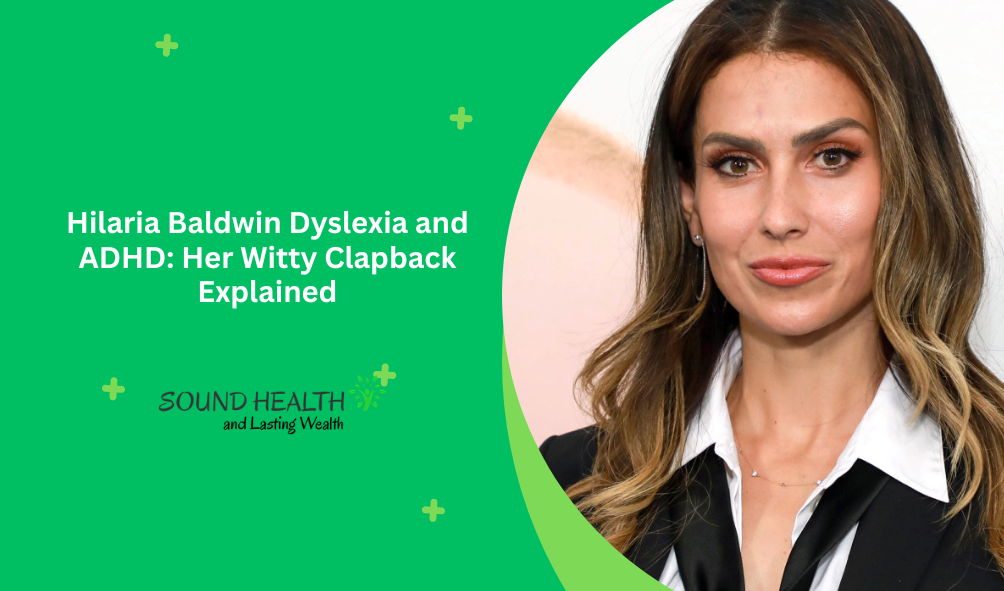

Sometimes the best response to a mean comment is a good laugh. That is exactly what Hilaria Baldwin delivered when an online troll tried to insult her, and her clever comeback quickly went viral. The moment has put a spotlight on Hilaria Baldwin’s dyslexia and ADHD, and on the millions of people who navigate the world with these very common learning and attention differences.
When a critic called Baldwin “vacuous,” a word meaning empty or lacking substance, she turned the insult on its head. She joked that it took her about a minute and a half just to read the word, then shared that her dyslexia and ADHD read it as “vivacious” instead, a word that means lively and full of energy.
It was funny, self-aware, and quietly powerful. Behind the humor is an important conversation about what dyslexia and ADHD really are, how often they occur together, and how people can thrive with the right understanding and support. Let’s break it down.

Key Takeaways
- Hilaria Baldwin responded to an online troll with humor, joking that her dyslexia and ADHD read “vacuous” as “vivacious.”
- She has been open about being neurodivergent, sharing her dyslexia and ADHD diagnoses in her 2025 book.
- Dyslexia is a common learning difference that mainly affects reading, spelling, and language processing.
- ADHD is a neurodevelopmental condition involving inattention, hyperactivity, and impulsivity.
- The two conditions often overlap, with research suggesting a co-occurrence rate of roughly 25 to 50 percent.
- With the right strategies and support, people with dyslexia and ADHD can and do thrive.
Also Read | Jeana Keough Tongue Cancer: Her Painful Battle and What to Know
What Happened: The Viral Clapback
Hilaria Baldwin, a yoga and wellness instructor, author, and wife of actor Alec Baldwin, is no stranger to online criticism. But her recent response to a troll struck a chord with fans for its wit and honesty.
After someone commented that she was “vacuous,” Baldwin, 42, decided to have a little fun with it. In a lighthearted post, she admitted the word stumped her at first, saying it took her a solid minute and a half to read. She then looked up the definition and shared it with her followers, explaining that vacuous describes something empty or lacking in thought or substance.
Rather than getting upset, she flipped the script. In her caption, she joked that you sometimes have to do a Google search before you can even be offended by a hate comment, adding that her dyslexia and ADHD read the word as “vivacious” anyway.
The response was widely praised as a smart, confident way to handle negativity. It also gave her a chance to normalize talking about neurodivergence in a relatable, humorous way.
Hilaria Baldwin and Her Neurodivergence
Baldwin has spoken openly about being neurodivergent, particularly in her 2025 book, Manual Not Included. In it, she shared that she has ADHD and dyslexia, and described how having a brain that works differently has shaped her life.
She has explained that her diagnoses affect areas such as her speech, reading, listening, focus, memory, and self-confidence. For Baldwin, these are not excuses but part of understanding how she experiences the world.
Her openness has sparked discussion. Some fans have applauded her for raising awareness, while some critics have been skeptical of how she has connected her neurodivergence to past controversies. Regardless of where people land, her willingness to talk about dyslexia and ADHD has helped bring these often misunderstood conditions into the public conversation, and that visibility can help others feel seen.
Also Read | Teen Anxiety Warning Signs in 2026 Every Parent Needs to Know
What Is Dyslexia?
Dyslexia is one of the most common learning differences in the world. According to the International Dyslexia Association, it is a specific learning difficulty that is neurological in origin and mainly affects the skills involved in accurate and fluent reading and spelling.
Importantly, dyslexia has nothing to do with intelligence or effort. Many people with dyslexia are highly intelligent, creative, and successful. Their brains simply process written language differently.
Common Signs of Dyslexia
Dyslexia can look different from person to person, but common signs include:
- Difficulty reading quickly or accurately
- Trouble sounding out or decoding words
- Challenges with spelling
- Mixing up the order of letters or sounds
- Taking longer to process written information
- Difficulty with reading comprehension despite strong understanding when hearing information
Baldwin’s comment about needing extra time to read a single word is a relatable example of how dyslexia can affect everyday reading tasks.
What Is ADHD?
Attention-deficit/hyperactivity disorder, or ADHD, is a neurodevelopmental condition. According to health authorities like the CDC and the National Institute of Mental Health, it involves ongoing patterns of inattention, hyperactivity, and impulsivity that can affect daily life.
ADHD is not a matter of laziness or lack of willpower. It reflects real differences in how the brain regulates attention and activity.
Common Signs of ADHD
ADHD symptoms generally fall into two groups:
Inattention:
- Difficulty focusing or staying on task
- Being easily distracted
- Forgetfulness
- Trouble with organization
- Losing track of details
Hyperactivity and impulsivity:
- Restlessness or fidgeting
- Difficulty sitting still
- Interrupting or blurting out
- Acting without thinking
Not everyone experiences ADHD the same way. Some people are mostly inattentive, some are mostly hyperactive, and many have a combination.
Why Dyslexia and ADHD Often Overlap
Here is something many people do not realize: dyslexia and ADHD frequently occur together. Baldwin having both is far from unusual.
Research suggests that these two conditions co-occur in roughly 25 to 50 percent of cases, depending on the study. Some findings indicate that having ADHD significantly increases the likelihood of also having dyslexia.
Why the strong connection? Recent research points to shared genetic factors rather than one condition causing the other. Both conditions also share some overlapping traits, such as:
- Difficulty with focus and attention
- Working memory challenges
- Slower information processing
- Forgetfulness or disorganization
- Lower self-confidence from years of struggle
Because the symptoms can overlap, one condition is sometimes diagnosed while the other goes unnoticed. That is why experts recommend thorough evaluations that consider both.
Also Read | Prediabetes Can Double The Risk Of Having Heart Disease: Ways To Control The Outcome
What Experts Say
Trusted organizations and researchers offer clear, encouraging insights:
- The International Dyslexia Association stresses that dyslexia is neurological and unrelated to intelligence, and that early identification and support make a big difference.
- CHADD, a leading ADHD organization, notes that ADHD often co-occurs with learning disorders like dyslexia, and that recognizing both is key to effective support.
- The CDC describes ADHD as one of the most common neurodevelopmental disorders, often continuing into adulthood.
- Peer-reviewed research suggests that the overlap between dyslexia and ADHD is largely explained by shared genetic risk, not by one condition triggering the other.
The consistent expert message is hopeful: these are common, well-understood conditions, and with the right tools, people who have them can flourish.
Signs in Adults and Late Diagnosis
Many people are not diagnosed with dyslexia or ADHD until adulthood. Some, like many public figures, only fully understand their brains later in life.
This is especially common in women and girls, whose symptoms are sometimes overlooked. Instead of obvious hyperactivity, their struggles may show up as mental fatigue, anxiety, perfectionism, or quietly working twice as hard to keep up. As a result, they may be praised for coping while the underlying challenge goes unrecognized.
Signs that an adult might benefit from an evaluation include:
- Lifelong difficulty with reading, spelling, or focus
- Chronic disorganization or forgetfulness
- Trouble managing time or completing tasks
- Avoiding reading-heavy activities
- A history of feeling misunderstood or “not living up to potential”
A diagnosis in adulthood can be a relief. It offers an explanation, opens the door to support, and often boosts self-understanding and confidence.
Living Well With Dyslexia and ADHD
The good news is that both conditions are highly manageable, and many people turn their differences into strengths. Support strategies may include:
For Dyslexia
- Structured, specialized reading instruction
- Audiobooks and text-to-speech tools
- Extra time for reading tasks
- Assistive technology like speech-to-text
- Breaking information into smaller chunks
For ADHD
- Organizational tools, planners, and reminders
- Breaking tasks into manageable steps
- Routines and consistent structure
- Behavioral strategies and coaching
- Medication when recommended by a doctor
For Both
- Working with qualified professionals for evaluation and support
- Self-compassion and patience
- Focusing on strengths, such as creativity and problem-solving
- Building supportive environments at home, school, or work
Many people with dyslexia and ADHD are entrepreneurs, artists, athletes, and leaders. Their brains often bring fresh perspectives, big-picture thinking, and remarkable creativity.
When to Seek an Evaluation
If reading, focus, or organization challenges are affecting daily life, school, or work, consider speaking with a doctor, psychologist, or learning specialist. A professional evaluation can identify what is going on and point toward the right support.
Also Read | Jada Pinkett Smith on the Slap, Alopecia and Will: The Full Timeline
Turning Insults Into Awareness
Baldwin’s clapback did more than shut down a troll. It gently reminded people that words meant to hurt often say more about the sender than the target.
Online cruelty is a real problem, and public figures face a steady stream of it. Responding with humor, as Baldwin did, is one way to take back power. It also models something valuable: you can acknowledge a challenge, like taking longer to read a word, while refusing to feel ashamed of it.
Whether or not you follow celebrity news, there is a takeaway here for everyone. Neurodivergence is common, it is nothing to hide, and a little understanding goes a long way. When someone turns a moment of criticism into a moment of connection and education, that is a win worth celebrating.
Myth vs Fact
| Myth | Fact |
|---|---|
| Dyslexia means low intelligence. | Dyslexia is unrelated to intelligence; many people with it are highly capable. |
| ADHD is just an excuse for being lazy. | ADHD is a real neurodevelopmental condition affecting attention regulation. |
| You outgrow ADHD in childhood. | ADHD often continues into adulthood. |
| Dyslexia only affects children. | It is lifelong, though strategies can greatly reduce its impact. |
| You cannot have both dyslexia and ADHD. | The two frequently co-occur, in roughly 25 to 50 percent of cases. |
| Struggling to read means you are not trying. | Reading difficulty in dyslexia is neurological, not a lack of effort. |
Quick Summary Table
| Category | Key Points |
|---|---|
| Dyslexia | A neurological learning difference affecting reading and spelling |
| ADHD | A neurodevelopmental condition of inattention, hyperactivity, impulsivity |
| Overlap | The two co-occur often, likely due to shared genetic factors |
| Common Signs | Reading trouble, focus challenges, disorganization, forgetfulness |
| Support | Specialized instruction, tools, routines, coaching, and sometimes medication |
| When to Seek Help | When learning or focus difficulties affect daily life |
Also Read | Vasculitis Nose Collapse: One Woman’s Brave Story and What It Teaches Us
Frequently Asked Questions
1. What did Hilaria Baldwin say to the troll?
After a commenter called her “vacuous,” she joked that it took her about a minute and a half to read the word and that her dyslexia and ADHD read it as “vivacious” instead.
2. Does Hilaria Baldwin really have dyslexia and ADHD?
Yes. She has publicly shared both diagnoses, including in her 2025 book, and has spoken about being neurodivergent.
3. What is dyslexia?
Dyslexia is a common, neurological learning difference that mainly affects reading, spelling, and language processing. It is not related to intelligence.
4. What is ADHD?
ADHD is a neurodevelopmental condition involving ongoing inattention, hyperactivity, and impulsivity that can affect everyday functioning.
5. Can you have both dyslexia and ADHD?
Yes. The two conditions often co-occur, with research suggesting an overlap of roughly 25 to 50 percent.
6. Why do dyslexia and ADHD overlap so often?
Research suggests shared genetic factors largely explain the overlap, rather than one condition causing the other.
7. Can adults be diagnosed with dyslexia or ADHD?
Absolutely. Many people, especially women, are diagnosed in adulthood after years of unexplained challenges.
Why This Story Matters
A single funny comeback managed to do something meaningful: it turned an insult into a teachable moment. By speaking openly about her dyslexia and ADHD, Hilaria Baldwin helped remind millions of people that learning and attention differences are common, valid, and nothing to be ashamed of.
For anyone who has ever felt slow, scattered, or misunderstood, her message lands with warmth and humor. Your brain working differently does not make you less. Sometimes, it just means you read “vacuous” as “vivacious,” and honestly, that is a better word anyway.
A Note on Support
If you think you or your child may have dyslexia, ADHD, or both, know that help is available and effective. A doctor, psychologist, or learning specialist can provide an evaluation and connect you with the right support. This article is for general education and is not a substitute for professional advice.
Also Read | What Is a Dangerous A1C Level? Warning Signs to Know