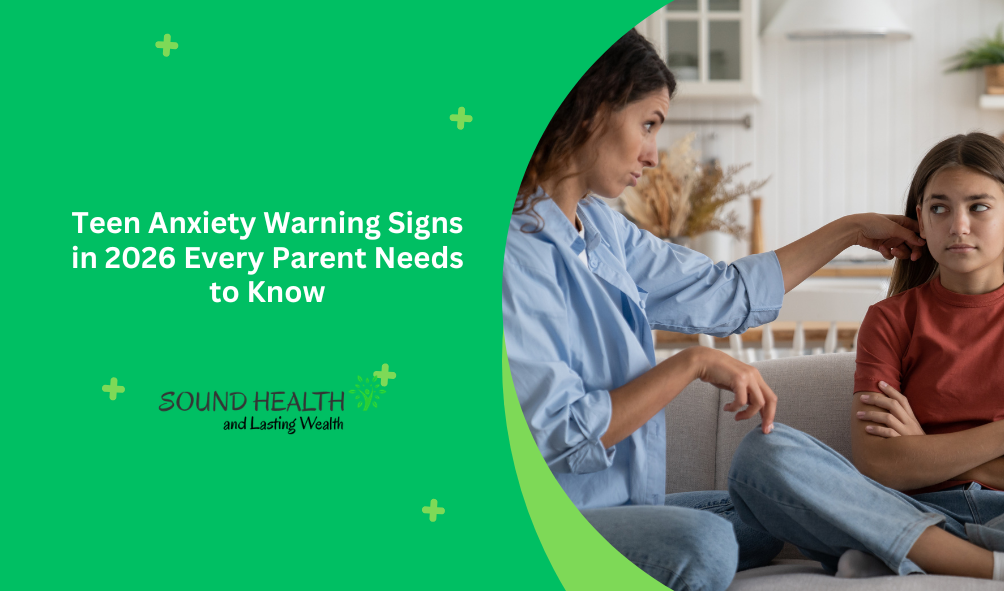
A 15-year-old refuses to go to school three Mondays in a row. She says her stomach hurts. The pediatrician finds nothing wrong. Her grades are dropping, she has quit soccer, and she spends most evenings alone in her room scrolling on her phone.
Her parents assume it is normal teenage behavior. In many cases, it is not.
According to the National Institute of Mental Health (NIMH), roughly 31.9% of adolescents aged 13 to 18 in the United States will experience an anxiety disorder at some point during those years (NIMH, n.d.). The World Health Organization estimates that about 14% of all 10- to 19-year-olds worldwide live with a mental health condition, with anxiety and depression ranking among the most common causes of illness and disability for this age group (World Health Organization, 2025).
And the numbers keep rising. A 2025 analysis published in JAMA Pediatrics found that the percentage of U.S. children and adolescents experiencing diagnosed anxiety jumped from 7.1% in 2016 to 10.6% in 2022 (Heffernan et al., 2025). A separate cohort study in JAMA Network Open of approximately 1.7 million individuals aged 5 to 22 showed that clinically diagnosed anxiety increased by 31% between 2017 and 2021 (Xiang et al., 2024).
Those are not abstract figures. They represent real teenagers sitting in real classrooms, struggling with fears that most adults around them do not recognize.
This article will walk you through the seven signs that your teen may be struggling with anxiety in 2026, explain how those signs differ from ordinary adolescent stress, and outline what you can actually do about it.

What Is Teen Anxiety, and Why Is It Different From Normal Worry?
Every teenager worries sometimes. Stress before a big exam, nervousness before a first date, or jitters about starting at a new school are all ordinary experiences.
Anxiety crosses into disorder territory when the worry becomes constant, difficult to control, out of proportion to the actual situation, and severe enough to get in the way of daily life (NIMH, n.d.). A teen who feels mildly nervous before a presentation is experiencing a normal stress response. A teen who cannot sleep for a week before the presentation, refuses to eat breakfast on the day, and ultimately stays home is showing signs of something more serious.
The adolescent brain is still developing, particularly in the prefrontal cortex, the region tied to decision-making, emotional regulation, and risk assessment. Academic pressure, social media, identity formation, and peer relationships all put additional strain on a system that is not yet fully equipped to process intense emotion (World Health Organization, 2025).
Types of anxiety disorders commonly diagnosed in teenagers include generalized anxiety disorder (GAD), social anxiety disorder, panic disorder, separation anxiety, and specific phobias (NIMH, n.d.). These conditions frequently overlap, and a teen may meet criteria for more than one at the same time.
Also Read | Can Stress Raise Cholesterol? What Studies Actually Found
7 Signs Your Teen May Be Struggling With Anxiety in 2026
Sign 1: Persistent Physical Complaints With No Medical Explanation
Anxiety is not just a mental experience. It triggers real physical responses. Teenagers with anxiety frequently report headaches, stomachaches, nausea, chest tightness, muscle tension, dizziness, and a racing heart (Child Mind Institute, 2025).
What makes this tricky is that the symptoms are genuine. The stomachache is real. The headache is real. But when a pediatrician runs tests and finds no underlying illness, anxiety is often the missing explanation.
Look for a pattern. If your teen regularly complains of physical symptoms before specific events (school, social gatherings, tests) and the complaints ease when the event is avoided, that sequence often points toward anxiety rather than a medical condition.
The CDC’s 2025 data on children’s mental health confirms that physical complaints remain one of the most overlooked signs of anxiety in young people, partly because parents and even doctors tend to treat the symptom rather than investigate the emotional cause (Centers for Disease Control and Prevention, 2025).
Sign 2: Withdrawal From Friends, Activities, and Things They Used to Enjoy
A teen who suddenly drops out of a sports team, stops spending time with close friends, or shows no interest in hobbies they once loved may be avoiding situations that trigger anxiety.
This sign gets misread more than almost any other. Parents often chalk it up to changing interests or assume their teen is just being “moody.” But when a teenager who thrived on the basketball court now refuses to attend practice, or a previously social kid starts eating lunch alone, there is usually something deeper going on.
Social anxiety disorder, which affects an estimated 9.1% of U.S. adolescents aged 13 to 18, often shows up exactly this way (NIMH, n.d.). The fear of being judged, embarrassed, or negatively evaluated becomes so intense that avoidance feels like the only safe option.
Watch especially for a narrowing circle. If your teen’s world is getting smaller month by month, that shrinkage may be driven by anxiety rather than preference.
Sign 3: Sudden Changes in Academic Performance
Anxiety and concentration do not coexist well. A teen whose grades have dropped noticeably, who cannot finish assignments on time, who “blanks” during exams, or who has started skipping school may be dealing with anxiety that is eating into their cognitive bandwidth.
In national surveys, 83% of U.S. teenagers have cited school and academic pressure as a significant source of stress (American Psychological Association, 2024). Test anxiety, perfectionism, and fear of failure can all paralyze a student who is otherwise capable.
Procrastination is another clue. A teen who puts off work until the last minute is not always lazy. In many cases, they are avoiding the discomfort that the task triggers. The avoidance temporarily reduces the anxious feeling, which makes it harder to break the cycle.
School refusal deserves special attention. Anxiety is now the most common reason teens seek school counseling services in 2026, surpassing depression (CDC, 2025). If your teenager is regularly asking to stay home from school, especially with vague complaints like “I just can’t go today,” anxiety should be considered.
Sign 4: Irritability, Anger, and Emotional Outbursts
Here is something many parents do not expect: anxiety in teenagers often looks like anger, not fear.
An anxious teen may snap at a parent over a small request, slam a door when asked about homework, or have an emotional meltdown over something that seems minor. The underlying mechanism is that the teen’s nervous system is already running on high alert. Any additional demand, even a small one, can tip them over the edge.
The Child Mind Institute (2025) notes that irritability is among the most common and most misidentified symptoms of anxiety in adolescents. Parents may interpret the anger as defiance or disrespect, which leads to conflict instead of support.
A useful distinction: defiant behavior typically has a goal (the teen wants something or is testing limits). Anxious irritability, by contrast, often seems disproportionate to the situation and is frequently followed by guilt, tears, or withdrawal.
Boys are particularly likely to express anxiety through anger and acting out rather than reporting internal distress. Data from the Substance Abuse and Mental Health Services Administration (SAMHSA) shows that adolescent boys are far more likely to externalize their symptoms, meaning their anxiety gets labeled as a behavioral problem rather than an emotional one (SAMHSA, 2025).
Sign 5: Sleep Problems That Will Not Go Away
Difficulty falling asleep, waking up frequently during the night, vivid nightmares, and exhaustion despite spending enough hours in bed are all closely linked to anxiety in teenagers.
Racing thoughts at bedtime are a hallmark symptom. A teen who lies awake replaying social interactions, worrying about tomorrow’s schedule, or imagining worst-case scenarios is experiencing the cognitive side of anxiety when there are no daytime distractions to mask it.
Poor sleep then makes anxiety worse. Less sleep means reduced emotional regulation, higher cortisol levels, and lower capacity to manage stress the following day. The cycle feeds itself.
The U.S. Surgeon General’s 2023 advisory on social media and youth mental health noted a direct connection between late-night social media use, disrupted sleep, and elevated anxiety and depression in teens (U.S. Surgeon General, 2023). Teenagers who spend more than three hours per day on social media face double the risk of poor mental health outcomes, and much of that screen time happens after midnight.
If your teen is chronically exhausted, struggles to get out of bed, or seems unable to “turn off” at night, anxiety is worth investigating alongside any sleep hygiene concerns.
Sign 6: Perfectionism and Constant Reassurance-Seeking
Not all anxious teens underperform. Some overperform, holding themselves to standards that are impossible to sustain.
A teen who rewrites an essay six times, who breaks down over a 92% because it was not a 100%, who checks and rechecks their phone for responses after sending a text, or who repeatedly asks a parent “Are you sure I did this right?” may be driven by anxiety rather than ambition.
Perfectionism fueled by anxiety looks different from healthy striving. Healthy striving is motivated by internal satisfaction. Anxious perfectionism is motivated by fear of judgment, failure, or rejection. The teen is not chasing excellence; they are running from the feeling that anything less than perfect means they are not good enough.
Reassurance-seeking is a related pattern. The teen asks a question (Is this okay? Will people laugh at me? What if I fail?), receives a reassuring answer, feels momentary relief, and then asks the same question again minutes later. The relief does not stick because the underlying anxiety has not been addressed.
Sign 7: Avoidance of New Situations, People, or Experiences
A certain amount of reluctance about new things is typical for teenagers. But when avoidance becomes a rigid pattern, it usually signals anxiety.
Examples include refusing to attend a party where they will not know everyone, avoiding phone calls or voicemails, declining opportunities like camps or trips because “something might go wrong,” or insisting on the same routines and reacting with distress to any disruption.
This avoidance brings short-term relief but long-term cost. The more a teen avoids something, the scarier that thing becomes in their mind. Over time, their comfort zone shrinks, and the list of “things I cannot do” gets longer.
Most anxiety disorders in young people start between ages 11 and 13, and without treatment, they rarely go away on their own (South Denver Therapy, 2026; NIMH, n.d.). Early recognition of avoidance behavior gives parents a critical window to intervene before the pattern becomes deeply ingrained.
Also Read | Silent Stroke Signs in Women Over 50: From Hiccups to Sudden Headaches
What Causes Anxiety in Teenagers?
There is no single cause. Anxiety in teens results from a mix of biological, psychological, and environmental factors.
Genetics and brain chemistry. Anxiety disorders tend to run in families. A teenager with a parent or sibling who has an anxiety disorder is at higher risk. Differences in brain chemistry and the way the amygdala processes threat signals also play a role (NIMH, n.d.).
Academic and social pressure. The pressure to perform academically has increased in recent years, with college admissions competition, standardized testing, and GPA tracking starting earlier. Social hierarchies, peer relationships, and identity development add additional weight.
Social media. The U.S. Surgeon General has formally warned that teenagers who spend more than three hours daily on social media face double the risk of mental health problems, including anxiety and depression (U.S. Surgeon General, 2023). Up to 95% of teens aged 13 to 17 report using at least one social media platform, and nearly one-third say they use it “almost constantly” (Pew Research Center, 2025).
Pandemic aftereffects. Research from the OECD (2026) and multiple national surveys shows that the rise in youth mental distress started before 2020 but accelerated significantly during and after the COVID-19 pandemic. Rates peaked in 2021 and have not returned to pre-pandemic levels.
Trauma and adverse experiences. Exposure to violence, abuse, family instability, poverty, or discrimination increases the risk of developing anxiety disorders (World Health Organization, 2025).
When Normal Stress Crosses Into a Disorder: A Quick Comparison
| Feature | Normal Teen Stress | Anxiety Disorder |
|---|---|---|
| Duration | Comes and goes around specific events | Persists for weeks or months |
| Intensity | Proportional to the situation | Feels overwhelming and uncontrollable |
| Daily functioning | Mild, temporary disruption | Significant impact on school, friendships, sleep, or home life |
| Response to reassurance | Calms down after support | Relief is brief or absent; worry returns quickly |
| Avoidance | May hesitate but still participates | Refuses or is unable to participate |
| Physical symptoms | Occasional butterflies or tension | Frequent headaches, stomachaches, chest tightness, nausea |
If your teen’s experience lines up more closely with the right column and the pattern has continued for several weeks, a professional evaluation is a reasonable next step.
When to See a Doctor or Mental Health Professional
Parents should consider professional help if their teen’s anxiety:
- Has lasted more than a few weeks and is not improving
- Is causing them to miss school regularly
- Has led to a noticeable drop in grades or withdrawal from friendships
- Is accompanied by persistent physical symptoms with no medical cause
- Is affecting their ability to eat, sleep, or carry out daily tasks
- Involves talk of hopelessness, feeling trapped, or not wanting to be alive
A good starting point is your teen’s pediatrician or family doctor, who can screen for anxiety and refer to a therapist or psychiatrist. Many schools also have counselors trained to identify anxiety in students.
Early intervention matters. Research consistently shows that treatment is more effective when anxiety is caught before patterns of avoidance become deeply established (NIMH, 2024).
Treatment Options That Work
Cognitive Behavioral Therapy (CBT)
CBT is the most widely studied and recommended treatment for anxiety in adolescents. It works by helping teens identify the distorted thoughts that fuel their anxiety and gradually face the situations they have been avoiding (NIMH, 2024; Mayo Clinic, 2022).
A large body of research, including the NIH-funded Child/Adolescent Anxiety Multimodal Study (CAMS), has shown that CBT produces significant improvement in roughly 60% of treated teens (Walkup et al., 2008).
Exposure Therapy
A specific form of CBT, exposure therapy involves gradually and systematically encountering the triggers of anxiety in a safe, controlled setting. Over time, the teen learns that the feared outcome either does not happen or is manageable.
Mayo Clinic notes that exposure therapy typically consists of about 10 weekly sessions and is one of the most effective approaches available for teen anxiety (Mayo Clinic, 2022).
Medication
For moderate to severe anxiety, a doctor may recommend medication in addition to therapy. Selective serotonin reuptake inhibitors (SSRIs) are the most commonly prescribed class for adolescent anxiety. The FDA has approved certain SSRIs for use in children and teenagers, though all carry a black box warning about a small risk of increased suicidal thinking in individuals under 25 (Mayo Clinic, n.d.).
Medication should always follow a thorough evaluation and should be monitored by a qualified healthcare provider.
Combination Treatment
The CAMS study found that the combination of CBT plus sertraline (an SSRI) was more effective than either treatment alone, with roughly 81% of teens in the combination group showing significant improvement (Walkup et al., 2008).
What Parents Can Do at Home
Professional treatment is the most effective path, but parents can also support an anxious teen in practical ways.
- Talk without interrogating. Instead of asking “What’s wrong?” repeatedly, try sitting with your teen during a calm moment and saying something like “I’ve noticed you seem stressed lately. I’m here if you want to talk, and I’m also okay sitting with you if you don’t.” Many anxious teens need to feel safe before they will open up.
- Resist the urge to remove all stress. A common instinct is to help your teen avoid everything that makes them anxious. But avoidance reinforces the anxiety cycle. Instead, support them in facing challenges gradually, with your encouragement behind them.
- Maintain routines. Predictable meal times, consistent bedtimes, and regular family check-ins create structure that reduces the “what’s going to happen next?” feeling that feeds anxiety.
- Limit late-night screen time. Given the evidence linking social media use with anxiety and sleep disruption in teens (U.S. Surgeon General, 2023), setting reasonable boundaries around phone use after a certain hour can make a measurable difference.
- Take care of your own mental health. Parenting an anxious teen is stressful, and your own anxiety response can unintentionally amplify theirs. If you notice yourself becoming increasingly worried or reactive, support for yourself is not selfish. It is practical.
Common Myths vs. Facts About Teen Anxiety
| Myth | Fact |
|---|---|
| Anxiety is just a normal part of being a teenager. | Some worry is normal. An anxiety disorder is a medical condition that requires treatment. |
| Tough love will snap them out of it. | Pressuring an anxious teen to “just get over it” typically increases shame and avoidance. |
| Medication is always the first step. | Therapy, particularly CBT, is the recommended first-line treatment. Medication is added when needed. |
| Only girls get anxiety. | Boys experience anxiety at similar rates but are less likely to report it and more likely to show it through anger or behavioral problems (SAMHSA, 2025). |
| Your teen will outgrow it. | Without treatment, anxiety disorders rarely resolve on their own and may worsen over time (NIMH, n.d.). |
| Anxiety means weakness. | Anxiety is a condition of the brain and nervous system, not a character flaw. |
Frequently Asked Questions
How common is anxiety in teenagers?
The NIMH reports that about 31.9% of U.S. teens aged 13 to 18 experience an anxiety disorder at some point. Globally, the WHO estimates that approximately 4.1% of 10- to 14-year-olds and 5.3% of 15- to 19-year-olds have a diagnosable anxiety disorder (World Health Organization, 2025).
Can anxiety cause physical symptoms in teens?
Yes. Headaches, stomachaches, chest tightness, nausea, dizziness, and racing heart are all well-documented physical manifestations of anxiety in adolescents. These symptoms are not imagined; they are the body’s stress response activating in the absence of a real physical threat.
What is the best therapy for teen anxiety?
Cognitive behavioral therapy (CBT), including exposure therapy, is the gold standard for treating anxiety disorders in children and teenagers, supported by decades of clinical research (NIMH, 2024; Mayo Clinic, 2022).
Can social media cause teen anxiety?
Research has linked heavy social media use with increased anxiety and depression in teens. The U.S. Surgeon General (2023) warned that teens spending more than three hours daily on social media face double the risk of poor mental health outcomes. The relationship is likely bidirectional: anxiety drives more social media use, and more social media use increases anxiety.
When should I be concerned about my teen’s anxiety?
If the anxiety has lasted several weeks, is interfering with school, friendships, sleep, or daily functioning, or is accompanied by persistent physical symptoms with no medical cause, seek a professional evaluation.
How can I talk to my teen about their anxiety?
Choose a calm, low-pressure moment. Avoid leading with criticism or alarm. Simple statements like “I’ve noticed some changes and I want to check in with you” tend to open the door more effectively than direct questioning about what is wrong.
Expert Tips for Parents
- Learn to recognize avoidance. Anxiety does not always look like panic. Often, it looks like a teen quietly removing themselves from situations that trigger discomfort.
- Do not dismiss physical complaints. If your teen’s stomachaches and headaches keep coming back with no medical explanation, take that pattern seriously.
- Know the difference between support and accommodation. Supporting your teen means helping them face challenges. Accommodating their anxiety means helping them avoid challenges. The second feels kind in the moment but strengthens the anxiety over time.
- Start with the pediatrician. If you are unsure whether your teen’s behavior signals anxiety, a visit to their regular doctor is a reasonable first step.
- Remember that treatment works. CBT and, when appropriate, medication are effective for the majority of teens with anxiety disorders. Getting help early makes a significant difference.
Key Takeaways
- About 1 in 3 U.S. teens will experience an anxiety disorder before turning 18, and rates have increased significantly since 2016.
- The seven most common warning signs are unexplained physical symptoms, social withdrawal, academic decline, irritability or anger, sleep problems, perfectionism with reassurance-seeking, and avoidance of new experiences.
- Anxiety in teenagers, especially boys, is frequently misidentified as moodiness, laziness, or defiance.
- Social media use exceeding three hours daily doubles the risk of mental health problems in adolescents.
- CBT (including exposure therapy) is the first-line treatment, and combination treatment (CBT plus medication) shows the highest rates of improvement.
- Early intervention produces better outcomes. If symptoms have lasted several weeks and are affecting daily functioning, schedule a professional evaluation.
Conclusion: Trust What You See
If something about your teenager’s behavior has been bothering you for weeks, pay attention to that instinct. Parents who notice a pattern of avoidance, irritability, physical complaints, and social withdrawal are often right to be concerned.
The research is clear: anxiety disorders in teens are common, they are treatable, and they rarely improve without intervention. A conversation with your teen’s doctor is a small step that can change the course of their adolescent years and the years that follow.
You do not need to diagnose your teenager. You do not need to have all the answers. What you need to do is notice the signs, take them seriously, and connect your teen with someone who can help.
If you found this article useful, share it with another parent who might need it. You can also sign up for our newsletter for more evidence-based health guidance delivered to your inbox.
Also Read | Jeana Keough Tongue Cancer: Her Painful Battle and What to Know
References
Casseus, M. (2025). Anxiety, depression, and behavioural problems among US children and adolescents, 2016–2022. Infant and Child Development, 34(2), e70008. https://doi.org/10.1002/icd.70008
Centers for Disease Control and Prevention. (2025). Data and statistics on children’s mental health. https://www.cdc.gov/children-mental-health/data-research/index.html
Child Mind Institute. (2025). How anxiety affects teenagers. https://childmind.org/article/signs-of-anxiety-in-teenagers/
Heffernan, M., Macy, M., et al. (2025). Youth anxiety and depression increasing. JAMA Pediatrics. https://news.feinberg.northwestern.edu/2025/06/06/youth-anxiety-and-depression-increasing-study-finds/
Mayo Clinic. (2022). Mayo Clinic Q and A: Teen anxiety. https://newsnetwork.mayoclinic.org/discussion/mayo-clinic-q-and-a-teen-anxiety/
Mayo Clinic. (n.d.). Antidepressants for children and teens. https://www.mayoclinic.org/diseases-conditions/teen-depression/in-depth/antidepressants/art-20047502
National Institute of Mental Health. (n.d.). Any anxiety disorder. https://www.nimh.nih.gov/health/statistics/any-anxiety-disorder
National Institute of Mental Health. (2024). Cognitive behavioral therapy alters brain activity in children with anxiety. https://www.nimh.nih.gov/news/science-updates/2024/cognitive-behavioral-therapy-alters-brain-activity-in-children-with-anxiety
OECD. (2026). Trends and patterns in the mental health status of children, adolescents and young people. In Child, adolescent and youth mental health in the 21st century. https://www.oecd.org/en/publications/child-adolescent-and-youth-mental-health-in-the-21st-century_1092c3cb-en.html
Pew Research Center. (2025). Teens, social media and mental health. https://www.pewresearch.org/internet/2025/04/22/teens-social-media-and-mental-health/
U.S. Surgeon General. (2023). Social media and youth mental health: The U.S. Surgeon General’s advisory. U.S. Department of Health and Human Services. https://www.hhs.gov/surgeongeneral/reports-and-publications/youth-mental-health/social-media/index.html
Walkup, J. T., Albano, A. M., Piacentini, J., Birmaher, B., Compton, S. N., Sherrill, J. T., … & Kendall, P. C. (2008). Cognitive behavioral therapy, sertraline, or a combination in childhood anxiety. New England Journal of Medicine, 359(26), 2753–2766. https://doi.org/10.1056/NEJMoa0804633
World Health Organization. (2025). Mental health of adolescents. https://www.who.int/news-room/fact-sheets/detail/adolescent-mental-health
Xiang, A. H., Carter, S., Negriff, S., et al. (2024). Depression and anxiety among US children and young adults. JAMA Network Open, 7(10), e2436906. https://doi.org/10.1001/jamanetworkopen.2024.36906