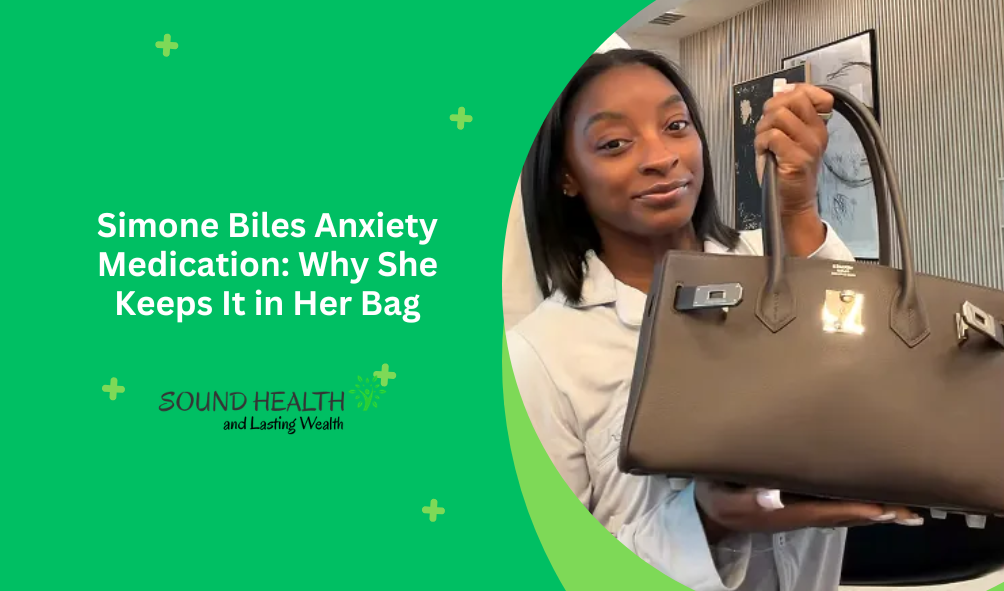
Simone Biles has spent years showing the world that even the greatest athletes are human. This week she did it again. In a candid Instagram video, the seven-time Olympic gold medalist gave fans a peek inside her travel bag and casually revealed something many people quietly relate to: she keeps “emergency” anxiety medication with her when she travels. The Simone Biles anxiety medication moment quickly caught attention, not for drama, but for how normal and honest it felt.
Biles, 29, was showing off the contents of her designer bag after a trip to Singapore when she mentioned the medication, adding that there is “a story behind that.” She kept the details private, but she was clear about why it is there: to help her when nerves hit before or during flights.
Her openness is more than a celebrity headline. It opens the door to an important conversation about anxiety, how it shows up, and the many ways people manage it. This article breaks down what experts say about anxiety, flying nerves, therapy, and treatment, so you can understand the topic clearly and know when to seek support.
:max_bytes(150000):strip_icc():focal(799x0:801x2):format(webp)/Simone-Biles-Shows-Off-Her-Anti-Anxiety-Medication-072726-1-a08da61bfc4e4e32b952832b055fdf03.jpg)
Key Takeaways
- Simone Biles, 29, revealed in a July 2026 Instagram video that she carries “emergency” anxiety medication for travel nerves.
- She has been an outspoken mental health advocate since 2018 and openly uses therapy and medication.
- Anxiety disorders are among the most common mental health conditions, and effective treatment is available.
- Treatment often combines talk therapy, especially cognitive behavioral therapy, with medication and lifestyle strategies.
- For fear of flying, experts often favor therapy-based approaches, with medication as a supportive tool used under a doctor’s guidance.
- Any anxiety medication should be prescribed and monitored by a licensed healthcare provider.
What Simone Biles Revealed
In a video posted to Instagram on Sunday, July 26, 2026, Biles walked fans through what she packs when she travels. She joked that her brown Birkin bag was stuffed to the brim after returning from Singapore, with her husband, Indianapolis Colts safety Jonathan Owens, standing in the background.
She listed everyday items many travelers carry: her passport, an extra phone, a charger, a compact mirror, earplugs, perfume, a foldable phone stand, headphones, sunglasses, a wallet, and even a sweet note a child had given her. Then, among the items, she mentioned her emergency anxiety medication, explaining it is there in case she gets nervous on flights or before flights. She added that there is a story behind it, but chose not to share the details.
That short, matter-of-fact moment resonated with viewers. For someone who has performed under the brightest lights in the world, admitting that flights can bring on nerves is a reminder that anxiety does not discriminate. It can affect anyone, including a decorated Olympian.
Simone Biles and Her Mental Health Journey
Biles has been one of the most influential voices in the mental health conversation for years.
She first spoke publicly about going to therapy and taking anxiety medication back in 2018. Since then, she has continued to share her experiences in a way that helps reduce stigma.
The world saw her advocacy on the biggest stage in 2021, when she withdrew from several events at the Tokyo Olympics after experiencing “the twisties,” a frightening phenomenon where a gymnast loses their sense of where their body is in the air. It can be dangerous, and her decision to protect her safety sparked a global discussion about athlete mental health.
At the 2024 Paris Olympics, Biles was open again. She described moments of intense anxiety, including feeling overwhelmed by attention, and credited therapy with helping her feel calm and ready before competition. She has often reminded her followers that, in her words, mental health matters.
She has also compared taking anxiety medication to using an inhaler for asthma, making the point that mental health care is health care. That framing has helped many fans feel less alone.

What Are “Emergency” Anxiety Medications?
When people talk about “emergency” or situational anxiety medication, they usually mean something taken in the moment to ease sudden, intense anxiety, rather than a daily maintenance medication.
Here is the key point, explained simply and responsibly:
- Daily medications are taken regularly over time to help manage ongoing anxiety. These often take weeks to reach full effect.
- As-needed medications may be prescribed for short-term, situational anxiety, such as before a flight or a stressful event.
Both types are prescription medications. That means a licensed doctor decides whether they are appropriate, chooses the right option, and monitors their use. Some fast-acting medications can carry risks, including drowsiness or dependence, especially if combined with other substances or used often. This is exactly why they should never be shared, borrowed, or self-prescribed.
This article does not recommend specific drugs or doses. If you think medication might help you, the safe and effective path is a conversation with your doctor or a mental health professional.
What Is Anxiety?
Anxiety is your body’s natural response to stress or perceived danger. In small doses, it can be helpful, sharpening focus before a big moment. But when anxiety becomes frequent, intense, or hard to control, it may point to an anxiety disorder.
According to the Cleveland Clinic, anxiety disorders are a group of mental health conditions that cause fear and dread that feel out of proportion to the situation. The National Institute of Mental Health notes they are among the most common mental health conditions, and importantly, they are treatable.
Common Symptoms
Anxiety can show up in the mind and the body. Signs may include:
- Excessive worry that is hard to control
- Restlessness or feeling on edge
- A racing or pounding heart
- Sweating or trembling
- Shortness of breath
- Trouble sleeping
- Difficulty concentrating
- Avoiding situations that trigger fear
Not everyone experiences anxiety the same way, and symptoms can range from mild to severe.
Why Flights Can Trigger Anxiety
Biles pointed to flights as a trigger, and she is far from alone. Fear of flying is common, and it can range from mild nerves to a specific phobia known as aerophobia.
Several factors can make flying stressful:
- A feeling of being unable to control the situation
- Enclosed spaces and crowds
- Turbulence or unfamiliar sensations
- Past negative experiences
- General anxiety that intensifies in high-stress settings
For frequent travelers, especially those in the public eye, the added pressure of attention and busy schedules can make things harder. That context helps explain why a travel bag might include tools for managing nerves.
Treatment Options for Anxiety
Treatment is highly personal, but the main pillars are well established.
Therapy
Talk therapy, especially cognitive behavioral therapy, is one of the most effective tools. CBT helps people identify anxious thought patterns and replace them with healthier responses. For phobias like fear of flying, gradual exposure can retrain the brain’s fear response over time.
Medication
For some people, medication is an important part of the plan. Options generally fall into daily and as-needed categories, and they are always prescribed and monitored by a healthcare provider. Medication is often most effective when paired with therapy.
Lifestyle and Self-Care
Everyday habits can support mental health, including:
- Regular physical activity
- Consistent, quality sleep
- Limiting caffeine and alcohol
- Mindfulness and meditation
- Staying connected to supportive people
When to See a Doctor
Consider reaching out to a professional if anxiety:
- Interferes with work, school, relationships, or daily life
- Causes you to avoid important activities
- Feels overwhelming or hard to control
- Comes with physical symptoms that worry you
Seeking help is a sign of strength, not weakness, a message Biles has championed for years.
Quick Coping Techniques for Anxious Moments
When anxiety spikes, simple grounding tools can help in the moment. Health experts often recommend:
- Box breathing: Inhale for 4 counts, hold for 4, exhale for 4, hold for 4.
- Progressive muscle relaxation: Slowly tense and release muscle groups from head to toe.
- Grounding with your senses: Notice five things you can see, four you can touch, three you can hear, two you can smell, and one you can taste.
- Focus on the physical: Feel your feet on the floor and the seat beneath you.
- Positive self-talk: Remind yourself that the feeling is temporary and will pass.
These techniques will not replace professional care for a disorder, but they can be helpful everyday tools for many people.
Benefits of Speaking Openly About Anxiety
When public figures like Biles share their experiences, real benefits follow:
- Less stigma. Honest conversations make it easier for others to seek help.
- More awareness. People learn that anxiety is common and treatable.
- Stronger connection. Fans feel seen and less alone.
- Encouragement to act. Openness can inspire someone to finally reach out for support.
Research and advocacy groups have long noted that visibility helps normalize mental health care, and Biles has become a powerful example of that.
Risks and Important Cautions
Balance matters, so here are honest cautions:
- Medication is not one-size-fits-all. What works for one person may not suit another.
- Some fast-acting medications carry risks, including drowsiness or dependence, and must be used exactly as prescribed.
- Self-medicating is dangerous. Never take medication that was not prescribed to you.
- Medication alone may not address root causes, which is why therapy is often recommended alongside it.
- Celebrity stories are not medical advice. Biles’ routine works for her and her care team, and yours should be built with your own provider.
Myth vs Fact
| Myth | Fact |
|---|---|
| Anxiety means you are weak. | Anxiety is a common medical condition, not a character flaw. |
| Only certain people get anxiety. | Anyone can experience anxiety, including elite athletes. |
| Medication is the only solution. | Therapy, lifestyle changes, and medication all play a role. |
| Taking anxiety medication is something to hide. | Many people benefit from it, and openness reduces stigma. |
| If you are successful, you cannot have anxiety. | Success and anxiety often coexist, as Biles has shown. |
| Fear of flying cannot be treated. | Therapy-based approaches are effective for flight anxiety. |
Quick Summary Table
| Category | Key Points |
|---|---|
| What Happened | Biles revealed she carries emergency anxiety meds for travel nerves |
| Symptoms of Anxiety | Excessive worry, racing heart, sweating, restlessness, avoidance |
| Common Triggers | Flights, crowds, stress, past experiences, public attention |
| Treatment | Therapy (CBT), medication when appropriate, lifestyle changes |
| Coping Tools | Breathing exercises, grounding, muscle relaxation |
| When to Seek Help | When anxiety disrupts daily life or feels overwhelming |

Frequently Asked Questions
1. What did Simone Biles reveal about anxiety medication?
In a July 2026 Instagram video showing her travel bag, Biles said she carries “emergency” anxiety medication in case she feels nervous before or during flights.
2. Has Simone Biles talked about anxiety before?
Yes. She has been an open mental health advocate since 2018 and has discussed therapy and medication many times, including around the Tokyo and Paris Olympics.
3. What is “emergency” anxiety medication?
It generally refers to as-needed medication taken to ease sudden, intense anxiety, as opposed to daily maintenance medication. It is prescribed and monitored by a doctor.
4. Is it safe to take anxiety medication for flights?
It can be, but only when prescribed and supervised by a healthcare provider. Some medications carry risks, so self-medicating is not safe.
5. What are common signs of anxiety?
Excessive worry, a racing heart, sweating, restlessness, trouble sleeping, and avoiding stressful situations are common signs.
6. How is anxiety treated?
Treatment often combines talk therapy, especially CBT, with medication when needed, plus lifestyle strategies like exercise and better sleep.
7. What helps with fear of flying?
Experts often recommend exposure-based therapy and CBT for long-term help, with medication as a supportive option under a doctor’s guidance.
8. Can anxiety be cured?
Anxiety is highly treatable, and many people manage it well. Some may need ongoing care, while others improve significantly with treatment.
Why This Conversation Matters
Simone Biles did not set out to give a health lecture. She was just showing what is in her bag. But by including her anxiety medication so casually, she reinforced a message she has carried for years: mental health care is normal, and taking care of your mind is just as valid as taking care of your body.
For anyone who has felt nervous before a flight, a presentation, or a big life moment, her honesty is a quiet reassurance. You are not alone, help exists, and there is no shame in using the tools that keep you well.
A Note on Getting Support
Anxiety is a sensitive topic, and everyone’s experience is different. If you are struggling with anxiety, please know that support is available and effective. A good first step is talking with a doctor or a licensed mental health professional. If you or someone you know is in crisis in the United States, you can call or text the 988 Suicide and Crisis Lifeline at 988 for free, confidential support. This article is for general education and is not a substitute for professional medical advice.
Also Read | Patrick Mahomes ACL Injury: What a Career-Long Recovery Really Means