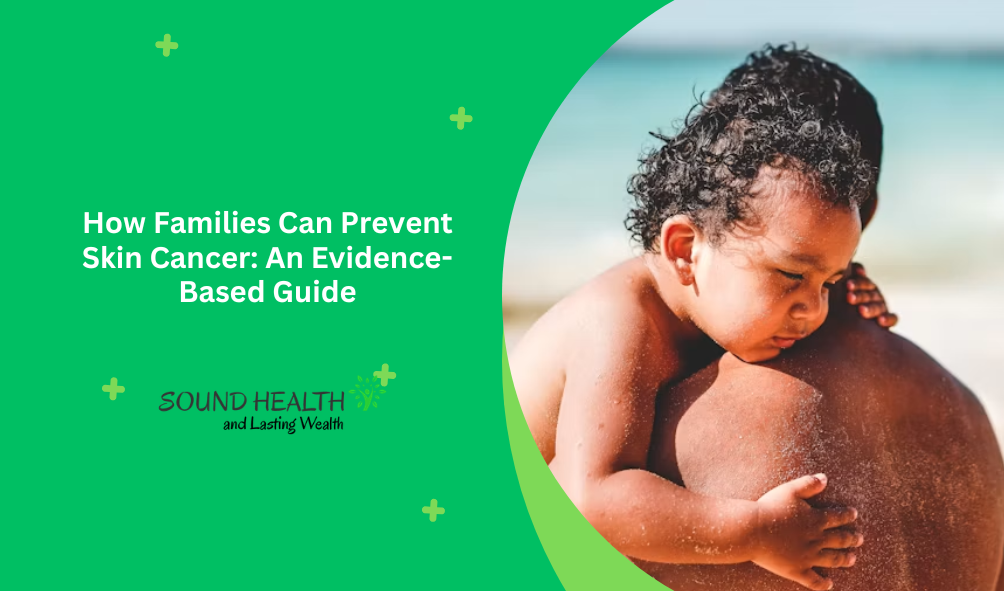
Skin cancer surpasses every other cancer type in the United States. Roughly 9,500 Americans receive a skin cancer diagnosis every single day. About 86% of melanomas are caused by ultraviolet radiation from the sun, and a single blistering sunburn during childhood or adolescence nearly doubles a person’s lifetime risk of developing melanoma. The good news: skin cancer is also one of the most preventable cancers, and the strategies that work are straightforward enough for every family member to follow.

The Numbers Most Families Have Never Heard
Skin cancer is not just common. It is more common than all other cancers combined.
According to the American Cancer Society’s 2026 Cancer Facts & Figures report, an estimated 234,680 new melanoma cases will be diagnosed in the United States this year, a 10.6% increase over last year’s projections. Of those, 112,000 will be invasive, meaning the cancer has penetrated beyond the top layer of skin. An estimated 8,510 Americans will die from melanoma in 2026 (ACS, 2026; AAD, 2026).
And melanoma is only the most dangerous form. It is not the most common. Basal cell carcinoma and squamous cell carcinoma, the two nonmelanoma skin cancers, together account for roughly 5.4 million cases treated annually in the United States. The CDC estimates that approximately 6.1 million adults are treated for these cancers each year, at a cost of about $8.9 billion (CDC, 2025).
The lifetime risk is sobering: 1 in 5 Americans will develop some form of skin cancer by age 70 (Skin Cancer Foundation, 2026).
Yet these numbers do not get the attention they deserve, partly because most nonmelanoma skin cancers are treatable and partly because sunburn is so ordinary that many families treat it as a minor inconvenience rather than a direct cause of cancer.
That gap between what the data shows and what families actually do about it is the problem this article aims to address.
Also Read | Teddi Mellencamp Pauses Treatment After Doctors Missed Melanoma Spread
Why This Is a Family Issue, Not Just an Adult One
Sun protection is often framed as an adult responsibility. But the research makes clear that the stakes are highest during childhood.
- One blistering sunburn in childhood or adolescence nearly doubles a person’s chance of developing melanoma later in life (AAD, 2026; UCSF Benioff Children’s Hospitals, 2023). Five or more sunburns at any age also doubles melanoma risk (Skin Cancer Foundation, 2026).
- Approximately 23% of a person’s total lifetime UV exposure occurs before age 18 (Cornerstone Dermatology, 2024). That means the choices a family makes about sun protection during a child’s first two decades have outsized consequences that stretch into middle age and beyond.
- Children’s skin is thinner and more vulnerable. Young skin produces less melanin, has a less developed outer barrier, and is more susceptible to the DNA damage that UV radiation causes (MedStar Health, 2024; UCSF Benioff, 2023).
The bottom line: skin cancer prevention is not something that starts when you are old enough to worry about wrinkles. It starts in infancy, and the habits a family builds around sun safety are among the most consequential health decisions parents make for their children.
Understanding the Three Main Types of Skin Cancer
Basal Cell Carcinoma (BCC)
BCC is the most common form of skin cancer and the most common cancer of any kind worldwide. It typically appears as a pearly or waxy bump, a flat flesh-colored or brown lesion, or a sore that heals and returns. BCC grows slowly and rarely spreads to other parts of the body, but it can cause significant local tissue damage if left untreated (Skin Cancer Foundation, 2026).
Squamous Cell Carcinoma (SCC)
SCC is the second most common skin cancer. It often appears as a firm red bump, a scaly patch, or a sore that heals and reopens. SCC is more aggressive than BCC and can metastasize (spread to other parts of the body) if not treated early, particularly in immunocompromised individuals.
Melanoma
Melanoma accounts for a smaller share of total skin cancer diagnoses, but it causes the vast majority of skin cancer deaths. It develops in the melanocytes, the cells that produce skin pigment, and can appear as a new dark spot or as a change in an existing mole. When caught before it spreads, the five-year survival rate for melanoma is approximately 99%. Once it has reached distant organs, that rate drops sharply (ACS, 2026).
What Causes Skin Cancer (And How Much Is Preventable)
The primary cause of skin cancer is ultraviolet (UV) radiation, from both sunlight and artificial sources like tanning beds. The Skin Cancer Foundation estimates that approximately 86% of melanomas and 90% of nonmelanoma skin cancers are attributable to UV exposure (Skin Cancer Foundation, 2026).
UV radiation damages the DNA inside skin cells. When this damage accumulates faster than the body can repair it, mutations develop that can lead to uncontrolled cell growth.
Two types of UV rays cause damage:
UVA rays penetrate deep into the skin and are the primary cause of premature aging (wrinkles, sunspots). They also contribute to skin cancer risk. UVA rays pass through window glass.
UVB rays are the primary cause of sunburn and are blocked by window glass. They are more directly linked to DNA damage in the outer skin layers.
Both types contribute to melanoma. Broad-spectrum sunscreen protects against both.
Other Risk Factors
While UV exposure is the biggest modifiable risk factor, other factors also affect skin cancer risk:
- Fair skin, light hair, light eyes, and a tendency to burn rather than tan
- A history of sunburns, especially blistering burns in childhood
- A large number of moles (50 or more) or atypical moles
- Family history of melanoma
- Personal history of skin cancer
- Weakened immune system
- Indoor tanning (any use increases melanoma risk; use before age 35 increases it by 75%)
Also Read | Skin cancer symptoms: Five differences between a normal and cancerous mole
A Family Sun Protection Plan: Age by Age
Infants (Under 6 Months)
Babies under six months should be kept out of direct sunlight entirely. Their skin is too thin and undeveloped to safely handle UV exposure, and the AAD and the FDA recommend avoiding sunscreen at this age because infant skin may not metabolize sunscreen chemicals effectively (AAD, 2026; UCSF Benioff, 2023).
What to do instead:
- Keep babies in shade at all times when outdoors
- Dress them in lightweight, long-sleeved clothing and pants
- Use a wide-brimmed hat that covers the face, ears, and neck
- Use stroller shades, canopies, or umbrellas
- If shade and clothing are insufficient, the AAD allows a small amount of mineral sunscreen (zinc oxide or titanium dioxide) on exposed areas like the hands and face
Children (6 Months to 12 Years)
Once a child is over six months, sunscreen becomes a central tool. The AAD recommends broad-spectrum, water-resistant sunscreen with an SPF of 30 or higher for all children, regardless of skin tone (AAD, 2026; Nemours KidsHealth, n.d.).
Practical guidance:
- Apply sunscreen 15 to 30 minutes before going outside
- Use enough: a golf ball-sized amount for a full body application, or the “teaspoon rule” (one teaspoon per body region)
- Reapply every two hours and immediately after swimming or sweating
- For children with sensory sensitivities, try stick or roll-on formulas instead of lotions
- Avoid spray sunscreens for young children due to inhalation risk; if spray is the only option, spray onto your hands first and then apply to the child’s skin
- Choose mineral sunscreens (zinc oxide, titanium dioxide) for sensitive skin
- Dress children in UPF-rated clothing and wide-brimmed hats
- Use sunglasses with UV protection
Schools, camps, and sports leagues present particular challenges. Pack sunscreen in your child’s bag with clear instructions to reapply, especially before afternoon outdoor activities.
Teenagers
Adolescents face unique skin cancer risks because they are gaining independence over their own sun protection while simultaneously facing social pressure around tanning.
According to CDC Youth Risk Behavior Surveillance data, sunscreen use remains low among U.S. high school students: only about 10% report using sunscreen with SPF 15 or higher “always or most of the time” when outdoors for more than an hour (U.S. Surgeon General, 2014; CDC, 2025). Girls use sunscreen more than boys (13.2% vs. 6.9%).
Indoor tanning is another concern. Although indoor tanning rates among teens have declined significantly in recent years due to state bans and education campaigns, any use of tanning beds before age 35 increases melanoma risk by 75% (Skin Cancer Foundation, 2026).
What parents can do:
- Model sun-safe behavior consistently (teens notice what you do more than what you say)
- Help teens find sunscreen formulas they will actually use (lightweight, non-greasy, fragrance-free)
- Talk plainly about the connection between UV exposure and skin cancer, including that tans are evidence of skin damage, not health
- Make sunscreen as automatic as brushing teeth: something that happens every morning
Adults
Cumulative UV damage increases skin cancer risk with each passing decade. Adults over 50 see the steepest increases in melanoma incidence: rates continue to rise by approximately 1.4% per year in men and 2.8% per year in women over 50 (AAD, 2026).
Adult sun protection follows the same principles as children’s, with a few additions:
- Daily sunscreen on all exposed skin, even on cloudy days (up to 80% of UV rays penetrate clouds)
- Reapply every two hours during outdoor activities
- Wear UPF-rated clothing when spending extended time outdoors
- Check medications for photosensitivity warnings (some antibiotics, blood pressure drugs, and acne treatments increase sun sensitivity)
- Perform monthly self-exams of your skin and see a dermatologist annually for a professional skin check
Also Read | Is Qld Oncologist Guilty Or Innocent? Charges Details For Melanoma Patient Death
How to Check Your Family’s Skin: The ABCDE Rule
The ABCDE rule is the standard tool dermatologists recommend for evaluating moles and spots at home:
| Letter | What to Look For | Warning Sign |
|---|---|---|
| A: Asymmetry | One half of the mole does not match the other | Uneven shape |
| B: Border | Edges are irregular, ragged, notched, or blurred | Not smooth or well-defined |
| C: Color | Multiple colors (brown, black, tan, red, white, blue) within the same mole | Not uniform |
| D: Diameter | Mole is larger than 6mm (about the size of a pencil eraser) | Growing or large |
| E: Evolving | The mole is changing in size, shape, color, or symptoms (itching, bleeding) | Any change over time |
If any mole or spot meets one or more of these criteria, schedule a dermatology appointment. “E” is the most important letter: any mole that is changing deserves evaluation.
For children, teach age-appropriate skin awareness. Children old enough to dress themselves can learn to notice if a spot on their skin looks different from before. The habit of paying attention to their own skin is a skill that will serve them for decades.
Common Sun Protection Mistakes Families Make
| Mistake | Why It Matters | What to Do Instead |
|---|---|---|
| Applying sunscreen only at the beach or pool | UV damage accumulates during everyday outdoor activities: recess, sports, walks, errands | Apply sunscreen daily to exposed skin before leaving the house |
| Using SPF 100 and assuming all-day protection | SPF above 50 provides marginally more UVB protection; no sunscreen lasts all day | Choose SPF 30 to 50 and reapply every two hours regardless of SPF number |
| Skipping sunscreen on cloudy days | Up to 80% of UV rays pass through clouds | Apply sunscreen in all weather during outdoor exposure |
| Only protecting skin and ignoring eyes and lips | UV radiation causes eye damage and lip cancer | Use sunglasses with UV protection and lip balm with SPF 30+ |
| Relying on sunscreen alone | Sunscreen is one layer of protection, not a complete solution | Combine sunscreen with shade, UPF clothing, hats, and avoiding peak sun (10 AM to 4 PM) |
| Assuming darker skin does not need protection | All skin tones can develop skin cancer; melanoma in people of color is often diagnosed at later stages | All family members should use sun protection regardless of skin tone |
Myths vs. Facts About Skin Cancer
| Myth | Fact |
|---|---|
| You can only get skin cancer if you sunburn easily. | All skin types can develop skin cancer. People with darker skin are less likely to burn but can still develop melanoma, often diagnosed at a more advanced stage. |
| A “base tan” protects you from skin damage. | A tan is the skin’s response to DNA damage. There is no safe tan from UV exposure. |
| Skin cancer only happens to older people. | Melanoma is among the most common cancers in young adults aged 15 to 29. Childhood sunburns are a direct risk factor. |
| Sunscreen causes cancer. | There is no credible evidence that sunscreen causes cancer. The AAD, ACS, and FDA all recommend regular sunscreen use to reduce skin cancer risk. |
| You do not need sunscreen in the car. | UVA rays pass through window glass. People who drive frequently can develop more sun damage and skin cancers on the left side of their body. |
| Indoor tanning is safer than outdoor tanning. | Indoor tanning devices emit concentrated UV radiation and increase melanoma risk by 75% when used before age 35. |
When to See a Dermatologist
Schedule a dermatology appointment if anyone in the family has:
- A new mole that appeared in adulthood
- An existing mole that is changing in size, shape, or color
- A spot that meets any of the ABCDE criteria
- A sore that does not heal within three weeks
- A pearly, waxy, or translucent bump on the skin
- A scaly, rough, or reddish patch that persists
- A family history of melanoma (increased screening frequency is recommended)
- A personal history of severe sunburns, especially in childhood
The AAD recommends that all adults have a baseline full-body skin exam by a dermatologist, with follow-up frequency determined by individual risk factors.
Also Read | How Teddi Mellencamp Is Fighting Cancer and Staying Positive
Frequently Asked Questions
How common is skin cancer in the United States?
Skin cancer is the most common cancer in the country. About 9,500 Americans are diagnosed daily. Roughly 6.1 million adults are treated annually for basal cell and squamous cell carcinomas, and an estimated 234,680 melanoma cases will be diagnosed in 2026. One in five Americans will develop skin cancer by age 70.
Can children get skin cancer?
Skin cancer is rare in children but not unheard of, and childhood sun exposure is a major determinant of adult skin cancer risk. One blistering sunburn in childhood nearly doubles the lifetime risk of melanoma. About 23% of total lifetime UV exposure occurs before age 18.
What SPF should families use?
The American Academy of Dermatology recommends broad-spectrum, water-resistant sunscreen with SPF 30 or higher for all family members over six months of age. Reapply every two hours and after swimming or sweating, regardless of the SPF number on the bottle.
Is sunscreen safe for babies?
Babies under six months should be kept out of direct sunlight and protected with shade, clothing, and hats. Sunscreen is generally not recommended before six months because infant skin may not process the chemicals effectively. After six months, mineral sunscreens (zinc oxide, titanium dioxide) are the preferred choice for sensitive baby skin.
Does darker skin protect against skin cancer?
Darker skin contains more melanin, which provides some natural UV protection and makes sunburn less likely. However, people with darker skin can and do develop skin cancer, including melanoma. Melanoma in people of color is more often diagnosed at advanced stages, partly because of lower awareness and screening rates, which results in worse outcomes.
How often should I check my skin for changes?
Perform a self-examination once a month, checking all areas of the body including the scalp, between the toes, and the soles of the feet. The AAD recommends using the ABCDE rule and taking photos of moles to track any changes over time. See a dermatologist annually for a professional full-body skin exam if you have risk factors.
Expert Tips for Families
- Make sunscreen a morning routine, not a beach-day decision. Apply it the same way you brush teeth: every day, year-round, before leaving the house. UV damage accumulates during ordinary activities like walking to school, sitting by a window, or playing in the yard.
- Invest in UPF clothing for kids who resist sunscreen. A UPF 50 rash guard or sun shirt blocks 98% of UV rays and does not need reapplication. For children who struggle with the texture or sensation of sunscreen, clothing is the more reliable solution.
- Do a family skin check once a month. Pick a day each month to look at your own skin and help children check theirs. You are looking for anything new, anything that has changed, and anything that matches the ABCDE criteria.
- Talk to your teenagers honestly about tanning. A tan is not a sign of health. It is a sign that UV radiation has damaged enough skin cell DNA to trigger a protective pigment response. Frame it in concrete terms: a tan today increases the chance of a biopsy at 40.
- Use shade as your first line of defense. Sunscreen is important, but it is a backup to shade, clothing, and timing. Avoiding direct sun between 10 AM and 4 PM, when UV intensity peaks, is the single most effective sun protection strategy.
Key Takeaways
- Skin cancer is more common in the U.S. than all other cancers combined. Approximately 9,500 Americans are diagnosed every single day.
- An estimated 234,680 melanoma cases will be diagnosed in 2026, a 10.6% increase over last year. About 8,510 people are expected to die from the disease.
- Roughly 86% of melanomas and 90% of nonmelanoma skin cancers are caused by UV radiation from the sun. Skin cancer is largely preventable.
- One blistering sunburn in childhood or adolescence nearly doubles the lifetime risk of melanoma. Five or more sunburns at any age doubles the risk.
- The AAD recommends broad-spectrum, water-resistant sunscreen with SPF 30+ for all family members over six months of age, reapplied every two hours.
- Babies under six months should be kept out of direct sunlight entirely and protected with shade, clothing, and hats.
- When melanoma is caught before it spreads, the five-year survival rate is approximately 99%. Monthly self-exams and annual dermatologist visits are the best tools for early detection.
The Simplest Thing You Can Do Today
Skin cancer is the most common cancer in America. It is also one of the most preventable. The interventions that work are not expensive, complicated, or time-consuming. Sunscreen, shade, clothing, and paying attention to your skin.
The most important thing a parent can do is make sun protection ordinary. Not a special occasion ritual for beach days, but a daily habit as automatic as putting on shoes. A child who grows up applying sunscreen every morning, wearing a hat without being asked, and knowing what their moles look like is a child whose lifetime melanoma risk drops substantially before they are old enough to understand the word.
Start today. It does not take much. A tube of SPF 30, a wide-brimmed hat, and five minutes of attention to your family’s skin can change the trajectory of a disease that affects 1 in 5 Americans.
If you found this article useful, share it with another family. You can also sign up for our newsletter for more evidence-based health content delivered to your inbox.
Also Read | Migraine Pain Relief in Minutes: Three Swaps Worth Trying Today
References
American Academy of Dermatology. (2026). Skin cancer: Statistics. https://www.aad.org/media/stats-skin-cancer
American Academy of Dermatology. (2026). Sunscreen FAQs. https://www.aad.org/media/stats-sunscreen
American Cancer Society. (2026). Cancer facts & figures 2026. https://www.cancer.org/content/dam/cancer-org/research/cancer-facts-and-statistics/annual-cancer-facts-and-figures/2026/2026-cancer-facts-and-figures-acs.pdf
Centers for Disease Control and Prevention. (2025). Health and economic benefits of skin cancer interventions. https://www.cdc.gov/nccdphp/priorities/skin-cancer.html
Centers for Disease Control and Prevention. (2026). Melanoma of the skin statistics. https://www.cdc.gov/skin-cancer/statistics/
Contemporary Pediatrics. (2026). Sun-safe practices in different pediatric patients. Contemporary Pediatrics. https://www.contemporarypediatrics.com/view/sun-safe-practices-in-different-pediatric-patients
Cornerstone Dermatology. (2024). A dermatologist’s ultimate guide to the best sunscreens for kids. https://www.cornerstonedermatology.com/blog/bestkidssunscreens
MedStar Health. (2024). Sunburns and skin cancer: Why parents need to give kids more sunscreen time. https://www.medstarhealth.org/blog/why-parents-need-to-give-kids-more-sunscreen-time
Melanoma Research Alliance. (2026). Over 112,000 Americans estimated to be diagnosed with invasive melanoma in 2026. https://www.curemelanoma.org/blog/over-112-000-americans-estimated-to-be-diagnosed-with-invasive-melanoma-in-2026
Nemours KidsHealth. (n.d.). How to choose and use sunscreen. https://kidshealth.org/en/parents/sunscreen.html
Siegel, R. L., Kratzer, T. B., Wagle, N. S., Sung, H., & Jemal, A. (2026). Cancer statistics, 2026. CA: A Cancer Journal for Clinicians, 76(1), e70043. https://doi.org/10.3322/caac.70043
Skin Cancer Foundation. (2026). Skin cancer facts & statistics. https://www.skincancer.org/skin-cancer-information/skin-cancer-facts/
UCSF Benioff Children’s Hospitals. (2023). Sun safety for children and babies. https://www.ucsfbenioffchildrens.org/education/sun-safety-for-children-and-babies
U.S. Department of Health and Human Services. (2014). The Surgeon General’s call to action to prevent skin cancer. https://www.ncbi.nlm.nih.gov/books/NBK247164/