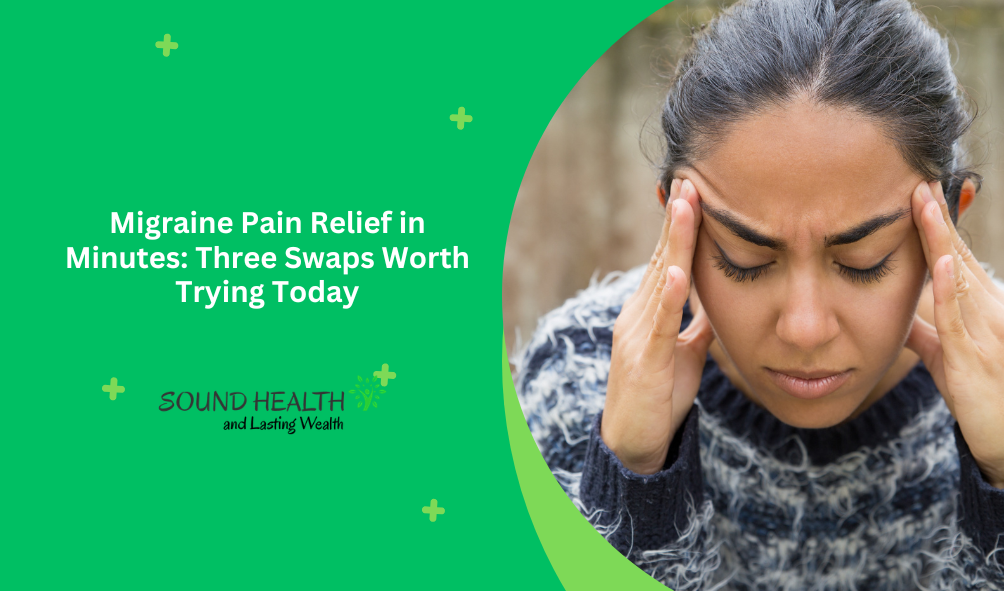

When a migraine hits, the instinct is to push through, lie on the couch with the lights on, or wait until the pain peaks before reaching for medication. All three of those responses make the attack worse. This article covers three specific, research-backed swaps: changing where you rest, changing what you put on your head, and changing when you take your medication. Each one can reduce migraine intensity and duration when applied at the right moment.

A Billion People Get Migraines. Most Manage Them Badly.
Migraine is not a bad headache. It is a complex neurological condition that ranks as the second leading cause of disability worldwide and the third highest cause of disability-adjusted life years globally, trailing only stroke and neonatal encephalopathy (World Health Organization, 2025).
The numbers are staggering. According to the WHO, headache disorders affect roughly 40% of the global population, or about 3.1 billion people. More than 1.16 billion of those cases are migraine specifically (Dong et al., 2024). In the United States alone, over 37 million people live with migraines, and more than 90% of those affected report that the pain interferes with their ability to work, study, or carry out daily activities (American Migraine Foundation, n.d.).
Global migraine incidence has increased by about 42% over the past 30 years, with the fastest growth among adolescents and young men (Dong et al., 2024).
Yet despite how common migraines are, most people manage their attacks with approaches that are either too late, too passive, or based on outdated advice. A 2026 survey reported in U.S. News & World Report found that only one-third of patients who present to emergency departments with migraine achieve sustained pain relief, and more than 80% of migraine patients report dissatisfaction with their current treatment, citing slow onset of action, incomplete relief, and headache recurrence within 24 hours (U.S. News, 2026).
The good news is that three targeted adjustments, none of them complicated and all of them supported by clinical evidence, can meaningfully shorten an attack if applied at the right time.
Also Read | How to Deal If Migraine Is Messing With Your Social Life
How Migraine Works (And Why Timing Matters)
A migraine attack typically unfolds in phases:
- Prodrome (hours to days before pain). Subtle warning signs: food cravings, mood shifts, neck stiffness, frequent yawning, increased urination. Up to 77% of migraine patients experience a prodrome, though many do not recognize it as a warning (American Migraine Foundation, n.d.).
- Aura (5 to 60 minutes before pain, in about 25% of patients). Visual disturbances (flashing lights, blind spots, zigzag lines), tingling in the hands or face, or difficulty speaking.
- Attack (4 to 72 hours). Moderate to severe throbbing pain, usually on one side of the head, accompanied by nausea, vomiting, and extreme sensitivity to light, sound, and sometimes smell.
- Postdrome (hours to a day after pain). Often described as a “migraine hangover,” with fatigue, confusion, mood changes, and residual sensitivity.
Here is the critical insight: interventions applied during the prodrome or the first 20 to 30 minutes of pain are significantly more effective than the same interventions applied after pain peaks. A 2006 randomized, double-blind, placebo-controlled study published in Journal of Headache Pain found that treating migraine during the mild pain phase produced substantially higher rates of pain freedom at two hours compared to treating during moderate or severe pain (Tfelt-Hansen et al., 2006). The American Headache Society and the Italian Society for the Study of Headache/International Headache Society evidence-based guidelines both emphasize early treatment as a cornerstone of effective acute migraine care (Ornello et al., 2025).
Every swap in this article works better when you act early. The migraine is weakest at its start. That is the moment to intervene.
Swap #1: Trade Your Lit Room for a Cold, Dark, Quiet One
What Most People Do
When a migraine starts, most people stay where they are. They dim the lights slightly, maybe lie on the couch, and hope it passes. The television stays on. The blinds are half-drawn. A child is playing in the next room.
What the Evidence Says to Do Instead
Light and sound are not just uncomfortable during a migraine. They actively worsen the attack through a process called central sensitization, in which the brain’s pain-processing centers become increasingly reactive to normal sensory input. The longer you stay in a stimulating environment after pain begins, the harder the migraine becomes to control.
The Mayo Clinic recommends retreating to a dark, quiet room at the first sign of migraine and resting if possible (Mayo Clinic, 2026). This is not vague wellness advice. It addresses the physiology of what is happening in the brain during an attack.
Photophobia (light sensitivity) and phonophobia (sound sensitivity) are core diagnostic features of migraine, present in the vast majority of attacks. Research shows that exposure to light during a migraine activates retinal pathways that connect directly to the thalamus, amplifying pain signals that are already elevated (Noseda et al., 2010). Removing the light source reduces this amplification.
How to Do It
Leave your current environment as quickly as possible. Go to a room where you can control the light and sound. Close the blinds or curtains fully. Turn off screens, including your phone. If total darkness is not possible, use a sleep mask. If noise cannot be eliminated, use earplugs or noise-canceling headphones without music.
Lie down if you can. The combination of darkness, quiet, and horizontal rest reduces the sensory load on a brain that is already in an overexcited state.
If you are at work or in a public setting and cannot fully retreat, move to the quietest, dimmest space available. Even partial reduction of light and noise input during the first 30 minutes of an attack can affect how the rest of the attack unfolds.
Swap #2: Trade the Heating Pad for a Cold Pack on Your Neck
What Most People Do
Some people reach for a warm compress. Others use nothing at all, or press their fingers into their temples. A large number do not apply anything to their head or neck.
What the Evidence Says to Do Instead
Cold therapy is one of the oldest and most consistently supported non-drug interventions for acute migraine pain. The National Headache Foundation, the American Migraine Foundation, and the Mayo Clinic all recommend applying cold to the head or neck at the onset of a migraine (Mayo Clinic, 2026).
A 2013 randomized controlled trial published in the Hawaii Journal of Medicine & Public Health found that applying a frozen neck wrap targeting the carotid arteries at the onset of a migraine significantly reduced pain intensity compared to no cold application (Sprouse-Blum et al., 2013). The proposed mechanism: cooling the blood flowing through the carotid arteries reduces the temperature of blood reaching the brain, which decreases the inflammatory and vasodilatory processes involved in migraine pain.
A 2022 analysis of studies published in Wiley found that cold interventions, including cold-gel headbands and neck wraps, provided instant short-term relief of migraine pain (Healthgrades, 2026). A separate pilot study of 100 migraine patients found that 75% reported at least some pain reduction from cold therapy alone (Ucler et al., 2006).
Cold works through three mechanisms simultaneously: it numbs local nerve endings (analgesia), it constricts dilated blood vessels (vasoconstriction), and it slows nerve conduction, reducing the speed at which pain signals travel.
Heat, by contrast, dilates blood vessels and can increase blood flow to the head, which may worsen throbbing migraine pain. Heat therapy has a role in tension-type headaches and muscle-related pain, but it is generally not recommended for acute migraine.
How to Do It
Wrap a cold pack, bag of frozen peas, or gel pack in a thin cloth (never apply ice directly to skin). Place it on the back of your neck, just below the base of your skull, where the carotid arteries run close to the surface.
Alternatively, apply it across your forehead or temples.
Keep it on for 15 to 20 minutes, then remove for at least 20 minutes before reapplying. Some neurologists recommend alternating 20 minutes on, 60 minutes off if the attack is prolonged.
Apply the cold pack as early in the attack as possible. Like every intervention on this list, cold therapy is most effective during the first stage of pain, before central sensitization sets in.
Also Read | Winter Dehydration: Beat Fatigue and Fog with 7 Fast Fixes
Swap #3: Trade Delayed Dosing for Treatment at the First Sign of Pain
What Most People Do
Wait. Most migraine patients delay taking medication, either because they hope the attack will resolve on its own, because they are unsure whether the headache is actually a migraine, or because they are trying to limit how often they use pain medication.
The delay is understandable. But the research is clear that it is counterproductive.
What the Evidence Says to Do Instead
Every major clinical guideline on acute migraine treatment emphasizes the same point: treat early.
The evidence-based guidelines published jointly by the Italian Society for the Study of Headache and the International Headache Society in 2025 state that early treatment during the mild pain phase produces significantly better outcomes than treatment during moderate or severe pain (Ornello et al., 2025). The American Headache Society’s 2025 updated guideline for emergency department treatment of migraine echoes this, noting that early, appropriate intervention prevents escalation and reduces the need for more aggressive treatment later (Robblee et al., 2025).
A landmark placebo-controlled study specifically tested sumatriptan during the mild phase of migraine and found that treating early resulted in significantly higher rates of pain freedom at two hours compared to waiting (Tfelt-Hansen et al., 2006). Multiple trials with other triptans and newer drug classes have confirmed this pattern.
What to Take and When
For mild to moderate migraine pain: NSAIDs (ibuprofen, naproxen, aspirin) are considered first-line therapy. A combination of acetaminophen, aspirin, and caffeine (the formulation sold as Excedrin Migraine in the U.S.) is FDA-approved for migraine and has strong clinical evidence supporting its use (New Approaches to Shifting the Migraine Treatment Paradigm, PMC, 2022).
For moderate to severe migraine pain or when NSAIDs fail: Triptans (sumatriptan, rizatriptan, eletriptan) are considered the gold standard. They work specifically on serotonin receptors involved in migraine, constricting dilated blood vessels and reducing inflammatory signaling.
Newer options for people who cannot use triptans: Gepants (ubrogepant, rimegepant) and ditans (lasmiditan) are newer drug classes that target the CGRP pathway or 5-HT1F receptors, respectively. They offer fast relief without the cardiovascular restrictions that limit triptan use in some patients (Jakubowska & Sowa-Kucma, 2025).
The caffeine factor: Caffeine is a vasoconstrictor that enhances the absorption of pain medication. A single cup of coffee or tea (roughly 100 mg of caffeine) taken alongside an NSAID can improve its effectiveness. The American Migraine Foundation notes that about one-third of migraine patients report dehydration as a trigger, so pairing medication with fluids (caffeinated or not) addresses two factors at once (Healthline, 2026).
What to avoid: Opioids. The 2025 American Headache Society guideline explicitly recommends against intravenous opioids for migraine relief, and the same principle applies to oral opioids at home. Opioids do not address migraine pathophysiology, carry high risk of medication-overuse headache, and are associated with worse long-term outcomes (Robblee et al., 2025).
The Medication-Overuse Trap
One reason people delay treatment is fear of medication-overuse headache (MOH), a real condition in which frequent use of acute medication paradoxically increases headache frequency. The Lancet Neurology‘s 2025 GBD analysis noted that medication-overuse headache is a growing global concern (GBD 2023 Headache Collaborators, 2025).
The general guideline: limit NSAID use for headaches to no more than 14 days per month, and triptan or combination medication use to no more than 9 days per month. If you find yourself needing acute medication more than twice a week, that is a signal to discuss preventive treatment with your doctor.
Early treatment does not mean more frequent treatment. It means using the right dose at the right time, rather than half-doses spread over hours while the attack escalates.
Why These Three Swaps Work Together
Each swap targets a different dimension of the migraine attack:
| Swap | What It Targets | How It Helps |
|---|---|---|
| Dark, quiet room | Sensory amplification (photophobia, phonophobia) | Reduces the external stimulation that worsens central sensitization |
| Cold pack on neck | Vascular and inflammatory components of pain | Cools carotid blood flow, numbs nerve endings, constricts dilated vessels |
| Early medication | Neurochemical cascade driving the attack | Interrupts pain signaling before it escalates beyond easy control |
Applied together within the first 20 to 30 minutes of an attack, these three interventions address the sensory, vascular, and chemical dimensions of migraine simultaneously. No single one is a guaranteed fix. Together, they represent the best non-clinical acute response available.
Also Read | Why You Wake Up With Headaches: Causes & Prevention Tips
When to See a Doctor
Self-management works for occasional, predictable migraine attacks. But certain patterns call for professional evaluation:
- Migraines occurring more than four times per month
- Attacks lasting longer than 72 hours despite treatment
- Migraine pain that is worsening over time or changing in character
- New-onset migraine after age 40
- Migraine with neurological symptoms (weakness on one side, vision loss, confusion, difficulty speaking) that do not fully resolve
- Need for acute medication more than twice per week
- A “worst headache of your life” that comes on suddenly (this requires emergency evaluation)
A neurologist or headache specialist can discuss preventive treatment options, including CGRP monoclonal antibodies (erenumab, fremanezumab, galcanezumab, eptinezumab), gepants for prevention (atogepant, rimegepant), botulinum toxin for chronic migraine, and non-invasive neuromodulation devices (International Headache Society, 2025).
Common Mistakes That Make Migraines Worse
| What People Do | Why It Backfires | What to Do Instead |
|---|---|---|
| Push through the pain and keep working | Sustained cognitive and sensory effort amplifies the attack | Stop, retreat to a quiet space, and rest |
| Wait hours before taking medication | Central sensitization sets in, making the migraine harder to break | Treat at the first sign of pain, during the mild phase |
| Use heat on the head | Heat dilates blood vessels, potentially worsening throbbing pain | Use cold, especially on the neck or forehead |
| Take opioids for migraine | Opioids do not address migraine pathophysiology and increase the risk of medication-overuse headache | Use NSAIDs, triptans, or gepants instead |
| Overuse caffeine to compensate | Excess caffeine withdrawal is itself a migraine trigger | Limit to one caffeinated drink alongside medication |
| Skip meals or dehydrate during an attack | Low blood sugar and dehydration are common migraine triggers | Eat something small and drink water, even if nauseous |
Myths vs. Facts About Migraine Relief
| Myth | Fact |
|---|---|
| Migraines are just bad headaches. | Migraine is a neurological disorder involving abnormal brain activity, nerve pathways, and inflammatory processes. It is classified as the second leading cause of disability worldwide. |
| You should tough it out and wait for it to pass. | Early intervention during the mild pain phase is significantly more effective than delayed treatment. Waiting makes the attack harder to stop. |
| Ice packs only help if placed on the forehead. | Research shows that cold applied to the neck, targeting the carotid arteries, may be more effective than forehead-only application. |
| Natural remedies are always safer than medication. | Some supplements interact with medications, and avoiding proven treatments in favor of unproven remedies can prolong suffering. The safest approach is evidence-based. |
| Frequent migraines are something you just have to live with. | Multiple FDA-approved preventive treatments can significantly reduce migraine frequency. If you have four or more attacks per month, talk to a specialist. |
Also Read | Why Am I Experiencing Ocular Migraines? Causes, Symptoms, and Effective Treatments
Frequently Asked Questions
What helps a migraine go away fast?
Three things, applied early: retreating to a dark, quiet room to reduce sensory input; applying a cold pack wrapped in cloth to the back of the neck for 15 to 20 minutes; and taking appropriate medication (NSAIDs for mild attacks, triptans or gepants for moderate to severe ones) at the first sign of pain rather than waiting for the pain to peak.
Should I use ice or heat for a migraine?
Ice. Cold therapy constricts blood vessels, numbs nerve endings, and slows pain signal transmission. Heat dilates blood vessels and may worsen throbbing migraine pain. Multiple clinical sources, including the Mayo Clinic, the National Headache Foundation, and the American Migraine Foundation, recommend cold over heat for acute migraine.
When should I take medication for a migraine?
At the earliest sign of pain. Research consistently shows that treating migraine during the mild phase produces significantly better results than waiting until pain is moderate or severe. “Wait and see” is one of the most common and most counterproductive approaches to migraine management.
Does a dark room actually help migraines?
Yes. Photophobia is a core feature of migraine, and light exposure during an attack activates retinal pathways that connect to pain-processing centers in the brain, intensifying the headache. Removing the light source reduces this amplification. The Mayo Clinic recommends a dark, quiet room as a first-line non-drug intervention for acute migraine (Mayo Clinic, 2026).
Can caffeine help a migraine?
In moderate amounts, yes. Caffeine is a vasoconstrictor that enhances the absorption and effectiveness of pain medication. It is an active ingredient in several FDA-approved migraine formulations. However, excessive caffeine use or abrupt caffeine withdrawal can trigger migraines. Limit intake to one cup of coffee or tea alongside your medication.
When should I go to the ER for a migraine?
Seek emergency care if you experience the worst headache of your life with sudden onset, migraine with fever and stiff neck, confusion or loss of consciousness, neurological symptoms that do not resolve (vision loss, one-sided weakness, slurred speech), or a migraine that has lasted more than 72 hours despite treatment.
Expert Tips
- Learn your prodrome. If you can identify your personal warning signs (yawning, neck stiffness, light sensitivity, food cravings), you can begin your response before the pain arrives. Keep a headache diary for two months to spot patterns.
- Keep a migraine kit at your desk. A cold pack (keep one in the office freezer), your medication, a sleep mask, and earplugs. Having everything within reach eliminates the delay that makes attacks worse.
- Do not split your dose. Taking half a dose of an NSAID or triptan and waiting to see if it works, then taking the other half an hour later, is less effective than taking a full dose early. If you are going to treat, treat decisively.
- Hydrate before you medicate. Dehydration is a trigger for roughly one-third of migraine patients. A glass of water alongside your medication is a cost-free addition that may improve the outcome.
- Talk to your doctor about prevention, not just rescue. If you are reaching for acute medication more than twice a week, you are a candidate for preventive treatment. Multiple effective options now exist, including once-monthly or once-quarterly CGRP injections.
Key Takeaways
- Migraine affects over 1.16 billion people worldwide and is the second leading cause of disability globally. Incidence has increased 42% over the past three decades.
- The three most effective acute swaps are: (1) retreating immediately to a dark, quiet room; (2) applying a cold pack to the neck or forehead; and (3) taking appropriate medication at the first sign of pain rather than waiting.
- Cold therapy on the neck works by cooling carotid blood flow, numbing nerve endings, and constricting dilated vessels. Heat is not recommended for acute migraine.
- Timing matters more than most people realize. Treating during the mild pain phase is significantly more effective than treating after pain peaks.
- Opioids are not recommended for migraine relief. NSAIDs, triptans, and gepants are evidence-based first-line options.
- If you experience four or more migraines per month, a neurologist can discuss preventive treatments that reduce attack frequency.
One Last Thing
A migraine is not a test of endurance. You do not earn anything by pushing through it, and waiting does not make it easier to treat. It makes it harder.
The three swaps in this article work because they target the biology of the attack, not just the sensation. They are simple enough to remember in the middle of the worst headache of your week and practical enough to apply at home, at work, or anywhere you happen to be when the prodrome starts.
If your current approach to migraines is “wait, endure, recover,” try these three changes the next time you feel one coming on. The difference between treating a migraine in minute 5 versus minute 50 can be the difference between losing an hour and losing an entire day.
If you found this article useful, share it with someone who gets migraines and has never been told that timing changes everything. You can also sign up for our newsletter for more evidence-based health content delivered to your inbox.
Also Read | Stop Migraines Now: Yale Doctors’ Revealed Hidden Triggers and Fast Remedies
References
American Migraine Foundation. (n.d.). Migraine facts. https://americanmigrainefoundation.org/resource-library/migraine-facts/
Dong, L., Dong, W., Jin, Y., Jiang, Y., Li, Z., & Yu, D. (2024). The global burden of migraine: A 30-year trend review and future projections by age, sex, country, and region. Pain and Therapy, 14(1), 297–315. https://doi.org/10.1007/s40122-024-00690-7
GBD 2023 Headache Collaborators. (2025). Global, regional, and national burden of headache disorders, 1990–2023: A systematic analysis for the Global Burden of Disease Study 2023. The Lancet Neurology. https://doi.org/10.1016/S1474-4422(25)00402-8
Jakubowska, B., & Sowa-Kucma, M. (2025). Gepants: Targeting the CGRP pathway for migraine relief. Frontiers in Pharmacology, 16, 1708226. https://doi.org/10.3389/fphar.2025.1708226
Mayo Clinic. (2026, January 21). Migraines: Simple steps to head off the pain. https://www.mayoclinic.org/diseases-conditions/migraine-headache/in-depth/migraines/art-20047242
Noseda, R., Kainz, V., Jakubowski, M., Gooley, J. J., Saper, C. B., Digre, K., & Burstein, R. (2010). A neural mechanism for exacerbation of headache by light. Nature Neuroscience, 13(2), 239–245. https://doi.org/10.1038/nn.2475
Ornello, R., Caponnetto, V., Ahmed, F., et al. (2025). Evidence-based guidelines for the pharmacological treatment of migraine. Cephalalgia. https://doi.org/10.1177/03331024241305381
Robblee, J., Minen, M. T., Friedman, B. W., et al. (2025). 2025 guideline update to acute treatment of migraine for adults in the emergency department: The American Headache Society evidence assessment of parenteral pharmacotherapies. Headache, 66(1), 53–76. https://doi.org/10.1111/head.70016
Sprouse-Blum, A. S., Gabriel, A. K., Brown, J. P., & Yee, M. H. (2013). Randomized controlled trial: Targeted neck cooling in the treatment of the migraine patient. Hawaii Journal of Medicine & Public Health, 72(7), 237–241.
Tfelt-Hansen, P., Bach, F. W., Daugaard, D., et al. (2006). Treatment with sumatriptan 50 mg in the mild phase of migraine attacks in patients with infrequent attacks: A randomised, double-blind, placebo-controlled study. Journal of Headache Pain, 7(6), 389–394. https://doi.org/10.1007/s10194-006-0338-3
Ucler, S., Coskun, O., Inan, L. E., & Kanatli, Y. (2006). Cold therapy in migraine patients: Open-label, non-controlled, pilot study. Evidence-Based Complementary and Alternative Medicine, 3(4), 489–493.
World Health Organization. (2025). Migraine and other headache disorders. https://www.who.int/news-room/fact-sheets/detail/headache-disorders
Yuan, H., et al. (2025). International Headache Society evidence-based guidelines on the use of non-invasive neuromodulation devices for the acute and preventive treatment of migraine. Cephalalgia, 45(10). https://doi.org/10.1177/03331024251388377