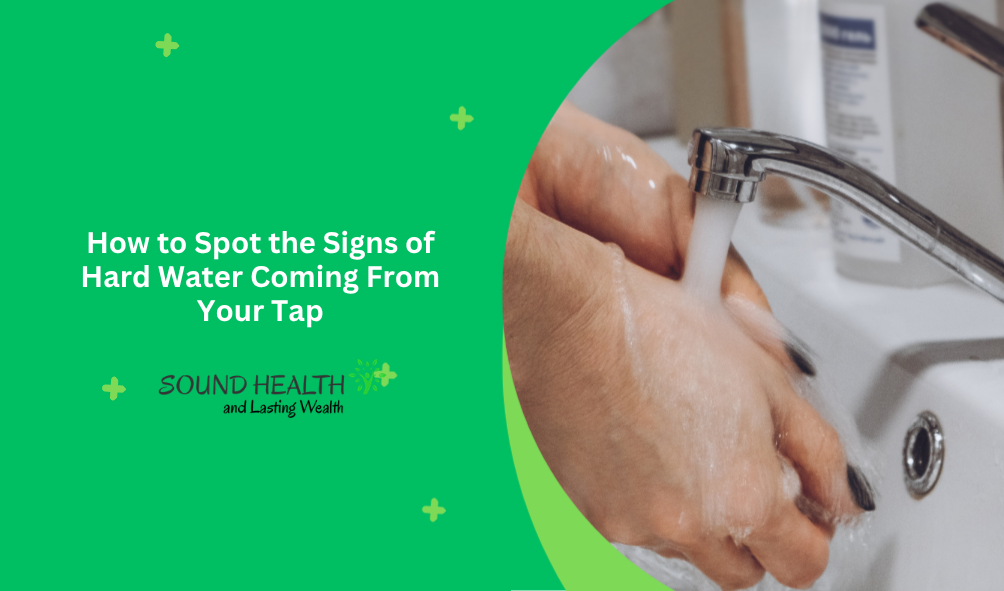

If your glasses come out of the dishwasher spotted, your soap barely lathers, and a chalky white crust keeps returning on your faucets, you very likely have hard water. It is one of the most common household water issues, affecting the majority of homes, and the good news is that it is usually harmless to drink. Hard water is mostly a nuisance and a slow drain on your appliances and budget, not a danger to your health.
That said, wanting to know what is actually coming out of your tap is a smart instinct. The key is understanding an important distinction: hard water simply means your water is high in dissolved minerals, which is a separate question from whether your water contains anything genuinely unsafe. This guide covers how to spot the telltale signs of hard water, how to confirm it, and how to find out what else might be in your water, so you know when it is just an annoyance and when it is worth a closer look.
Key Takeaways
- Hard water is water high in dissolved minerals, mainly calcium and magnesium, picked up as groundwater passes through rock like limestone.
- It is generally safe to drink. Health authorities, including the World Health Organization, find no health risk from water hardness itself.
- You usually spot hard water by its effects: limescale buildup, soap scum, spotty dishes, dry skin and dull hair, and less efficient appliances.
- A simple soap test or an inexpensive test strip can confirm hardness, and your local utility publishes an annual water quality report.
- Hardness is not the same as safety. A hardness test tells you nothing about contaminants like lead, which are the real health concern and need separate testing.
- Private well owners and people in older homes should test for contaminants, since wells are not federally regulated and old plumbing can add lead.
What hard water actually is
Water is called “hard” when it contains a high level of dissolved minerals, primarily calcium and magnesium, and sometimes iron. These minerals are entirely natural. As rain and groundwater move through soil and rock formations such as limestone, they pick up and carry these minerals along, which is why hardness varies so much from region to region.
Geologists measure hardness by the concentration of these minerals, often expressed as milligrams per liter of calcium carbonate. As a rough guide from the US Geological Survey, water above about 60 milligrams per liter is considered hard, and above roughly 180 is very hard. Hard water itself is nearly impossible to detect by sight, taste, or smell, which is why you notice it through the marks it leaves behind rather than in the water itself.
The telltale signs of hard water
Once you know what to look for, hard water is easy to spot. Common signs include:
- Limescale buildup. A crusty, chalky white or off-white deposit around faucets, showerheads, kettles, and coffee makers is the classic giveaway.
- Soap scum and poor lather. Minerals react with soap to form a sticky film on tubs, shower doors, and sinks, and your soap or shampoo struggles to lather.
- Spotty dishes and glassware. Cloudy film or spots on glasses and dishes even after washing point to mineral deposits.
- A residue that won’t rinse. If your skin feels coated or oddly squeaky and your soap seems like it never fully rinses off, that is often mineral residue plus leftover cleanser.
- Dry skin and dull hair. Hard water leaves a residue that can leave skin feeling dry and hair looking dull, stiff, and harder to manage over time.
- Stiff, dingy laundry. Clothes may feel rough, and colors may fade faster.
- Reduced water pressure. Over time, scale can narrow pipes and clog showerhead openings, weakening flow.
- Appliances working harder. Water heaters, dishwashers, and washing machines lose efficiency and wear out faster as scale builds up, which quietly raises energy bills.
Is hard water safe to drink?
This is the reassuring part. Hard water is generally safe to drink. Major health authorities, including the World Health Organization, have found no health risk associated with the mineral content that makes water hard. In fact, the calcium and magnesium in hard water contribute in a small way to your daily mineral intake.
This is also why hardness is not treated as a health issue by regulators. In the United States, the Environmental Protection Agency classifies hardness under secondary standards, which cover aesthetic and nuisance qualities like taste and staining, rather than under the health-based standards that apply to genuine contaminants. In short, hard water can be irritating to live with, but drinking it is not a safety problem for the vast majority of people.
How hard water affects your skin, hair, and home
While it is safe to drink, hard water can still affect your comfort and your household. On skin and hair, the issue is residue. Because minerals make soap and shampoo harder to rinse away, they can leave skin feeling dry or coated and hair looking dull and feeling stiff. For most people, this is a cosmetic annoyance, but there is some evidence it matters more for sensitive skin. The National Eczema Association notes that hard water may harm the skin barrier, and studies have found a link between hard water and a higher risk of eczema, particularly in children. It is worth being clear that this is an association rather than firm proof that hard water causes eczema, and claims that it directly causes acne or hair loss have limited scientific support.
The bigger, more measurable impact is on your home and budget. Scale buildup inside a water heater can reduce its efficiency significantly, with industry estimates often citing around a 20 to 30 percent loss when heating surfaces get coated, meaning you pay for energy that is wasted rather than heating your water. Add in shorter appliance lifespans, more frequent repairs, and constant scrubbing of limescale, and hard water becomes a slow, steady expense.
How to find out what’s coming from your tap
If you want to confirm hard water and learn more about your water in general, you have several options, from free to thorough:
- Read your water quality report. If you are on public water, your utility is required to publish an annual report, formally called a Consumer Confidence Report, which summarizes what is in your water, including regulated contaminants and often the hardness level. This is free and a great starting point.
- Try the soap bottle test. Fill a clear bottle halfway with tap water, add a few drops of liquid soap, and shake. Lots of fluffy lather suggests soft water, while poor lather and cloudy water suggest hard water.
- Use a home test strip. Inexpensive hard water test kits give you a quick hardness reading in minutes.
- Contact your water supplier. They can tell you the hardness levels for your specific area.
- Use a certified lab for a full picture. For a comprehensive check of contaminants, not just hardness, a certified water testing lab is the reliable route.
One crucial point ties these together: a hardness test only tells you about minerals. It does not confirm that your water is free of other concerns, so if your real question is safety, hardness testing alone is not enough.
The difference between hard water and unsafe water
This distinction is the heart of the matter and the thing most “what’s in your tap” articles gloss over. Hard water and unsafe water are two separate issues.
Hard water is about minerals like calcium and magnesium. They are a nuisance, but they are safe. Genuinely unsafe water is about contaminants such as lead, bacteria, nitrates, or others that can pose real health risks, and these have nothing to do with hardness. A home can have perfectly safe water that is very hard, or soft water that has a contaminant problem. Because the two are unrelated, treating your hard water does not make it “safe,” and confirming it is not hard does not mean it is free of contaminants.
The practical takeaway is to match your testing to your real concern. If you are bothered by scale and spots, a hardness test is all you need. If you are worried about health, the things to actually test for are contaminants, and certain situations make that testing genuinely important, as covered below.
What you can do about hard water
If hard water is bothering you, there are several ways to address it, and the right choice depends on how hard your water is and what is driving you crazy:
- Water softeners. The most common solution uses ion exchange to swap out the calcium and magnesium, usually replacing them with a small amount of sodium. If you follow a low-sodium diet, ask about potassium chloride as an alternative.
- Salt-free conditioners. These systems change how minerals crystallize so they form less scale, without removing them. They do not soften water in the traditional sense but can reduce buildup.
- Filters for drinking water. A point-of-use filter or a reverse osmosis system at the tap can improve taste and, in the case of reverse osmosis, remove minerals and many contaminants for your drinking water.
- Descaling. For existing buildup, an acidic rinse like vinegar dissolves limescale in kettles, coffee makers, and on fixtures, though it will not stop it from returning.
It is worth remembering that treating hard water is a comfort and cost decision, not a health necessity. Boiling water can reduce some temporary hardness but does not remove permanent hardness or most contaminants, so it is not a real solution for either.
What to avoid
- Do not assume hard water is dangerous to drink. For nearly everyone, it is safe.
- Do not rely on a hardness test to judge whether your water is safe. It tells you about minerals, not contaminants.
- Do not skip contaminant testing if you have a private well or an older home, where the real risks are more likely.
- Do not rush to buy an expensive softener before testing your water and confirming you actually have a hardness problem worth solving.
- Do not count on boiling to make hard or questionable water safe, since it does not remove permanent hardness or many contaminants.
When to test your water or seek professional advice
While hard water is a comfort issue, there are times when testing your water for safety genuinely matters. Consider testing or consulting a professional if:
- You rely on a private well, which is not covered by federal drinking water regulations, so testing is your responsibility. Wells should be tested regularly, typically for bacteria and nitrates, and for other contaminants depending on local conditions.
- You live in an older home that may have lead pipes or fixtures, especially if there are infants, young children, or pregnant women in the household, since lead is a serious health risk.
- Your water shows sudden changes in color, taste, smell, or appearance, or you notice unusual staining.
- There has been flooding, nearby construction, or plumbing work that could affect your water.
- Someone in your home is more vulnerable, such as an infant or someone with a weakened immune system, and you want reassurance about safety.
Your local water utility, health department, or a certified testing lab can help you test the right things and interpret the results.
What the evidence does NOT prove
A few clarifications keep this accurate. The evidence does not show that hard water is a health hazard. On the contrary, health authorities consistently find it safe to drink. The link between hard water and skin conditions like eczema is an association, most notable in children, rather than proof that hard water causes these conditions, and popular claims that it causes acne or hair loss are weakly supported.
It is equally important not to draw false comfort from the opposite direction. Confirming your water is soft, or treating hard water, does not mean your water is free of contaminants, because hardness and safety are unrelated. And treating hard water is a matter of preference, appliance protection, and cost, not a medical necessity. The honest summary is simple: hard water is common, usually harmless to drink, and mostly an issue of comfort and household expense, while true safety questions call for the right contaminant testing rather than a hardness check.
The bottom line
Spotting hard water is straightforward once you know the signs: limescale on your fixtures, soap that won’t lather, spotty dishes, dry skin, dull hair, and appliances that seem to wear out fast. Confirming it is easy and cheap, with a soap test, a test strip, or your utility’s annual water report. And reassuringly, hard water is almost always safe to drink, so for most people it is a comfort and cost issue rather than a health one.
The one thing worth keeping straight is that hardness and safety are different questions. If scale and spots are your concern, a softener or conditioner and some regular descaling will help. If you genuinely want to know your water is safe, especially with a private well or an older home, test for contaminants like lead rather than relying on a hardness reading, and lean on your water utility or a certified lab for the full picture.
Also Read | Rosemary Oil for Hair: How to Match It to Your Type and Porosity