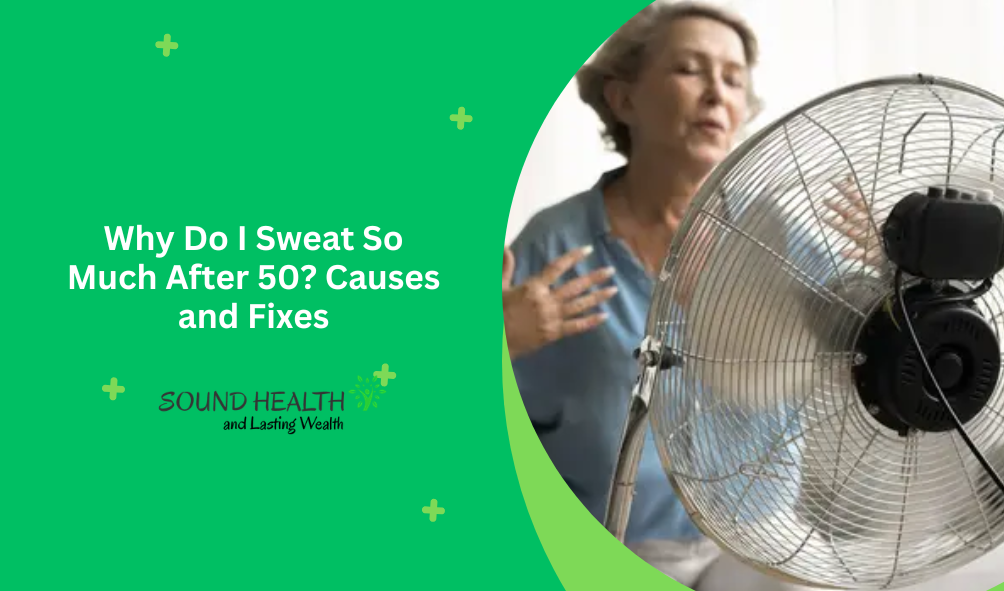
If you are asking yourself, “Why do I sweat so much?” and you are a woman over 50, the answer is usually a combination of shifting hormones, a more sensitive internal thermostat, and everyday triggers such as stress, alcohol, and certain medications. Sweating itself is normal and necessary. Sweating that soaks your clothes, wakes you at 3 a.m., or makes you avoid social plans is worth investigating.
What you will learn in this article:
- What sweat actually is and why your body makes it
- How stress sweat differs from heat sweat
- The most common triggers for excessive sweating in women over 50
- Medical treatment options, including newer non-hormonal medications
- Three practical home strategies for stress-related sweating
- The warning signs that mean you should call a doctor

What Exactly Is Sweat?
Sweat is your body’s built-in cooling system. When your core temperature rises, your brain signals millions of tiny glands in your skin to release fluid. As that fluid evaporates off the surface of your skin, it carries heat away with it. Without this process, a hot afternoon or a brisk walk could push your internal temperature into dangerous territory.
Most sweat is roughly 99% water. The rest is a small amount of sodium, chloride, potassium, urea, and trace minerals. That is why heavy sweating leaves a salty film on your skin, and why rehydrating matters after a long session in the heat.
The Two Types of Sweat Glands
Your skin contains two main kinds of sweat glands, and understanding the difference explains a lot about why some sweat smells and some does not.
| Feature | Eccrine glands | Apocrine glands |
|---|---|---|
| Where they are | Almost everywhere on the body, densest on palms, soles, and forehead | Underarms, groin, and scalp |
| Roughly how many | Estimated 2 to 4 million | Far fewer, concentrated in specific areas |
| When they become active | Present and working from infancy | Become active at puberty |
| What they release | Thin, watery, mostly salt and water | Thicker fluid containing proteins and lipids |
| Main job | Temperature regulation | Linked to scent and emotional response |
| Does it smell? | Largely odorless on its own | Odor develops when skin bacteria break down the fluid |
Here is the part most people get wrong: sweat itself does not smell. Body odor comes from bacteria living on your skin feeding on the richer secretions from apocrine glands and releasing compounds that carry a strong scent. That is also why underarm odor tends to be more noticeable than sweat from your forearms.
Also Read | Menopause Heart Changes: Blood Pressure and Palpitations Explained
Stress Sweating vs. Heat Sweating: What Is the Difference?
You have almost certainly noticed that nervous sweat feels different from workout sweat. It is not your imagination. The two are driven by different signals and often come from different glands.
- Heat sweating is a thermoregulatory response. Your hypothalamus, the temperature control centre in your brain, detects that you are too warm and triggers a broad, whole-body release of watery eccrine sweat. It builds gradually, spreads across large areas, and cools you down efficiently.
- Stress sweating is an adrenaline-driven response. When your nervous system perceives a threat, whether that is a difficult meeting or a near-miss in traffic, stress hormones surge and activate sweat glands directly. This kind of sweating comes on fast, tends to concentrate in the palms, soles, underarms, and face, and involves apocrine glands more heavily, which is why it is more likely to carry an odor.
| Heat sweat | Stress sweat | |
|---|---|---|
| Trigger | Rising core body temperature | Adrenaline and nervous system activation |
| Onset | Gradual | Sudden, sometimes within seconds |
| Location | Widespread across the body | Palms, soles, underarms, face |
| Glands involved | Mainly eccrine | Eccrine plus apocrine |
| Odor | Usually mild | More noticeable |
| Stops when | You cool down | The stressor passes, and adrenaline falls |
Understanding which type you are dealing with matters, because the fixes differ. A cooling towel helps heat sweat. It does very little for a nervous system stuck in high alert.
Why Do I Sweat So Much? Common Triggers for Women Over 50
For women in midlife, excessive sweating rarely has a single cause. More often, several factors stack on top of each other. Here are the most common ones.
1. Perimenopause and Menopause
This is the leading explanation for new or worsening sweating in women over 50. As estrogen levels fall, the thermoregulatory centre in the hypothalamus becomes more reactive. Researchers describe this as a narrowing of the “thermoneutral zone,” the comfortable temperature range your body tolerates without needing to sweat or shiver. When that window shrinks, a small rise in core temperature that you would not have noticed at 35 now triggers a full cooling response: flushing, a wave of heat, and sudden sweating.
These episodes are called vasomotor symptoms. Hot flashes happen during the day; night sweats are the same event occurring during sleep. Experts commonly estimate that up to 80% of women experience vasomotor symptoms during the menopause transition.
Duration surprises many women. The Study of Women’s Health Across the Nation (SWAN), a long-running research project published in JAMA Internal Medicine, found that vasomotor symptoms lasted a median of about 7.4 years, and considerably longer for women whose symptoms began early in the transition. If you are 54 and still having night sweats, you are well within the normal range.
2. Primary Focal Hyperhidrosis
Hyperhidrosis is the medical term for sweating beyond what the body needs for cooling. Research published in Archives of Dermatological Research estimated that roughly 4.8% of the US population is affected, which works out to approximately 15.3 million people. The same research found that only about half of those affected had ever raised it with a healthcare professional, often because they assumed nothing could be done.
Primary focal hyperhidrosis usually begins in childhood or the teenage years, affects specific areas symmetrically (both palms, both underarms, both feet), and typically stops during sleep. It often runs in families. If you have had sweaty palms since you were 12, this is likely what you are dealing with, and menopause may simply be making it more noticeable.
3. Thyroid Problems
An overactive thyroid speeds up your metabolism, which raises heat production. Excessive sweating and heat intolerance are classic signs, often alongside a racing heart, unexplained weight loss, tremor, anxiety, and difficulty sleeping. Thyroid disorders become more common with age and are more frequent in women, so a simple TSH blood test is a reasonable early step.
4. Blood Sugar Swings
When blood glucose drops too low, the body releases adrenaline. Sweating, shakiness, and a pounding heart follow. This is particularly relevant for women taking insulin or certain diabetes medications, but it can also happen after a large, high-sugar meal followed by a sharp glucose drop. Night sweats that respond to eating something are worth mentioning to your doctor.
5. Medications
A surprising number of commonly prescribed drugs list sweating as a side effect. These include:
- Certain antidepressants, particularly SSRIs and SNRIs
- Some pain medications, including opioids
- Breast cancer treatments such as tamoxifen and aromatase inhibitors
- Thyroid hormone at a dose that is too high
- Some drugs used for dementia and Parkinson’s disease
- Certain migraine medications
Never stop a prescribed medication on your own. Bring it up with the prescribing clinician, who may be able to adjust the dose or switch you to an alternative.
6. Anxiety and Chronic Stress
Sustained stress keeps the sympathetic nervous system partially switched on, which lowers the threshold for a sweat response. Many women in their fifties are managing career demands, ageing parents, and their own health changes at the same time. That background load is physiological, not just emotional.
7. Everyday Dietary Triggers
Alcohol dilates blood vessels and interferes with temperature regulation, and red wine is a frequently reported hot flash trigger. Caffeine stimulates the nervous system. Capsaicin, the compound in chilli peppers, activates heat receptors and can produce a genuine sweat response. Very hot drinks and large meals both raise core temperature.
8. Body Weight and Sleep Apnea
Carrying extra weight adds insulation and increases the metabolic heat your body produces, so heavier women often sweat more at a given temperature. Obstructive sleep apnea, which becomes more common in women after menopause, is also strongly associated with night sweats. If your night sweats come with loud snoring, gasping, or daytime exhaustion, a sleep evaluation is worth requesting.
9. Less Common but Important Causes
A small number of serious conditions can cause heavy sweating, particularly drenching night sweats. These include some infections, certain blood cancers such as lymphoma, and rare hormone-secreting tumours. These causes are uncommon, but they are the reason doctors take new-onset drenching night sweats seriously, especially when they come with fever or unexplained weight loss.
Also Read | How to Get Better Sleep After 50: 7 Simple Tips for Pain‑Free Nights
How Doctors Diagnose Excessive Sweating
There is no single test. Diagnosis is built from your history plus targeted investigations.
What your doctor will likely ask:
- When did the sweating start, and was the onset gradual or sudden?
- Which areas of the body are affected, and is it symmetrical?
- Does it stop when you are asleep?
- Are you losing weight, running fevers, or feeling unusually tired?
- What medications and supplements are you taking?
- Is there a family history of heavy sweating?
Common tests:
| Test | What it looks for |
|---|---|
| TSH and thyroid panel | Overactive thyroid |
| Fasting glucose or HbA1c | Diabetes and blood sugar instability |
| Complete blood count | Infection, anaemia, blood disorders |
| Inflammatory markers (ESR, CRP) | Underlying inflammation or infection |
| Hormone testing (selected cases) | Menopause status, other endocrine causes |
| Starch-iodine (Minor’s) test | Maps exactly where sweating occurs |
| Chest imaging (if indicated) | Infection or other chest pathology |
A key distinction your doctor will make is whether the sweating is primary (no underlying disease, usually lifelong, focal and symmetrical) or secondary (caused by something else, often generalised, and frequently continuing during sleep). Sweating that begins for the first time after age 50 is more likely to be secondary and deserves a proper workup.
Treatment Options for Excessive Sweating
Treatment depends heavily on the cause. Here is how the main options compare.
| Treatment | Best suited for | How it works | Notes |
|---|---|---|---|
| Clinical-strength antiperspirant | Mild to moderate underarm sweating | Aluminium salts temporarily block sweat ducts | Apply to completely dry skin at night for best results |
| Prescription-strength aluminium chloride | Moderate sweating | Stronger version of the above | Can irritate skin; use as directed |
| Topical anticholinergic wipes and gels | Underarm hyperhidrosis | Blocks the chemical signal to sweat glands | Prescription only; watch for dry mouth and blurred vision |
| Oral anticholinergics | Widespread sweating | Same mechanism, systemic | Often used off-label; side effects limit long-term use |
| Botulinum toxin injections | Severe underarm sweating | Temporarily blocks nerve signals to sweat glands | FDA-approved for severe primary axillary hyperhidrosis; effects are temporary |
| Iontophoresis | Palms and soles | Mild electrical current through water reduces sweating | Requires regular repeat sessions |
| Microwave thermolysis | Underarms | Energy device targets sweat glands | Usually one or two sessions; done in-office |
| Sympathectomy surgery | Severe cases only | Interrupts nerve signals surgically | Last resort; carries a real risk of compensatory sweating elsewhere |
Menopause-Specific Treatments for Hot Flashes and Night Sweats
If your sweating is driven by the menopause transition, the treatment landscape looks different and has changed meaningfully in the last few years.
Hormone therapy remains the most effective treatment for moderate to severe vasomotor symptoms. Whether it is appropriate for you depends on your age, how long it has been since your final period, and your personal and family medical history, particularly regarding breast cancer, blood clots, and cardiovascular disease. Professional guidance generally supports a more favourable benefit-to-risk profile for women who begin therapy before age 60 or within ten years of menopause. This is a conversation for you and your clinician, not a decision to make from an article.
Non-hormonal prescription options have expanded significantly:
- Neurokinin receptor antagonists. These target the brain pathway responsible for hot flashes rather than replacing hormones. Fezolinetant (Veozah) was the first to reach the US market. Importantly, the FDA added a boxed warning in December 2024 for rare but serious liver injury, along with a requirement for liver blood testing monthly for the first two months of treatment and then at months 3, 6, and 9. A second drug, elinzanetant (Lynkuet), which blocks both NK1 and NK3 receptors, received FDA approval on 24 October 2025 following the phase 3 OASIS trial programme, which reported reductions in hot flash frequency and severity along with improvements in sleep quality.
- Certain antidepressants. Low-dose paroxetine, escitalopram, and venlafaxine have evidence for reducing hot flash frequency and are useful for women who cannot or prefer not to take hormones.
- Gabapentin. Sometimes helpful, particularly for night sweats that disrupt sleep.
- Oxybutynin. An option with supporting evidence, though anticholinergic side effects need weighing.
- Cognitive behavioural therapy and clinical hypnosis. Both have research support for reducing how bothersome hot flashes feel, and neither carries medication risks.
3 Home Remedies for Excessive Stress Sweating
These will not replace medical treatment for an underlying condition, but they address the stress component that amplifies sweating for many women.
1. Reset Your Nervous System
Stress sweating starts with sympathetic activation. Deliberately shifting toward the parasympathetic (“rest and digest”) side reduces that baseline arousal.
Try this:
- Extended exhale breathing. Breathe in for a count of four, out for a count of six or eight. A longer exhale than inhale supports vagal activity and slows heart rate. Practise for five minutes, twice daily, not only during a flare.
- Cool the pulse points. Running cool water over your wrists or placing a cool cloth on the back of your neck helps interrupt an escalating episode.
- Grounding before high-stress moments. Two minutes of slow breathing before a presentation or difficult conversation is more effective than trying to calm down mid-episode.
A note on evidence: paced breathing is low-risk, and many women find it helpful, but formal research on whether it reduces hot flash frequency specifically has been mixed. Treat it as a tool for the stress layer rather than a cure for vasomotor symptoms.
Also Read | 7 Benefits of Sleeping Naked After 50 for Weight Loss, Less Sweats
2. Address Your Stress Head On
Managing the episode is useful. Reducing the underlying load is more powerful.
- Protect your sleep. Poor sleep raises next-day cortisol and lowers your tolerance for everything else. Keep the bedroom cool (around 16 to 19°C or 60 to 67°F), use breathable cotton or bamboo bedding, and keep a spare set of nightclothes within reach so a night sweat does not become a two-hour awakening.
- Consider structured psychological support. Cognitive behavioural therapy specifically adapted for menopause has research support and is offered through many health systems.
- Move regularly. Regular moderate exercise improves sleep quality, mood, and body composition. Evidence that exercise directly reduces hot flash frequency is mixed, so set expectations accordingly, but the wider benefits in midlife are well established.
- Name the load. Caregiving, work pressure, and health worry are real physiological stressors. Redistributing what you can is a legitimate health intervention.
3. Lower Inflammation
Chronic low-grade inflammation and metabolic instability can worsen how you experience temperature swings.
Foods that generally help:
- Oily fish such as salmon, sardines, and mackerel
- Leafy greens and colourful vegetables
- Olive oil, nuts, and seeds
- Legumes and whole grains
- Plenty of plain water throughout the day
Foods and drinks that commonly trigger sweating:
- Alcohol, especially red wine
- Caffeine, particularly in the afternoon
- Spicy food containing chilli
- Very hot drinks and soups
- Large, heavy meals close to bedtime
A practical tip: keep a two-week trigger diary. Note what you ate and drank, your stress level, and when episodes occurred. Personal triggers vary far more than general lists suggest, and a diary will identify yours faster than trial and error.
Practical Cooling Checklist
- Dress in layers you can remove quickly
- Choose natural, breathable fabrics such as cotton, linen, and bamboo over synthetics
- Keep a small fan at your desk and beside your bed
- Carry a refillable water bottle and sip throughout the day
- Use a cooling pillow or mattress topper
- Apply antiperspirant at night, not in the morning
- Keep a change of top in your bag or car
- Choose loose, light-coloured clothing in warm weather
Myths vs. Facts
| Myth | Fact |
|---|---|
| Sweating flushes toxins out of your body | Detoxification is handled by your liver and kidneys. Sweat is overwhelmingly water and salt. |
| Antiperspirants are unsafe and cause cancer | Major cancer research organisations have not established a causal link between antiperspirant use and breast cancer. |
| Heavy sweating always means poor fitness | Fitter people often sweat sooner and more efficiently, because their bodies cool more effectively. |
| Hot flashes only last a year or two | Research including the SWAN study found a median duration of around 7.4 years, and longer for many women. |
| There is nothing you can do about it | Multiple effective treatments exist, from topical products to prescription medication. |
| Only overweight women get hot flashes | Weight is one contributing factor among many. Women of every size experience vasomotor symptoms. |
Common Mistakes to Avoid
- Assuming it is “just menopause” without checking. Thyroid disease, medication side effects, and sleep apnea are common and treatable.
- Applying antiperspirant to damp skin in the morning. It works best on completely dry skin, applied at night.
- Using deodorant and expecting it to stop sweat. Deodorant addresses odor. Antiperspirant reduces sweat. Check the label.
- Dehydrating on purpose. Restricting fluids does not meaningfully reduce sweating and raises your risk of heat-related problems.
- Stopping a medication without medical advice. Ask about alternatives instead.
- Waiting years to raise it. Research suggests around half of people with hyperhidrosis never mention it to a clinician.
When to Worry About Excessive Sweating
Most excessive sweating in women over 50 is uncomfortable rather than dangerous. Some patterns warrant prompt medical attention.
Book an appointment if:
- Sweating began suddenly after age 50 with no clear explanation
- It is generalised across your whole body rather than focal
- It continues during sleep and soaks your bedding
- It interferes with work, relationships, or daily activities
- Over-the-counter antiperspirants have not helped
Seek medical care promptly if sweating comes with:
- Unexplained weight loss
- Persistent fever
- Chest pain, breathlessness, or a racing heart
- A new lump or swollen lymph nodes
- A persistent cough
- Confusion, severe dizziness, or fainting
Sudden heavy sweating together with chest pain, jaw or arm pain, nausea, or shortness of breath can indicate a heart attack. Women’s cardiac symptoms often present less typically than men’s. Call emergency services rather than waiting.
Frequently Asked Questions
Why do I sweat so much all of a sudden at 55?
The most common explanation is the menopause transition affecting your body’s temperature regulation. However, new-onset sweating after 50 should also be checked for thyroid problems, medication effects, blood sugar issues, and sleep apnea. A single visit with basic blood work usually clarifies it.
Is excessive sweating a sign of heart problems?
It can be. Sudden heavy sweating with chest discomfort, breathlessness, or nausea requires emergency assessment. Chronic sweating on its own is far more often hormonal or related to hyperhidrosis.
Do hot flashes ever stop completely?
For most women, yes. Research indicates a median duration of roughly 7.4 years, though a minority experience symptoms for considerably longer.
Can I take something over the counter?
Clinical-strength antiperspirants are the sensible first step. Discuss supplements with a clinician before starting them, particularly if you take prescription medication or have a history of breast cancer.
Does drinking more water make me sweat more?
No. Adequate hydration supports efficient temperature regulation. Restricting fluids does not reduce sweating and increases your risk of overheating.
What is the difference between night sweats and hot flashes?
They are the same physiological event. Hot flashes occur while you are awake; night sweats occur during sleep and often wake you.
Is heavy sweating hereditary?
Primary focal hyperhidrosis frequently runs in families. If a parent or sibling has always had sweaty palms or underarms, that supports a primary diagnosis.
Can losing weight reduce sweating?
It can help for some women, since extra body mass adds insulation and metabolic heat. It is one factor rather than a guaranteed solution.
Key Takeaways
- Sweating is a normal cooling function, but sweating that disrupts your life is a legitimate medical concern.
- In women over 50, falling estrogen narrows the body’s comfortable temperature range, making hot flashes and night sweats far more likely.
- Stress sweat and heat sweat are driven by different mechanisms and respond to different strategies.
- New-onset heavy sweating after 50 should be assessed for thyroid disease, blood sugar problems, medication side effects, and sleep apnea.
- Effective treatments range from clinical-strength antiperspirants to botulinum toxin injections, hormone therapy, and newer non-hormonal medications including fezolinetant and elinzanetant.
- Drenching night sweats combined with weight loss or fever should be evaluated promptly.
Why Do I Sweat So Much? The Bottom Line
If you are a woman over 50 asking why you sweat so much, the honest answer is that your body is responding to a genuine physiological shift, not failing you. Estrogen decline changes how your brain reads temperature. Stress, alcohol, medications, and sleep quality all add to the effect.
What matters most is this: excessive sweating is treatable, and it is worth raising. Research consistently shows that a large share of people who sweat heavily never mention it to a doctor, often because they assume nothing can be done. That assumption is outdated. Between antiperspirant options, hormone therapy where appropriate, newly approved non-hormonal medications, and practical daily strategies, most women can find meaningful relief.
Start by tracking your triggers for two weeks. Then book an appointment and bring that record with you. It gives your clinician far more to work with than a general description, and it usually shortens the path to something that actually helps.
Also Read | PMOS vs PCOS: What the Name Change Means for Menopause Health
References
- Doolittle J, Walker P, Mills T, Thurston J. Hyperhidrosis: an update on prevalence and severity in the United States. Archives of Dermatological Research. 2016. https://pubmed.ncbi.nlm.nih.gov/27744497/
- Avis NE, et al. Duration of menopausal vasomotor symptoms over the menopause transition (SWAN). JAMA Internal Medicine. 2015. https://pubmed.ncbi.nlm.nih.gov/25686030/
- US Food and Drug Administration. FDA adds warning about rare occurrence of serious liver injury with use of Veozah (fezolinetant). https://www.fda.gov/drugs/drug-safety-and-availability/fda-adds-warning-about-rare-occurrence-serious-liver-injury-use-veozah-fezolinetant-hot-flashes-due
- National Institute on Aging (NIH). Hot Flashes: What Can I Do? https://www.nia.nih.gov/health/hot-flashes-what-can-i-do
- Mayo Clinic. Hyperhidrosis: Symptoms and causes. https://www.mayoclinic.org/diseases-conditions/hyperhidrosis/symptoms-causes/syc-20367152
- Cleveland Clinic. Hyperhidrosis (Excessive Sweating). https://my.clevelandclinic.org/health/diseases/17113-hyperhidrosis
- NHS. Excessive sweating (hyperhidrosis). https://www.nhs.uk/conditions/excessive-sweating-hyperhidrosis/
- Johns Hopkins Medicine. Hyperhidrosis. https://www.hopkinsmedicine.org/health/conditions-and-diseases/hyperhidrosis
- Harvard Health Publishing, Harvard Medical School. Menopause-related hot flashes and night sweats can last for years. https://www.health.harvard.edu/
- NHS. Menopause: Symptoms. https://www.nhs.uk/conditions/menopause/symptoms/