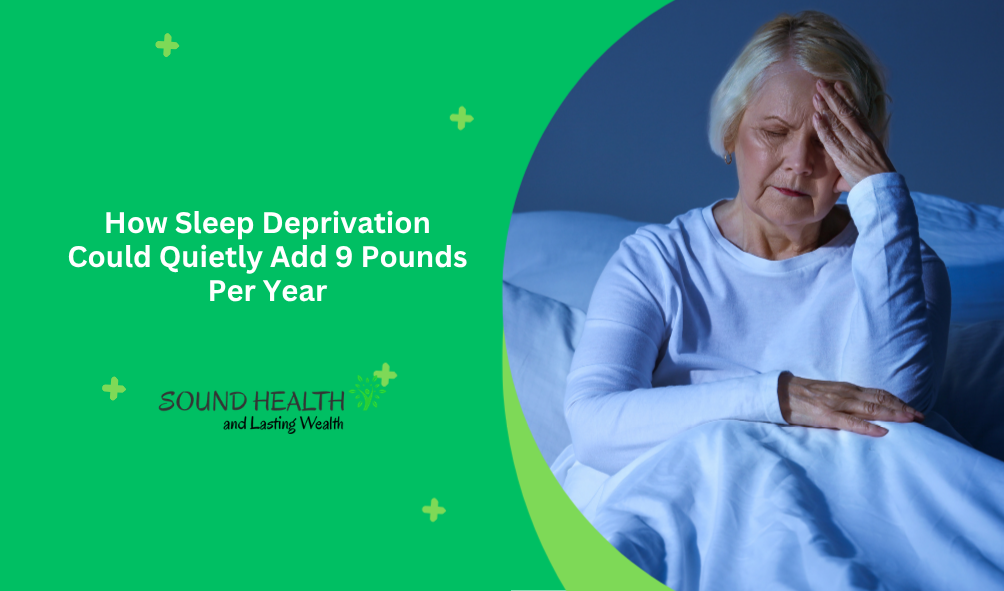

A landmark study published in July 2026 in the Annals of Internal Medicine by Columbia University researchers found that adults who slept roughly 80 minutes less per night for six weeks gained nearly one pound on average and increased their waist circumference. Extrapolated to a full year, that rate of gain adds up to approximately 9 pounds. A 2022 Mayo Clinic study found that even when the scale barely moved, sleep-restricted participants gained 9% more visceral (belly) fat. The connection is not just about having more hours awake to eat. Sleep deprivation rewires your hunger hormones, increases cravings for high-calorie foods, promotes visceral fat storage, and makes you more sedentary. This article covers the five mechanisms that link sleep loss to weight gain, what the newest research shows, and practical steps to protect both your sleep and your waistline.

The Study That Changed the Conversation
In July 2026, researchers at Columbia University’s Vagelos College of Physicians and Surgeons published findings that put a concrete number on what many people had long suspected: not sleeping enough makes you gain weight.
The study, published in the Annals of Internal Medicine, tracked 95 adults who normally slept seven to eight hours per night. Participants were asked to delay their usual bedtime by 90 minutes while continuing to wake at their normal time. They maintained this mildly sleep-deprived schedule for six weeks, ultimately sleeping about 80 minutes less per night than usual (Zuraikat et al., 2026).
The results:
- Participants gained an average of 0.45 kilograms (nearly one pound) during the sleep-restriction phase.
- Waist circumference increased by about half a centimeter, indicating that some weight gain was concentrated around the abdomen
- Sedentary time increased by an average of 17 minutes per day, with men and postmenopausal women increasing by nearly 30 minutes
While the one-pound weight gain observed with modest sleep curtailment is not overwhelming, it is important to remember this is occurring over just six weeks, said Faris Zuraikat, assistant professor of nutritional medicine at Columbia and the study’s first author.
Our study shows that getting adequate sleep may help reduce the risk of weight gain and obesity-related conditions like heart disease and diabetes, said Marie-Pierre St-Onge, professor of nutritional medicine at Columbia and the study’s senior author.
Also Read | Fatty Liver Symptoms in Women Over 50: 8 Silent Signs Doctors Miss
Where the 9-Pound Figure Comes From
One pound gained in six weeks equals approximately 8.7 pounds over 52 weeks. The researchers themselves acknowledged this extrapolation: When extrapolated to a full year, we would expect that losing less than an hour and a half of sleep per night could result in clinically meaningful weight gain.
The caveat is important: the study lasted six weeks, not a year. Whether the one-pound-per-six-weeks rate would continue at the same pace for 12 months is unknown. The body may partially adapt over time, or the effects may compound. But the trajectory is clear: chronic, mild sleep loss pushes the body toward weight gain, and the amounts are not trivial.
Five Mechanisms: How Sleep Loss Leads to Weight Gain
The connection between sleep and weight is not simply “more hours awake means more hours to eat.” Five distinct biological pathways drive the relationship, and they operate simultaneously.
1. Hunger Hormones Shift in the Wrong Direction
Two hormones regulate appetite at the most basic level:
- Ghrelin (the “hunger hormone”): tells your brain you need to eat
- Leptin (the “satiety hormone”): tells your brain you have had enough
Sleep deprivation pushes both hormones in the direction that promotes overeating. A 2023 study published in Obesity found that after one night of total sleep deprivation, fasting leptin levels dropped while ghrelin levels rose (Obesity, 2023). The leptin change was more pronounced in women. An earlier study found that ghrelin levels were 22% higher after sleep deprivation compared to adequate sleep, and hunger ratings increased accordingly (Schmid et al., 2008).
The practical result: when you are sleep-deprived, you feel hungrier than your body’s actual caloric needs warrant.
A 2025 meta-analysis of six randomized controlled trials added nuance to this picture, finding that short-term sleep deprivation did not consistently alter leptin and ghrelin levels across all studies (MDPI, 2025). The authors attributed the variability to differences in study design, blood sampling timing, and participant characteristics. This suggests that while hormone disruption is a well-established mechanism, additional pathways are likely involved.
Also Read | Liver Disease Symptoms in Women: 6 Red Flags to Spot Early
2. Your Brain Craves Junk Food
Sleep deprivation does not just increase appetite in general. It increases appetite specifically for calorie-dense, high-fat, high-sugar foods.
Research has shown that sleep loss alters activity in the brain’s reward centers, including the amygdala and the prefrontal cortex. The prefrontal cortex, which is responsible for impulse control and rational decision-making, becomes less active when you are short on sleep. The amygdala, which processes emotional responses including cravings, becomes more active. The result is reduced ability to resist the foods that produce the fastest dopamine hit (GSSIWEB, 2025).
An earlier study found that sleep-deprived individuals reported 23% higher overall appetite and specifically elevated desire for calorie-dense, carbohydrate-rich foods.
3. Cortisol Rises and Promotes Visceral Fat Storage
Sleep deprivation elevates cortisol, the body’s primary stress hormone. Chronically elevated cortisol promotes fat storage specifically in the visceral compartment, the fat surrounding internal organs in the abdomen.
A 2022 randomized controlled trial led by Dr. Naima Covassin at the Mayo Clinic provided one of the most striking demonstrations of this effect. Participants whose sleep was restricted consumed more than 300 extra calories per day during the restriction period, eating approximately 13% more protein and 17% more fat</cite>. They gained only about one pound on the scale, but CT scans revealed that visceral fat increased by 9%, an increase that would have been completely invisible without imaging.
The visceral fat accumulation was only detected by CT scan and would otherwise have been missed, especially since the increase in weight was quite modest, “Dr. Covassin said. Measures of weight alone would be falsely reassuring in terms of the health consequences of inadequate sleep.”
This finding matters because visceral fat is far more metabolically dangerous than subcutaneous fat. It is strongly associated with heart disease, type 2 diabetes, stroke, and systemic inflammation.
4. Insulin Sensitivity Drops
Sleep deprivation reduces the body’s ability to process glucose effectively. Studies have shown that even a few nights of restricted sleep can decrease insulin sensitivity, meaning the body needs to produce more insulin to manage the same amount of blood sugar. Over time, this promotes fat storage and increases the risk of type 2 diabetes and metabolic syndrome (GSSIWEB, 2025).
5. You Move Less
The 2026 Columbia study confirmed what many sleep researchers had theorized: sleep-deprived people become more sedentary during the day. Participants increased their sedentary time by an average of 17 minutes per day, with men and postmenopausal women becoming sedentary for nearly 30 additional minutes daily.
Fatigue reduces motivation to exercise, makes daily movement feel more effortful, and shifts behavior toward sitting, lying down, and passive activities. At the same time, the extra hours spent awake do not translate into significantly more calories burned. The body compensates by reducing energy expenditure during waking hours, creating a net caloric surplus that drives weight gain.
Also Read | 10 Foods That Can Cause More Damage To Your Liver Than Alcohol
What About Sleeping More? Does It Reverse the Effect?
Yes, at least partially. A 2022 study found that when people who usually slept too little were asked to sleep more over the course of two weeks, they consumed 270 fewer calories per day</cite>. At that rate, the caloric reduction alone would translate to roughly 28 pounds of potential weight loss over a year if sustained, though actual results depend on many other factors.
The finding suggests that sleep is a two-way lever: restricting it promotes weight gain, and extending it promotes conditions favorable to weight loss.
How Much Sleep Do You Need?
The American Academy of Sleep Medicine and the Sleep Research Society recommend:
| Age Group | Recommended Sleep |
|---|---|
| Adults 18 to 60 | 7 or more hours per night |
| Adults 61 to 64 | 7 to 9 hours per night |
| Adults 65 and older | 7 to 8 hours per night |
According to the CDC, approximately 35% of American adults regularly get less than seven hours of sleep per night. The Columbia study specifically targeted this population: people experiencing “real-world” mild chronic sleep loss, not extreme laboratory deprivation.
If you are among the one-third of adults sleeping under seven hours, the weight implications are not theoretical. They are measurable within weeks.
Sleep Loss and Weight Gain: The Numbers at a Glance
| Study | Sleep Reduction | Duration | Weight Change | Other Findings |
|---|---|---|---|---|
| Columbia 2026 (Annals of Internal Medicine) | ~80 min/night | 6 weeks | +1 lb average | Waist increased 0.5 cm; sedentary time up 17 min/day |
| Mayo Clinic 2022 (Covassin et al.) | Restricted to 2/3 of normal | 2 weeks | +1 lb (modest) | Visceral fat increased 9%; 300+ extra calories/day consumed |
| Penn 2013 (Spaeth et al.) | 4 hours/night | 5 nights | +2.13 lbs | 552 extra calories consumed during late-night hours |
| Sleep extension 2022 (Tasali et al.) | +1.2 hours/night | 2 weeks | Caloric intake dropped 270 cal/day | Suggests sleep improvement can reverse overconsumption |
Practical Steps: How to Protect Your Sleep (and Your Weight)
Fix Your Sleep Schedule
Go to bed and wake up at the same time every day, including weekends. Consistency reinforces your circadian rhythm, which regulates both sleep quality and metabolic function.
Create a 30-Minute Wind-Down Buffer
Stop using screens (phone, laptop, television) at least 30 minutes before bed. The blue light suppresses melatonin production, but the stimulation itself, scrolling, reading news, responding to messages, also keeps the brain in an alert state that makes falling asleep harder.
Keep the Bedroom Cool and Dark
The optimal sleep temperature for most adults is between 60 and 67 degrees Fahrenheit (15.5 to 19.5 degrees Celsius). Use blackout curtains or a sleep mask to block light, which can disrupt sleep even through closed eyelids.
Watch Your Caffeine Window
Caffeine has a half-life of approximately five to six hours, meaning that a 3 PM coffee still has half its caffeine active in your system at 8 or 9 PM. Cutting caffeine after noon (or 2 PM at the latest) gives your body time to clear it before bed.
Do Not Eat Large Meals Close to Bedtime
Eating a heavy meal within two to three hours of sleep forces your digestive system to work when it should be slowing down. This can disrupt sleep quality and promote acid reflux. If you need a snack, keep it small and low in sugar.
Address Sleep Disorders
If you consistently get seven to eight hours but still feel exhausted, a sleep disorder such as obstructive sleep apnea or restless leg syndrome may be fragmenting your sleep without your awareness. Sleep apnea in particular is strongly associated with weight gain and metabolic disruption. Talk to your doctor about a sleep study if daytime fatigue persists despite adequate time in bed.
Also Read | Colon Cancer Under 50 Is Rising: These Signs Shouldn’t Be Ignored
Myths vs. Facts About Sleep and Weight Gain
| Myth | Fact |
|---|---|
| Sleeping less means burning more calories from being awake longer. | The extra calories burned by being awake are small and are more than offset by increased food intake and decreased activity. The 2022 Mayo Clinic study showed participants ate 300+ extra calories despite minimal increase in energy expenditure. |
| Only severe sleep deprivation affects weight. | The 2026 Columbia study used a mild, real-world pattern (80 minutes less per night) and still found measurable weight gain in six weeks. |
| Sleep loss mainly causes subcutaneous (surface) fat gain. | The 2022 Mayo Clinic CT scan study showed a 9% increase in visceral (internal organ) fat with sleep restriction, even when the scale barely changed. Visceral fat is the more dangerous type. |
| Willpower can override sleep-deprivation hunger. | Sleep deprivation reduces prefrontal cortex activity (impulse control) while increasing amygdala activity (cravings). The playing field is neurologically tilted against willpower. |
| Only nighttime eating matters. | Sleep-deprived individuals eat more at all times of day, though late-night eating accounts for a disproportionate share. |
Frequently Asked Questions
Does lack of sleep really cause weight gain?
Yes. Multiple controlled studies, including a 2026 Columbia University trial of 95 adults published in the Annals of Internal Medicine, have demonstrated that even mild sleep restriction (80 minutes less per night) causes measurable weight gain within weeks. The mechanisms include hormone disruption, increased food cravings, cortisol-driven visceral fat storage, decreased insulin sensitivity, and reduced physical activity.
How much weight can you gain from not sleeping enough?
The 2026 Columbia study found approximately one pound gained over six weeks of sleeping 80 minutes less per night. Extrapolated to a year, that rate would produce roughly 9 pounds of weight gain. The 2022 Mayo Clinic study found that two weeks of sleep restriction increased visceral fat by 9%, even when total weight barely changed.
Can sleeping more help you lose weight?
Evidence suggests yes. A 2022 sleep extension study found that when short-sleepers increased their sleep duration, they consumed 270 fewer calories per day without any dietary instructions. Adequate sleep supports healthier food choices, better hormone balance, and greater physical activity, all of which support weight management.
Why do I crave junk food when I’m tired?
Sleep deprivation reduces activity in the prefrontal cortex (responsible for impulse control) while increasing activity in the brain’s reward centers. This neurological shift produces stronger cravings for high-calorie, high-sugar foods specifically because they deliver the fastest dopamine response.
Is the weight gain from sleep loss just water weight?
No. The 2022 Mayo Clinic study used CT scans to show that sleep restriction specifically increased visceral fat, the metabolically dangerous fat surrounding internal organs. Waist circumference increases in the 2026 Columbia study further confirm that the gain includes actual adipose tissue, not just fluid.
How many hours of sleep do I need to avoid weight gain?
Most adults need seven or more hours per night. The CDC reports that 35% of American adults regularly fall below this threshold. The 2026 Columbia study showed that reducing sleep from seven to eight hours down to about six hours was enough to trigger weight gain within six weeks.
Also Read | 7 Colon Cancer Symptoms Women Over 50 Must Recognize
Expert Tips
- Treat sleep as a weight management tool, not a luxury. The evidence is clear that sleep directly affects the hormones, brain circuits, and metabolic processes that control body weight. Prioritizing sleep is not laziness. It is a health intervention.
- Check your sleep duration honestly. Time in bed is not the same as time asleep. If you go to bed at 11 PM and wake at 6:30 AM, your time in bed is 7.5 hours, but your actual sleep time may be 6.5 to 7 hours after accounting for the time it takes to fall asleep and any nighttime awakenings.
- Watch for the visceral fat trap. The scale may not budge, but sleep restriction can still be shifting your body composition toward more dangerous visceral fat. Waist circumference is a better indicator than weight alone.
- Front-load your calories. If you are prone to late-night snacking when tired, eat a larger breakfast and lunch and a lighter dinner. This reduces the caloric surplus that sleep-deprived individuals accumulate during evening hours.
- If you cannot add hours, improve quality. For people whose schedules genuinely prevent longer sleep, improving sleep quality through a cool, dark room, consistent schedule, and reduced stimulants can partially compensate.
Key Takeaways
- The 2026 Columbia University study found that sleeping 80 minutes less per night for six weeks caused nearly one pound of weight gain and increased waist circumference. Extrapolated to a year, that rate equals approximately 9 pounds.
- A 2022 Mayo Clinic study found that sleep restriction increased visceral (belly) fat by 9%, even when the scale barely changed. CT scans were required to detect the shift, meaning weight alone is a misleading indicator.
- Five mechanisms drive sleep-related weight gain: hormone disruption (higher ghrelin, lower leptin), brain reward circuit changes (more junk food cravings), elevated cortisol (visceral fat storage), reduced insulin sensitivity, and increased sedentary behavior.
- Sleeping more reverses the pattern: a 2022 study found that short-sleepers who extended their sleep consumed 270 fewer calories per day without any dietary intervention.
- Roughly 35% of American adults regularly sleep less than seven hours per night. The weight implications of this pattern are measurable within weeks, not years.
- Practical steps include maintaining a consistent sleep schedule, stopping screens 30 minutes before bed, keeping the bedroom cool and dark, cutting caffeine after noon, and addressing sleep disorders like sleep apnea.
The Quietest Weight Gain You Will Ever Experience
Nobody steps on a scale and blames their pillow. Weight gain from sleep deprivation is invisible in real time. You do not feel it happening. You do not connect last night’s six hours to this morning’s extra handful of chips. The hormonal changes, the cortisol elevation, the visceral fat accumulation, none of it arrives with a label.
But the Columbia study put a number on it: one pound in six weeks. That is the rate at which a pattern adopted by one-third of American adults adds weight to the body. It is slow enough to dismiss and steady enough to matter.
The flip side is equally striking. When short-sleepers added time, they ate 270 fewer calories per day without trying. Nobody told them to eat less. Nobody put them on a diet. Their bodies simply stopped asking for food they did not need.
If you have been trying to lose weight and the diet is right and the exercise is happening and the scale is not moving, ask yourself one question before you change anything else: how much are you sleeping?
The answer might be the variable you have not adjusted.
If you found this article useful, share it with someone who is sleep-deprived and trying to lose weight. You can also sign up for our newsletter for more evidence-based health content delivered to your inbox.
Also Read | How to Reverse MASLD Naturally Through Weight Loss and Diet
References
Covassin, N., Singh, P., McCrady-Spitzer, S. K., St Louis, E. K., Calvin, A. D., Levine, J. A., & Somers, V. K. (2022). Effects of experimental sleep restriction on energy intake, energy expenditure, and visceral obesity. Journal of the American College of Cardiology, 79(13), 1254-1265. https://doi.org/10.1016/j.jacc.2022.01.038
Gssiweb. (2025). How sleep loss undermines nutritional goals. Gatorade Sports Science Institute. https://www.gssiweb.org/docs/default-source/sse-docs/sse_268.pdf
MDPI. (2025). The impact of sleep deprivation on hunger-related hormones: A meta-analysis and systematic review. Obesities, 5(2), 48. https://doi.org/10.3390/obesities5020048
Schmid, S. M., Hallschmid, M., Jauch-Chara, K., Born, J., & Schultes, B. (2008). A single night of sleep deprivation increases ghrelin levels and feelings of hunger in normal-weight healthy men. Journal of Sleep Research, 17(3), 331-334. https://doi.org/10.1111/j.1365-2869.2008.00662.x
Spaeth, A. M., Dinges, D. F., & Goel, N. (2013). Effects of experimental sleep restriction on weight gain, caloric intake, and meal timing in healthy adults. Sleep, 36(7), 981-990. https://doi.org/10.5665/sleep.2792
Spiegel, K., Tasali, E., Penev, P., & Van Cauter, E. (2004). Brief communication: Sleep curtailment in healthy young men is associated with decreased leptin levels, elevated ghrelin levels, and increased hunger and appetite. Annals of Internal Medicine, 141(11), 846-850. https://doi.org/10.7326/0003-4819-141-11-200412070-00008
St-Onge, M. P., Pizinger, T., Engel, G., Gao, S., & Fauci, A. S. (2023). Effects of acute sleep loss on leptin, ghrelin, and adiponectin in adults with healthy weight and obesity. Obesity, 31(3), 635-641. https://doi.org/10.1002/oby.23616
Tasali, E., Wroblewski, K., Kahn, E., Kilkus, J., & Schoeller, D. A. (2022). Effect of sleep extension on objectively assessed energy intake among adults with overweight in real-life settings: A randomized clinical trial. JAMA Internal Medicine, 182(4), 365-374. https://doi.org/10.1001/jamainternmed.2021.8098
Zuraikat, F. M., Scaccia, S., Cochran, J., Cheng, B., Diaz, K. M., Creasy, S. A., Aggarwal, B., Jelic, S., & St-Onge, M. P. (2026). Effects of mild sleep restriction on body weight and related outcomes in adults. Annals of Internal Medicine. Columbia University Vagelos College of Physicians and Surgeons. https://www.cuimc.columbia.edu/news/skimping-sleep-leads-weight-gain