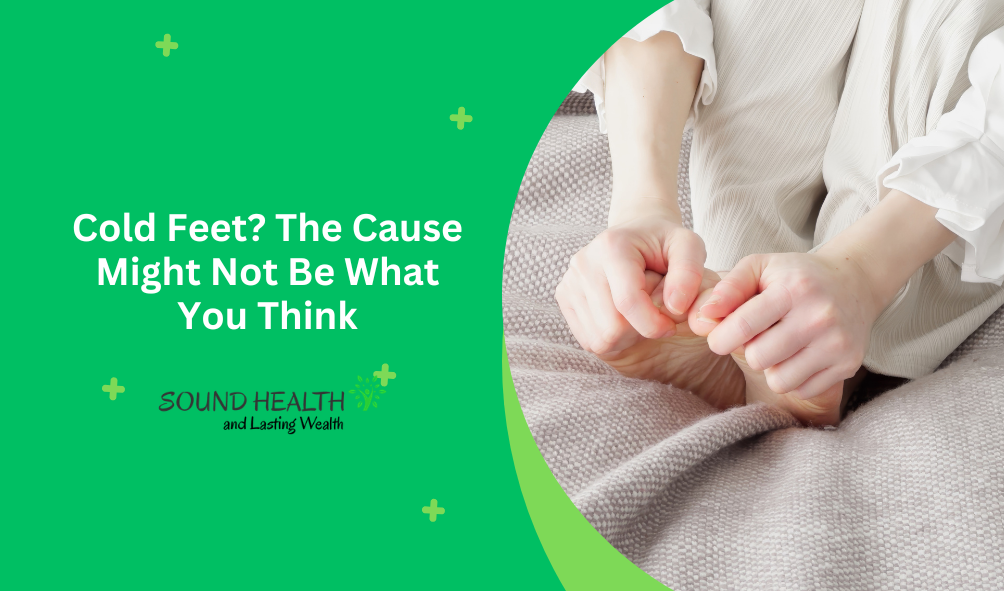

Most people assume cold feet are caused by poor circulation. Sometimes they are. But the list of causes extends far beyond that, and several of them are things you would never connect to your feet. Caffeine, including the caffeine in Diet Coke, temporarily constricts blood vessels in your extremities. Iron and vitamin B12 deficiencies reduce your blood’s ability to carry oxygen to your toes. An underactive thyroid slows your metabolism and makes cold sensitivity worse. Chronic stress, certain medications, and nerve damage all belong on the list too. This article covers nine causes of cold feet that most people overlook, and explains when cold feet are harmless versus when they deserve a doctor’s attention.

Your Feet Might Be Trying to Tell You Something
Cold feet are so common that most people treat them as a minor nuisance. Thicker socks. A heating pad. An extra blanket at night. Problem managed.
But chronically cold feet, the kind that persist regardless of room temperature, that feel icy even under a warm blanket, or that are cold to the touch when the rest of your body feels fine, are not always an issue of insufficient socks. They can be a signal from your body that something internal has shifted.
According to the Cleveland Clinic, cold feet occur when blood flow to the feet is reduced or when nerve damage changes the way the feet sense temperature (Cleveland Clinic, 2026). The causes range from benign (sitting too long) to medically significant (peripheral artery disease, diabetes, thyroid dysfunction).
The surprise is how many of the common causes have nothing to do with “poor circulation” in the way most people understand that phrase. Some are dietary. Some are hormonal. Some are sitting in a can on your desk right now.
Also Read | How High Blood Sugar Causes Diabetic Foot Ulcers and How to Prevent Them
9 Causes of Cold Feet Most People Do Not Consider
1. Caffeine (Yes, Including Diet Coke)
This is the one nobody expects. If you drink Diet Coke, coffee, energy drinks, or caffeinated tea throughout the day and your feet are chronically cold, the caffeine itself may be contributing.
Caffeine is a vasoconstrictor. It temporarily narrows blood vessels, including the small vessels in your hands and feet. When those vessels constrict, less warm blood reaches your extremities, and your feet get cold.
“Studies show that caffeine can temporarily constrict blood flow to your extremities,” says Zachary Cartun, MD, co-founder and chief medical officer of Stride Soles. “And without enough blood pumping through, feet grow frigid” (AOL Health, 2026).
The effect is especially noticeable for people who drink caffeinated beverages throughout the day and never give their blood vessels a chance to fully relax. A morning coffee plus an afternoon Diet Coke plus an evening tea adds up to persistent mild vasoconstriction across most of the day.
The irony, as Dr. Cartun points out, is that people who drink hot coffee specifically to warm up may be doing the opposite. The caffeine works against the warmth of the liquid.
What to try: Switch to caffeine-free beverages for two to three weeks and see if your feet respond. It is a simple, cost-free experiment that can rule this cause in or out.
2. Iron Deficiency Anemia
Iron-deficiency anemia is the most common nutritional deficiency in the United States and worldwide. It occurs when the body lacks enough iron to produce adequate hemoglobin, the protein in red blood cells that carries oxygen. Without enough hemoglobin, less oxygen reaches the tissues in your extremities, and without that oxygen, your feet feel cold.
Iron-deficiency anemia can occur in otherwise healthy people, and it is especially common in women of childbearing age, people on restrictive diets, and individuals with chronic gastrointestinal bleeding they may not be aware of.
Symptoms beyond cold feet include fatigue, weakness, pale skin, shortness of breath, and brittle nails.
What to try: Ask your doctor for a complete blood count (CBC) and serum ferritin test. If iron is low, dietary changes (red meat, lentils, spinach, fortified cereals) and supplementation can often resolve the issue. Iron supplements are best absorbed with vitamin C.
3. Vitamin B12 Deficiency
B12 plays a critical role in nerve function and red blood cell production. A deficiency can reduce the blood’s oxygen-carrying capacity and also directly damage peripheral nerves, both of which can make your feet feel cold, numb, or tingly (Medical News Today, 2025).
B12 deficiency is particularly common in adults over 50 (due to decreased stomach acid needed for absorption), in people who follow vegan or vegetarian diets (B12 is found almost exclusively in animal products), and in individuals taking proton pump inhibitors (PPIs) or metformin long-term.
What to try: B12 levels can be checked with a simple blood test. Good dietary sources include clams, salmon, tuna, beef, eggs, and Greek yogurt. If absorption is impaired, sublingual supplements or B12 injections may be necessary.
4. Hypothyroidism
An underactive thyroid gland produces insufficient thyroid hormone, which slows the body’s metabolism. Because metabolism directly controls how much heat your body generates, hypothyroidism often makes people feel cold all over, but the effect is especially noticeable in the hands and feet (Healthline, 2025; Cleveland Clinic, 2026; Medical News Today, 2025).
Cold intolerance is, in fact, one of the classic early symptoms of hypothyroidism. Other symptoms include fatigue, weight gain, dry skin, hair thinning, constipation, and memory problems.
Hypothyroidism is far more common in women than men and becomes increasingly prevalent after age 50.
What to try: A thyroid function test (TSH) is a standard blood test that most doctors can order. If TSH is elevated, it indicates the thyroid is underactive and hormone replacement therapy (levothyroxine) can correct the issue and resolve the cold sensitivity.
5. Raynaud’s Phenomenon
Raynaud’s is a condition in which blood vessels in the fingers and toes overreact to cold temperatures or stress, going into exaggerated spasm and dramatically reducing blood flow. During an attack, the affected areas turn white, then blue, then red as circulation returns (Cleveland Clinic, 2026).
Primary Raynaud’s (Raynaud’s disease) occurs on its own without an underlying cause. Secondary Raynaud’s (Raynaud’s phenomenon) is associated with autoimmune conditions such as scleroderma, lupus, and rheumatoid arthritis.
The Cleveland Clinic estimates that 5 to 10% of the U.S. population is affected by some degree of Raynaud’s, with most cases being primary and mild (Cleveland Clinic, 2026). The condition is most common in young women.
What to try: Keep a log of when your feet (and hands) go cold and what triggers the episodes. If you notice color changes (white, blue, red sequence), mention this specifically to your doctor. Primary Raynaud’s is usually managed with lifestyle measures; secondary Raynaud’s requires treatment of the underlying condition.
6. Chronic Stress and Anxiety
When your body perceives a threat, whether from a predator or a Monday morning deadline, the stress response redirects blood away from your extremities and toward your heart and muscles. This is the “fight or flight” response, and it is mediated by adrenaline and cortisol (Medical News Today, 2025).
If you are under chronic stress, this redirection happens repeatedly throughout the day. The result: cold feet and hands that seem disconnected from your actual environment.
Dr. Cartun notes that your body “can’t tell whether [the stress] is caused by a bear attack or a bad commute, so, to be safe, it assumes bear attack” and constricts peripheral blood vessels accordingly (AOL Health, 2026).
What to try: Notice whether your feet are coldest during high-stress periods (work deadlines, difficult conversations, anxiety episodes). If the pattern holds, stress management techniques such as regular exercise, breathing exercises, and therapy may improve circulation as a secondary benefit.
7. Peripheral Neuropathy
Peripheral neuropathy is damage to the nerves outside the brain and spinal cord. When the nerves in your feet are damaged, they may incorrectly signal “cold” even when the feet are actually warm to the touch. The feet may also feel numb, tingling, or burning.
The most common cause of peripheral neuropathy is diabetes, but it can also result from B12 deficiency, alcohol use disorder, autoimmune conditions, kidney disease, infections, and certain medications (Healthline, 2025; Cleveland Clinic, 2026).
This is a particularly important cause to identify because the cold sensation is not about blood flow at all. It is about faulty nerve signaling, and it requires a different kind of treatment.
What to try: If your feet feel cold but are warm to the touch, neuropathy should be considered. A nerve conduction study (EMG) can assess nerve function. Managing the underlying cause (blood sugar control for diabetes, B12 supplementation for deficiency) is the primary treatment.
8. Medications
Several commonly prescribed medications can cause cold feet as a side effect by altering blood flow or nerve function.
The Cleveland Clinic lists the following categories (Cleveland Clinic, 2026):
- Beta-blockers (used for high blood pressure): slow the heart rate and reduce blood pressure, which can decrease blood flow to the extremities
- Ergotamine (used for migraines): constricts blood vessels
- Pseudoephedrine (in cold and sinus medications): narrows blood vessels as part of its decongestant action
If your cold feet started or worsened after beginning a new medication, the timing is worth mentioning to your prescribing doctor.
9. Sedentary Lifestyle and Prolonged Sitting
This is the simplest and most fixable cause on the list. Sitting for extended periods reduces blood flow to the lower extremities. Blood pools in the legs, the small vessels in the feet receive less fresh, warm blood, and the feet grow cold.
People who work desk jobs report cold feet far more frequently than those who move regularly during the day (DPM/Michigan Foot Doctors, 2026). The solution does not require a gym membership. Standing up and walking for two to three minutes every hour is often enough to restore adequate circulation to the feet.
When Cold Feet Are Just Cold Feet vs. When They Signal a Problem
| Situation | Likely Harmless | Worth Investigating |
|---|---|---|
| Feet get cold in a cold room and warm up when you put on socks | Normal thermoregulation | No action needed |
| Feet are cold during a stressful period and warm up afterward | Stress response | Only if chronic or severe |
| Feet are cold after sitting for hours at a desk | Reduced circulation from inactivity | Get up and move every hour |
| Feet are persistently cold regardless of temperature | Could signal anemia, thyroid, or vascular issue | Schedule a medical evaluation |
| Feet feel cold but are warm to the touch | Possible neuropathy | See a doctor, especially if you have diabetes |
| Toes change color (white, blue, red) in cold or stress | Likely Raynaud’s | See a doctor |
| Cold feet with numbness, tingling, or pain | Possible nerve damage or vascular disease | See a doctor promptly |
| Cold feet with fatigue, weight changes, or hair thinning | Possible thyroid or nutritional issue | Request bloodwork |
Also Read | Restless Legs Syndrome and Iron: What to Ask Your Doctor
What to Ask Your Doctor
If your cold feet are persistent, your doctor can run several straightforward tests to identify or rule out the most common causes:
- Complete blood count (CBC) and iron studies to check for iron-deficiency anemia
- Serum B12 level to check for vitamin B12 deficiency
- Thyroid function test (TSH) to check for hypothyroidism
- Fasting blood glucose and HbA1c to screen for diabetes
- Ankle-brachial index (ABI) to evaluate for peripheral artery disease
- Nerve conduction study (EMG) if neuropathy is suspected
Most of these are routine blood tests that can be performed at a standard lab visit. If the results point to a specific cause, treatment is often straightforward and effective.
Simple Fixes Worth Trying First
Before booking a doctor’s appointment, a few low-cost experiments can help you narrow down the cause:
- Cut caffeine for two weeks. If you drink multiple caffeinated beverages a day, switching to decaf versions for two to three weeks can reveal whether caffeine-driven vasoconstriction is the problem.
- Move every hour. Set a timer. Stand up, walk around for two to three minutes, then sit back down. If your cold feet improve with regular movement, sedentary circulation may be the primary issue.
- Check your diet. If you eat very little red meat, leafy greens, or animal products, your iron and B12 intake may be insufficient. A daily multivitamin can help bridge the gap while you wait for bloodwork.
- Manage stress actively. If cold feet correlate with stress, try a week of daily walking (30 minutes) and see whether the symptom improves. Exercise both reduces stress hormones and improves peripheral circulation.
- Wear appropriate footwear. This sounds obvious, but thin-soled shoes and cotton socks are poor insulators. Wool or wool-blend socks and insulated footwear make a measurable difference, especially in air-conditioned environments.
Myths vs. Facts About Cold Feet
| Myth | Fact |
|---|---|
| Cold feet always mean poor circulation. | Cold feet have at least nine common causes, including anemia, thyroid dysfunction, nerve damage, caffeine, stress, and medications. Poor circulation is just one possibility. |
| Only older people get cold feet. | Cold feet are common across all age groups. Raynaud’s most commonly affects young women, and B12 deficiency can occur at any age. |
| Thicker socks will fix the problem. | Warm socks help if the cause is environmental. They do not address anemia, hypothyroidism, nerve damage, or vasoconstriction from caffeine or stress. |
| Cold feet are never serious. | Persistently cold feet can signal peripheral artery disease, diabetes, or thyroid dysfunction, all of which benefit from early treatment. |
| Drinking hot beverages warms your feet. | If the beverage contains caffeine, it may constrict blood vessels and reduce blood flow to your feet despite the warmth of the drink. |
Also Read | Enhancing Leg Circulation with Natural Herbs: How to Use Them
Frequently Asked Questions
Why are my feet always cold even in warm weather?
Persistently cold feet in warm environments suggest an internal cause rather than an environmental one. The most common culprits are iron-deficiency anemia, B12 deficiency, hypothyroidism, Raynaud’s phenomenon, peripheral neuropathy, chronic stress, and caffeine-driven vasoconstriction. A few basic blood tests can rule most of these in or out.
Can caffeine really make your feet cold?
Yes. Caffeine is a vasoconstrictor that temporarily narrows blood vessels, including those in your hands and feet. People who consume multiple caffeinated drinks throughout the day maintain mild vasoconstriction for most of their waking hours, which can contribute to chronically cold extremities.
What vitamin deficiency causes cold feet?
Both iron deficiency and vitamin B12 deficiency can cause cold feet. Iron deficiency reduces the blood’s oxygen-carrying capacity. B12 deficiency does the same and can also damage peripheral nerves, making feet feel cold even when they are objectively warm.
When should I see a doctor about cold feet?
See a doctor if your feet are persistently cold regardless of temperature, if they change color (white, blue, or red), if they feel cold but are warm to the touch, if cold feet are accompanied by numbness or tingling, or if you also have fatigue, weight changes, or shortness of breath.
Can stress cause cold feet?
Yes. The fight-or-flight response to stress causes adrenaline to constrict blood vessels in the extremities, redirecting blood toward the core and major muscle groups. Chronic or repeated stress can cause this response to occur frequently enough that cold feet become a recurring symptom.
Do cold feet mean I have diabetes?
Not necessarily. Cold feet have many possible causes. However, diabetes can contribute to cold feet through two mechanisms: peripheral neuropathy (nerve damage that alters temperature sensation) and peripheral artery disease (reduced blood flow). If you have risk factors for diabetes, it is worth screening.
Expert Tips
- Track the pattern. Keep a simple log for one to two weeks noting when your feet are coldest, what you ate or drank beforehand, your stress level, and how long you had been sitting. Patterns often point toward the cause more quickly than guesswork.
- Do not skip bloodwork. Three inexpensive blood tests (CBC with iron, B12, TSH) can rule out or confirm the three most common internal causes of chronically cold feet: anemia, B12 deficiency, and hypothyroidism.
- Pay attention to color changes. If your toes turn white or blue during cold exposure or stress, and then turn red when warming up, that pattern is characteristic of Raynaud’s and is worth reporting to your doctor.
- Try the caffeine experiment first. It is the simplest test available. Two weeks without caffeine costs nothing and can provide a clear answer.
- Do not treat cold feet as purely cosmetic. In most cases they are harmless, but persistently cold feet are occasionally the first symptom of thyroid disease, diabetes, or vascular conditions that benefit from early treatment.
Key Takeaways
- Cold feet have at least nine common causes beyond simple exposure to cold temperatures. Poor circulation is just one of them.
- Caffeine, including the caffeine in Diet Coke, coffee, and energy drinks, temporarily constricts blood vessels and reduces blood flow to the extremities. Cutting caffeine for two to three weeks is a simple diagnostic step.
- Iron-deficiency anemia and B12 deficiency both reduce the blood’s oxygen-carrying capacity and are among the most frequently overlooked causes of chronically cold feet.
- Hypothyroidism slows metabolism and heat generation, making cold sensitivity one of its earliest symptoms. A TSH blood test can confirm it.
- Raynaud’s phenomenon causes exaggerated blood vessel spasms in the fingers and toes and affects an estimated 5 to 10% of the U.S. population.
- Peripheral neuropathy, most commonly from diabetes, can make feet feel cold even when they are objectively warm. This is a nerve signaling problem, not a blood flow problem.
- Chronic stress, certain medications (beta-blockers, ergotamine, pseudoephedrine), and prolonged sitting are all modifiable causes that can be addressed without medication.
The Bigger Picture
Cold feet are one of those symptoms that sit in a gray area. Most of the time, they are a minor annoyance with a simple explanation. But occasionally, they are the first sign that your thyroid is slowing down, your iron is depleted, your nerves are taking damage from uncontrolled blood sugar, or your arteries are narrowing in ways you cannot yet feel.
The difference between those two categories is a conversation with your doctor and a few blood tests. The cost of those tests is low. The cost of ignoring a treatable condition because you assumed it was “just cold feet” can be much higher.
And if the answer turns out to be that your three-Diet-Coke-a-day habit has been quietly constricting the blood vessels in your toes for years, that is actually the best possible outcome. Because the fix is a fridge full of caffeine-free alternatives and two weeks of patience.
If you found this article useful, share it with someone whose feet are always cold. You can also sign up for our newsletter for more evidence-based health content delivered to your inbox.
Also Read | Don’t Ignore Cold Feet: The Surprising Link to Diabetes, Thyroid, & More
References
AOL Health. (2026). What causes cold feet? It may be your Diet Coke, not poor circulation. https://www.aol.com/articles/causes-cold-feet-may-diet-000020000.html
Cleveland Clinic. (2026). Cold feet: Causes & treatment. https://my.clevelandclinic.org/health/diseases/23045-cold-feet
Cleveland Clinic. (2026). Raynaud’s syndrome: Symptoms, causes & treatment. https://my.clevelandclinic.org/health/diseases/9849-raynauds-phenomenon
Healthline. (2025). Cold feet. https://www.healthline.com/health/cold-feet
Medical News Today. (2025). Cold feet: Causes and remedies. https://www.medicalnewstoday.com/articles/320327
Michigan Foot Doctors/DPM. (2026). Cold feet 2026: Causes & medical problems. https://www.michiganfootdoctors.com/cold-feet-causes-medical-problem-treatment-guide/
Solace Health. (n.d.). What are the worst foods for neuropathy? https://www.solace.health/articles/worst-foods-for-neuropathy