
After 50, and especially after menopause, bones lose density faster than the body rebuilds them. The drop in estrogen speeds this up, which is why roughly 1 in 2 women over 50 will experience an osteoporosis-related fracture in their lifetime (Rizzoli & Chevalley, 2024).
The encouraging part is how much you can influence. Four evidence-based habits, adequate calcium and vitamin D, enough protein, the right kind of exercise, and cutting the things that strip bone, do most of the heavy lifting.

The four ways this article covers:
- Get enough calcium and vitamin D, mostly from food
- Eat enough protein
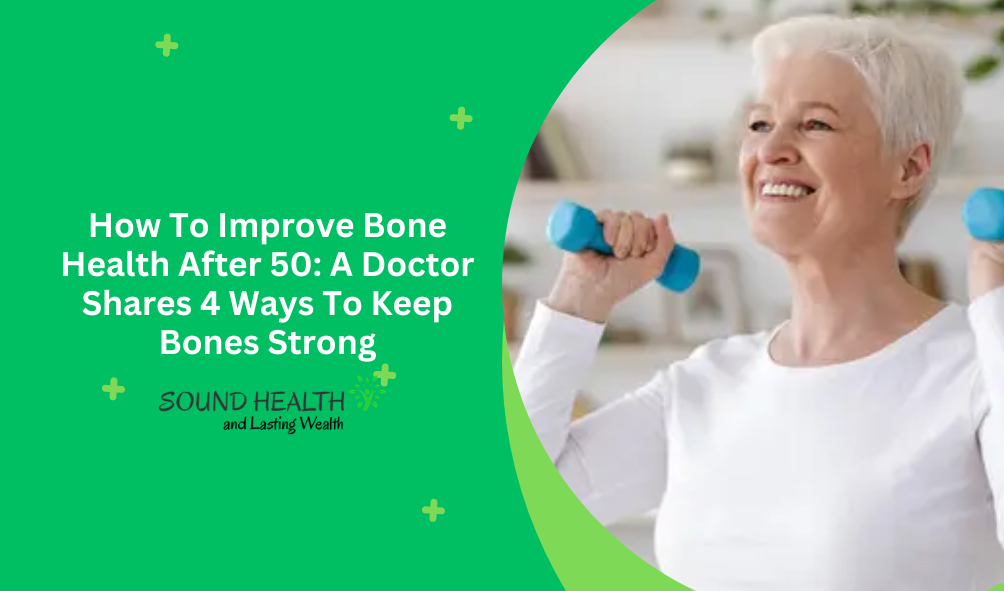
- Do weight-bearing and resistance exercise
- Remove the habits that weaken bone
You will also learn who should get a bone density scan, which numbers to aim for, and when medication enters the picture.
Why Bone Health Changes After 50
Bone is living tissue. Throughout life it is constantly broken down and rebuilt in a balanced cycle. Before about age 30 you build more than you lose, reaching peak bone mass. After that, the balance gradually tips toward loss.
For women, menopause accelerates this sharply. Estrogen helps protect bone, and as levels fall during and after the menopause transition, bone loss speeds up, particularly in the first five to ten years after the final period. Men lose bone too, just more slowly and later.
Two related conditions matter here:
- Osteopenia: bone density that is lower than normal but not yet osteoporosis. Think of it as an early warning.
- Osteoporosis: bone density low enough that bones become fragile and break easily, sometimes from a minor fall or even routine movement.
The prevalence of osteoporosis among US adults aged 50 and over is around 12.6%, rising to about 27.1% in women aged 65 and over (USPSTF, 2025). Osteoporosis causes no symptoms until a bone breaks, which is exactly why prevention matters so much. You cannot feel your bones thinning.
Also Read | Women in Perimenopause Feel Extreme Anxiety—Reddit Threads Reveal All
Way 1: Get Enough Calcium and Vitamin D
Calcium is the main mineral in bone, and vitamin D is what allows your body to absorb it. Without enough D, even a calcium-rich diet falls short.
How Much Calcium You Need
| Group | Recommended daily calcium |
|---|---|
| Women aged 50 and under | 1,000 mg |
| Women aged 51 and over | 1,200 mg |
| Men aged 51 to 70 | 1,000 mg |
| Men aged 71 and over | 1,200 mg |
Source: Institute of Medicine reference intakes (Hospital for Special Surgery, 2012).
Food First, Not Supplements First
The most important principle: aim to get calcium from food rather than pills where possible. Dietary calcium comes packaged with other nutrients, and the evidence for food-based calcium is stronger and safer than for high-dose supplements.
Good sources include:
- Dairy such as milk, yoghurt, and cheese
- Fortified plant milks and fortified cereals
- Tinned fish with soft edible bones, such as sardines and salmon
- Tofu set with calcium
- Leafy greens such as kale and bok choy
- Almonds, beans, and lentils
A useful rough guide: a glass of milk, a pot of yoghurt, or a matchbox-sized piece of hard cheese each supply roughly 200 to 300 mg. Three to four servings of calcium-rich food a day gets most women close to target.
A Note of Caution on Calcium Supplements
If you cannot reach your target through food, a supplement can fill the gap. But more is not better. Very high supplemental calcium has been debated in relation to cardiovascular and kidney-stone risk, so the sensible approach is to make up the shortfall, not exceed the target. If you eat 800 mg through food, you need only a small top-up, not a 1,000 mg tablet. Discuss it with your doctor or pharmacist.
Vitamin D
Most guidance recommends 600 IU of vitamin D daily for adults up to 70, and 800 IU for those over 70, though many clinicians target somewhat higher intakes in people with low blood levels (Hospital for Special Surgery, 2012).
Vitamin D is genuinely hard to get from food and is mainly made in the skin through sunlight, which declines with age and varies with latitude, season, and skin tone. For this reason a vitamin D supplement is one of the few that is widely reasonable after 50, particularly in darker months or at higher latitudes. A blood test can tell you whether you are low.
Way 2: Eat Enough Protein
Protein is often left out of bone conversations, which is a mistake. Bone is roughly half protein by volume, and protein provides the structural framework onto which minerals attach.
There is a second reason it matters after 50: protein protects muscle. Muscle loss (sarcopenia) and bone loss (osteoporosis) tend to travel together, and strong muscles reduce falls, which are what actually cause most fractures.
How Much Protein
General guidance for bone and muscle health after 50 is roughly 0.4 grams of protein per pound of body weight, so a 140-pound woman needs around 60 grams daily (Johns Hopkins Medicine, 2025). Many older adults fall short of this.
Research supports the benefit. In one trial, a 20-gram daily protein supplement after a hip fracture led to a 50% reduction in bone loss at the hip over the following year and a shorter rehabilitation stay (Rizzoli & Chevalley, 2024).
Practical Ways to Hit the Target
- Include a protein source at every meal, not just dinner
- Aim for roughly 20 to 30 grams per meal, which is more effective than loading it all at once
- Good sources: eggs, dairy, fish, poultry, lean meat, beans, lentils, tofu, and Greek yoghurt
- Pair protein with calcium where you can, for example yoghurt with almonds, or sardines on toast
An old myth held that protein leaches calcium from bone. Current evidence does not support this in the context of adequate calcium intake. For most people, more protein is protective, not harmful.
Also Read | Your Heart Changes During Perimenopause: Here’s What Doctors Want You to Know
Way 3: Do Weight-Bearing and Resistance Exercise
Bone responds to being loaded. When muscles pull on bone and bone bears weight against gravity, it signals the body to build and maintain density. Not all exercise does this equally.
The Two Types That Build Bone
Weight-bearing exercise means being on your feet, working against gravity:
- Brisk walking and hiking
- Jogging, if your joints and bone density allow
- Dancing
- Stair climbing
- Racket sports
Resistance (strength) training means working muscles against a load:
- Free weights and weight machines
- Resistance bands
- Bodyweight moves such as squats, lunges, and press-ups
Swimming and cycling are excellent for the heart but are not weight-bearing, so they do little for bone density on their own. Enjoy them, but do not rely on them for your bones.
How Much
A reasonable target is weight-bearing and resistance exercise on three to four days a week (Johns Hopkins Medicine, 2025), which aligns with general activity guidance of 150 to 300 minutes of moderate activity weekly plus muscle strengthening on two or more days.
Balance Training Prevents the Fall
Because most fractures happen when someone falls, balance work is as important as strength. Tai chi, yoga, and simple standing-balance drills all reduce fall risk. If you are over 65 or have already had a fall, balance training deserves a regular place in your week.
An Important Safety Note
If you already have osteoporosis or a diagnosed spinal fracture, some movements carry risk. High-impact exercise and deep forward bending or twisting of the spine can be unsafe for fragile vertebrae. This does not mean avoiding exercise, which remains essential, but it does mean getting a tailored program from a physiotherapist or a suitably qualified trainer rather than following a generic high-intensity routine. When in doubt, ask before you load the spine hard.
Way 4: Remove the Habits That Weaken Bone
Building bone matters. So does stopping the things that quietly erode it.
Smoking
Smoking is directly toxic to bone-building cells and is linked to lower bone density and higher fracture risk. Stopping benefits bone at any age, alongside every other health gain.
Excess Alcohol
Heavy drinking interferes with bone formation and raises fall risk. Current guidance suggests keeping to one drink a day or less for bone and general health (University Hospitals, 2025).
Too Little Body Weight
Being significantly underweight is a genuine risk factor for low bone density, partly because body weight itself loads bone and partly through hormonal effects. A history of an eating disorder is also relevant. If this applies to you, mention it to your doctor, as it raises your priority for assessment.
Excess Salt, Caffeine, and Fizzy Drinks
The effects here are smaller and often overstated, but very high salt and caffeine intakes can nudge calcium loss, and cola-type drinks have been associated with lower bone density in some studies. Moderation, rather than elimination, is the sensible message.
Watch for Bone-Thinning Medications
Some long-term medications affect bone, most notably oral corticosteroids taken for months or years. Others include certain epilepsy drugs, some breast cancer treatments, and long-term high-dose proton pump inhibitors. Never stop a prescribed medication on your own, but do ask your doctor whether anything you take long term affects bone, and whether you need monitoring.
Foods for Bone Health at a Glance
| Eat regularly | Limit |
|---|---|
| Dairy or fortified plant milks | Excess alcohol |
| Tinned fish with bones (sardines, salmon) | Very high salt intake |
| Leafy greens (kale, bok choy) | Large amounts of caffeine |
| Beans, lentils, tofu | Cola-type soft drinks |
| Eggs, lean meat, poultry, fish | Ultra-processed, nutrient-poor foods |
| Nuts and seeds | |
| Fortified cereals |
Also Read | Endocrinologists’ Secrets About Menopause, Thyroid Health, and Women’s Weight Loss
Should You Have a Bone Density Scan?
A bone density scan, called a DEXA (or DXA) scan, is a quick, painless X-ray that measures bone density, most importantly at the hip and spine. It is the standard test for diagnosing osteoporosis before a fracture happens.
The US Preventive Services Task Force recommends DEXA screening for (USPSTF, 2025):
- All women aged 65 and over
- Postmenopausal women under 65 who are at increased risk, as identified by a formal fracture risk tool such as FRAX
The Task Force found the evidence insufficient to recommend routine screening in men, so decisions there are individualised.
Risk factors that may warrant earlier screening include:
- A parent who fractured a hip
- Previous fracture from a minor fall after age 50
- Long-term steroid use
- Smoking or heavy alcohol use
- Low body weight
- Early menopause
- Certain conditions such as rheumatoid arthritis, coeliac disease, or overactive thyroid
If you have several of these, ask your doctor whether a FRAX assessment or a DEXA scan is appropriate for you, even before 65. The FRAX tool estimates your ten-year fracture risk and helps decide whether scanning or treatment is worthwhile.
When Lifestyle Is Not Enough: Medication
Diet and exercise are the foundation, but for people with established osteoporosis or high fracture risk, medication substantially reduces the chance of breaking a bone. This is a decision for you and your doctor, guided by your DEXA result and FRAX score.
Broad categories include:
| Type | How it works |
|---|---|
| Bisphosphonates | Slow bone breakdown; usually first-line |
| Denosumab | An injection that slows bone breakdown |
| Anabolic agents | Actively build new bone; used in higher-risk cases |
| Hormone-related therapy | May be considered for some women, weighing individual risks and benefits |
The key point: needing medication is not a failure of your lifestyle efforts. For higher-risk bones, the two work together, and declining effective treatment when fracture risk is high carries real consequences.
Myths vs. Facts
| Myth | Fact |
|---|---|
| Only calcium matters for bones | Vitamin D, protein, and exercise are equally important. |
| Supplements are the best way to get calcium | Food-based calcium is safer and better supported by evidence. |
| More calcium is always better | Exceeding the target offers no extra benefit and may carry risks. |
| Walking alone protects your bones | Walking helps, but resistance training is needed to build strength. |
| Swimming is great for bone density | Swimming is not weight-bearing and does little for bone directly. |
| Protein is bad for bones | Adequate protein protects both bone and muscle. |
| Osteoporosis has warning signs | It is silent until a fracture. Screening is the only way to catch it early. |
| It is too late to help your bones after 50 | Bone responds to diet and exercise at every age. |
Also Read | Restless Legs Syndrome and Iron: What to Ask Your Doctor
Common Mistakes to Avoid
- Relying on a single high-dose calcium pill. Prioritise food, then top up only the shortfall.
- Ignoring protein. It protects the muscle that keeps you from falling.
- Doing only cardio. Add resistance training two or more days a week.
- Skipping balance work. Preventing falls prevents most fractures.
- Assuming you are fine because you feel fine. Osteoporosis is silent.
- Forgetting to ask about your medications. Steroids and some others thin bone.
- Fearing exercise after an osteoporosis diagnosis. Get a tailored plan rather than stopping.
When to See a Doctor
Book an appointment if you:
- Are a woman aged 65 or over and have never had a bone density scan
- Are postmenopausal, under 65, with one or more risk factors
- Have broken a bone from a minor fall after age 50
- Have lost height or developed a stooped upper back
- Take long-term steroids or another bone-affecting medication
- Have a parent who fractured a hip
Seek prompt care if you:
- Have sudden, severe back pain, which can signal a spinal compression fracture
- Have fallen and cannot bear weight or suspect a broken bone
A loss of height or a gradually rounding upper back is not simply ageing. It can indicate spinal fractures that have occurred without an obvious injury, and it deserves assessment.
Action Steps
- Tally your calcium for a typical day and see how close you get to 1,200 mg from food.
- Add a protein source to breakfast if you usually skip it.
- Schedule resistance training twice a week, starting light.
- Add two minutes of balance practice to your daily routine.
- Ask for a vitamin D blood test if you have never had one.
- If you are 65 or have risk factors, ask about a DEXA scan or FRAX assessment.
- Review long-term medications with your doctor for any bone effects.
Frequently Asked Questions
Can I rebuild bone after 50, or only slow the loss?
Lifestyle measures mainly slow loss and preserve what you have, which is hugely valuable. Certain medications can actively build new bone in people with osteoporosis. Either way, action after 50 makes a real difference.
Is walking enough to protect my bones?
Walking is genuinely helpful as weight-bearing exercise, but it does not build strength on its own. Combine it with resistance training two or more days a week for the best protection.
How much calcium should a woman over 50 get?
1,200 mg daily, ideally mostly from food. Only use supplements to make up the difference, not to exceed the target.
Do I need a calcium supplement?
Only if you cannot reach your target through diet. Food-based calcium is preferred, and excess supplemental calcium offers no added benefit.
Is swimming good for my bones?
It is excellent for fitness but is not weight-bearing, so it does little for bone density directly. Pair it with weight-bearing activity.
At what age should I get a bone density scan?
All women at 65, and earlier for postmenopausal women with risk factors, based on a fracture risk assessment. Ask your doctor if you are unsure.
Does menopause hormone therapy help bones?
It can help preserve bone in some women, but the decision weighs individual risks and benefits and should be made with your clinician.
Is it safe to lift weights if I have osteoporosis?
Usually yes, and it is beneficial, but with a program tailored to avoid high-impact moves and heavy spinal bending or twisting. Get guidance from a physiotherapist first.
Key Takeaways
- Bone loss accelerates after menopause, and about half of women over 50 will have an osteoporosis-related fracture in their lifetime.
- Aim for 1,200 mg of calcium daily after 50, mostly from food, plus adequate vitamin D.
- Protein protects both bone and the muscle that prevents falls; aim for roughly 0.4 g per pound of body weight.
- Weight-bearing and resistance exercise on three to four days a week builds and maintains bone; balance work prevents falls.
- Stop smoking, limit alcohol to one drink a day or less, and review bone-thinning medications.
- Osteoporosis is silent, so screening matters. Women should have a DEXA scan by 65, earlier with risk factors.
- Medication meaningfully reduces fracture risk when bones are already fragile.
The Bottom Line
Losing bone after 50 is normal, but losing enough to fracture is not inevitable. The four habits that matter most are within your control: feed your bones with calcium, vitamin D, and protein; load them with weight-bearing and resistance exercise; protect yourself from falls with balance work; and stop the habits that quietly erode density.
Start with food and movement this week. Then, if you are 65 or carry risk factors, book the conversation about a bone density scan. Osteoporosis gives no warning, so the scan is how you find out while there is still time to act.
Strong bones are built through consistent, unglamorous habits repeated over years. The best time to start protecting them was in your thirties. The second best time is today.
Also Read | Why Do I Sweat So Much After 50? Causes and Fixes
References
Hospital for Special Surgery. (2012). Calcium supplements, vitamin D, and osteoporosis. https://www.hss.edu/health-library/conditions-and-treatments/calcium-supplements-vitamind-osteoporosis
Johns Hopkins Medicine. (2025). What you can do now to help prevent osteoporosis. https://www.hopkinsmedicine.org/health/conditions-and-diseases/osteoporosis/what-you-can-do-now-to-prevent-osteoporosis
National Institutes of Health, Office of Dietary Supplements. (2024). Calcium: Fact sheet for health professionals. https://ods.od.nih.gov/factsheets/Calcium-HealthProfessional/
National Osteoporosis Foundation / Bone Health and Osteoporosis Foundation. (2024). Bone health basics. https://www.bonehealthandosteoporosis.org/
Rizzoli, R., & Chevalley, T. (2024). Nutrition and osteoporosis prevention. Current Osteoporosis Reports, 22(6), 515–522. https://doi.org/10.1007/s11914-024-00892-0
University Hospitals. (2025). Top 5 ways to support bone health. https://www.uhhospitals.org/blog/articles/2025/04/top-5-ways-to-support-bone-health
US Preventive Services Task Force. (2025). Screening for osteoporosis to prevent fractures: US Preventive Services Task Force recommendation statement. JAMA, 333(6), 498–508. https://doi.org/10.1001/jama.2024.27154
World Health Organization. (2020). WHO guidelines on physical activity and sedentary behaviour. https://www.who.int/publications/i/item/9789240015128