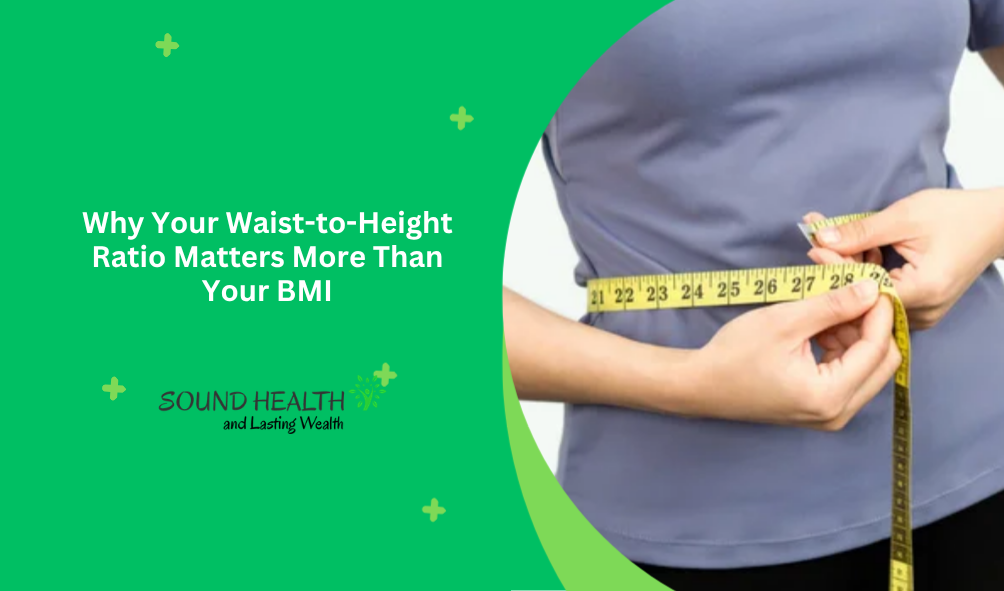

BMI has been the default measure of body composition for decades, but a growing body of research shows it misses a critical factor: where your fat is stored. A 2025 study published in The Lancet Regional Health found that waist-to-height ratio (WHtR) was the only obesity measure that remained a significant predictor of cardiovascular disease after adjusting for all other major risk factors. BMI and waist circumference both lost their predictive power in the same analysis. The rule is remarkably simple: keep your waist measurement to less than half your height. If your WHtR is above 0.5, your cardiometabolic risk is elevated, even if your BMI says you are “normal weight.” This article explains why WHtR works better, how to measure yours in 30 seconds, what the numbers mean, and what to do if yours is too high.

The Problem With BMI
Body mass index has been the standard screening tool for obesity since the 1970s. It is calculated by dividing your weight in kilograms by your height in meters squared. A BMI under 25 is classified as “normal weight,” 25 to 29.9 is “overweight,” and 30 or above is “obese.”
The formula is simple, which is its greatest strength and its greatest weakness.
BMI cannot tell the difference between fat and muscle. It cannot distinguish between subcutaneous fat (the fat under your skin, which is relatively benign) and visceral fat (the fat surrounding your internal organs, which is metabolically active and strongly linked to heart disease, type 2 diabetes, and stroke). It does not account for where fat is distributed on the body.
This means BMI systematically misclassifies two groups:
- People with high muscle mass. A 5’10” man who weighs 210 pounds because of strength training will have a BMI of 30.1, classifying him as “obese” despite having very low body fat.
- People with “normal” weight but high visceral fat. A person with a BMI of 24 (normal weight) but a large waist may carry significant visceral fat around their organs. BMI calls them healthy. Their cardiovascular risk says otherwise.
“BMI is the most common measure of obesity, but it is increasingly recognized as an insufficient indicator of metabolic health and cardiovascular risk,” said Dr. Amra Jujic of Lund University, presenting research at the European Society of Cardiology’s Heart Failure 2025 congress (ESC, 2025).
What Waist-to-Height Ratio Measures (And Why It Matters)
Waist-to-height ratio (WHtR) is exactly what it sounds like: your waist circumference divided by your height, both measured in the same units (inches or centimeters).
Unlike BMI, WHtR is specifically designed to capture central adiposity, the accumulation of fat around the abdomen and internal organs. This is the fat that matters most for cardiovascular and metabolic health.
Visceral fat is not passive tissue. It is metabolically active, producing inflammatory cytokines, disrupting insulin signaling, raising blood pressure, and altering lipid profiles. Two people can weigh the same amount, but if one stores fat primarily around the waist and the other distributes it more evenly, their cardiovascular risk profiles are dramatically different.
WHtR captures that difference. BMI does not.
Also Read | Eating This Diet Can Reduce Heart Disease Risk In Postmenopausal Women
What the Research Shows
The 2025 Lancet Study: WHtR Was the Only Measure That Held Up
A study published in October 2025 in The Lancet Regional Health by researchers from UPMC and the University of Pittsburgh analyzed 2,721 adults with no cardiovascular disease at baseline, followed for more than five years.
All three standard obesity measures (BMI, waist circumference, and WHtR) were associated with higher cardiovascular risk in the initial analysis. But when the researchers adjusted for all other classic risk factors, including age, sex, smoking, exercise, diabetes, hypertension, and cholesterol, only waist-to-height ratio remained a significant predictor of cardiovascular disease (Mendes et al., 2025).
BMI and waist circumference both lost their predictive power after adjustment. WHtR did not.
“Using waist-to-height ratio as a cardiovascular screening tool could lead to earlier identification and intervention for at-risk patients who might otherwise be missed,” said senior author Dr. Marcio Bittencourt, associate professor of medicine at Pitt and cardiologist at UPMC (University of Pittsburgh, 2025).
Critically, much of WHtR’s predictive power was concentrated among individuals with a BMI under 30, meaning people below the standard threshold for obesity. These are people that BMI would classify as normal weight or overweight, not obese, who nevertheless carry dangerous amounts of visceral fat. WHtR identifies them. BMI does not.
The 2025 ESC Heart Failure Study: WHtR Predicted Heart Failure Over 13 Years
Research presented at Heart Failure 2025, a congress of the European Society of Cardiology, analyzed nearly 2,000 individuals from the Malmö Preventive Project over a median follow-up of 13 years. WHtR was found to significantly predict incident heart failure and was proposed as a better metric than BMI for identifying patients who could benefit from targeted obesity interventions (ESC, 2025).
“Having a waist measurement that is less than half your height is ideal,” said study co-author Dr. John Molvin from Lund University and Malmö University Hospital (ESC, 2025).
The 2026 JACC Study: Where Fat Lives Matters More Than How Much You Weigh
A August 2026 study published in the Journal of the American College of Cardiology (JACC) analyzed data from hundreds of thousands of participants across large-scale cohort studies. The researchers found that waist-based measures provided critical information about cardiovascular risk even among people with a BMI considered normal (Dardari et al., 2026).
“This enormously important study authoritatively shows that waist circumference and waist-to-hip ratio provide critical information about cardiovascular risk, even among people with a BMI considered normal,” said JACC Editor-in-Chief Harlan M. Krumholz, MD, of Yale. “Where fat is distributed matters, and these simple measures should be part of routine cardiovascular risk assessment” (News-Medical, 2026).
How to Calculate Your Waist-to-Height Ratio in 30 Seconds
Step 1: Measure Your Waist
Stand up straight. Find the midpoint between the top of your hip bone and the bottom of your ribcage (roughly at your navel for most people). Wrap a flexible tape measure around your waist at that point. The tape should be snug but not compressing the skin. Exhale normally and read the measurement.
Step 2: Measure Your Height (Or Use a Known Measurement)
If you know your height, use it. If not, stand against a wall without shoes, mark the top of your head, and measure from the floor to the mark.
Step 3: Divide
Divide your waist measurement by your height. Both must be in the same units.
Example in inches: Waist = 34 inches, Height = 66 inches. WHtR = 34 / 66 = 0.515
Example in centimeters: Waist = 86 cm, Height = 168 cm. WHtR = 86 / 168 = 0.512
What Your Number Means
| WHtR | Category | What It Indicates |
|---|---|---|
| Below 0.40 | Underweight range | May indicate insufficient body fat; discuss with your doctor |
| 0.40 to 0.49 | Healthy range | Low cardiometabolic risk |
| 0.50 to 0.59 | Increased risk | Central adiposity is elevated; lifestyle changes recommended |
| 0.60 and above | Substantially increased risk | Significant visceral fat accumulation; medical evaluation and intervention recommended |
The primary cutoff is 0.5. If your waist is less than half your height, your central adiposity is within a range associated with lower cardiovascular and metabolic risk. If it exceeds half your height, risk begins to rise.
A 2012 meta-analysis of 31 prospective studies published in Obesity Reviews confirmed that WHtR with a boundary value of 0.5 was a better screening tool than waist circumference or BMI alone for detecting cardiometabolic risk factors including diabetes, hypertension, dyslipidemia, and metabolic syndrome across diverse populations (Ashwell et al., 2012).
The simplicity of the message is part of its power: keep your waist to less than half your height.
Also Read | Testosterone and Heart Safety: What the TRAVERSE Study Shows
Why BMI Gets It Wrong (And WHtR Gets It Right)
| Factor | BMI | WHtR |
|---|---|---|
| Distinguishes fat from muscle | No | Partially (waist measurement reflects fat, not muscle) |
| Captures visceral fat distribution | No | Yes |
| Works across different body types | Poorly (misclassifies muscular and slim-but-viscerally-obese individuals) | Better across body types and ethnicities |
| Identifies “normal weight but metabolically unhealthy” individuals | No | Yes |
| Adjusts for height naturally | Partially | Yes (height is in the denominator) |
| Requires a scale | Yes | No (tape measure only) |
| Predicts CVD after adjusting for other risk factors | Lost significance in the 2025 Lancet study | Retained significance as the only independent predictor |
The bottom line: BMI measures total body size. WHtR measures where your body stores its fat. The second question is far more relevant to cardiovascular disease.
What to Do If Your WHtR Is Above 0.5
A WHtR above 0.5 does not mean you have heart disease. It means your body is storing fat in a pattern associated with increased risk, and that pattern is modifiable.
Reduce Visceral Fat
Visceral fat responds well to lifestyle changes, often faster than subcutaneous fat:
- Exercise. Both aerobic exercise (brisk walking, cycling, swimming) and resistance training reduce visceral fat. A 2025 review confirmed that 150 to 300 minutes of moderate-intensity exercise per week produces significant visceral fat reduction, even when total body weight does not change dramatically.
- Reduce refined carbohydrates and added sugars. These foods spike insulin, and chronically elevated insulin promotes visceral fat storage. Replacing refined grains with whole grains and reducing sugar-sweetened beverages can shift fat distribution over time.
- Follow a Mediterranean-style diet. Rich in vegetables, fruits, whole grains, fish, nuts, and olive oil, this dietary pattern is consistently associated with lower visceral fat and reduced cardiovascular risk in clinical trials.
- Prioritize sleep. Short sleep duration (under six hours) is associated with increased visceral fat accumulation. Aim for seven to nine hours.
- Manage stress. Chronic stress elevates cortisol, which specifically promotes visceral fat storage around the abdomen.
- Limit alcohol. Alcohol contributes directly to abdominal fat accumulation, and the effect is dose-dependent.
Monitor Your Progress
Measure your waist every two to four weeks using the same technique. Unlike the scale, which fluctuates with water weight and meal timing, waist circumference changes more gradually and reflects actual shifts in fat distribution.
Your goal is to bring your WHtR below 0.5 and keep it there. Even a one-inch reduction in waist circumference reflects meaningful visceral fat loss.
Myths vs. Facts About Body Measurements and Heart Risk
| Myth | Fact |
|---|---|
| If my BMI is normal, my heart risk is low. | A normal BMI can coexist with dangerous levels of visceral fat. The 2025 Lancet study found that WHtR identified cardiovascular risk in people BMI would classify as healthy. |
| Only overweight people need to measure their waist. | The biggest advantage of WHtR over BMI is identifying risk in people who appear to be at a “normal” weight. |
| Waist measurement only matters for men. | Visceral fat is a risk factor regardless of sex. The WHtR cutoff of 0.5 applies to both men and women. |
| BMI is still the best tool we have. | Multiple studies, including a 2025 Lancet publication and a 2026 JACC analysis, have found that waist-based measures outperform BMI for cardiovascular risk prediction. |
| You need sophisticated equipment to assess body fat. | A flexible tape measure and a calculator (or simple mental math) are all that is required for WHtR. It takes 30 seconds. |
Also Read | Your Heart Changes During Perimenopause: Here’s What Doctors Want You to Know
Frequently Asked Questions
What is a good waist-to-height ratio?
A WHtR below 0.5 is associated with lower cardiometabolic risk. This means your waist should be less than half your height. A WHtR of 0.40 to 0.49 is considered the healthy range for most adults.
Is waist-to-height ratio really better than BMI?
For predicting cardiovascular disease, yes. A 2025 study in The Lancet Regional Health found that WHtR was the only obesity measure that remained a significant predictor of cardiovascular disease after adjusting for age, sex, smoking, exercise, diabetes, hypertension, and cholesterol. BMI and waist circumference both lost significance.
How do I measure my waist correctly?
Stand straight, exhale normally, and measure around your waist at the midpoint between the top of your hip bone and the bottom of your ribcage (approximately at the navel). The tape should be snug but not compressing the skin.
Does waist-to-height ratio work for all body types?
WHtR performs consistently across different body types and ethnic groups, which is one of its advantages over BMI. Research has confirmed its predictive value in European, Asian, African, and Latin American populations.
Can I have a normal BMI but a high WHtR?
Yes. This is one of the most important findings in the recent research. People with a BMI under 30 but a WHtR above 0.5 carry elevated cardiovascular risk that BMI would not detect. These individuals store disproportionate amounts of visceral fat around their organs despite being at a “normal” or “overweight” body weight.
What waist measurement is considered dangerous?
Rather than a fixed waist measurement, WHtR adjusts for height. The cutoff is 0.5: if your waist is more than half your height, your risk is elevated. For a person who is 5’6″ (66 inches), that means a waist above 33 inches. For someone 5’10” (70 inches), it is above 35 inches.
Expert Tips
- Measure your waist, not just your weight. A tape measure tells you more about your cardiovascular risk than a bathroom scale. Check your WHtR once a month and track the trend.
- Do not be reassured by a normal BMI. If your BMI is 24 but your WHtR is 0.54, your visceral fat is elevated and your cardiovascular risk is higher than your weight suggests. The 2025 Lancet study found this to be a common and dangerous blind spot.
- Target the waist, not just the scale. Exercise and dietary changes that reduce waist circumference (even by one inch) can improve cardiovascular markers regardless of what the scale says. Visceral fat often decreases before total body weight does.
- Ask your doctor to measure WHtR at your next visit. Despite the evidence, many clinicians still rely exclusively on BMI. Bringing up WHtR in your appointment can prompt a more accurate risk assessment.
- Remember the rule: keep your waist below half your height. That single sentence captures the entire clinical message. No formula memorization required.
Key Takeaways
- BMI cannot distinguish between fat and muscle or between visceral fat (dangerous) and subcutaneous fat (less harmful). It systematically misclassifies people with normal weight but high central adiposity.
- Waist-to-height ratio (WHtR) measures central adiposity directly and was the only obesity measure that predicted cardiovascular disease after adjusting for all other major risk factors in the 2025 Lancet Regional Health study.
- The cutoff is 0.5: if your waist is more than half your height, your cardiometabolic risk is elevated, even if your BMI is classified as “normal.”
- A 2026 JACC study of hundreds of thousands of participants confirmed that where fat is distributed matters more than how much you weigh, and that waist-based measures should be part of routine cardiovascular assessment.
- WHtR works across all ethnicities and body types and requires only a tape measure and 30 seconds.
- Visceral fat responds to lifestyle changes: regular exercise, Mediterranean-style eating, reduced sugar and refined carbohydrates, adequate sleep, stress management, and limited alcohol.
The Number You Should Know
You know your height. You know your weight. You probably know your BMI, or at least your doctor does.
But the number that may matter most for your heart is the one almost nobody checks: the ratio of your waist to your height. A 30-second measurement with a tape measure, followed by one division, tells you more about your cardiovascular risk than BMI can.
The message from the research published in the last 12 months is consistent: BMI is a blunt tool in a field that demands precision. It counts total mass when the question is about fat distribution. It calls muscular people obese and clears viscerally fat people as healthy. And when researchers control for every other risk factor, BMI drops out of the equation. WHtR does not.
Pick up a tape measure. Wrap it around your waist. Divide by your height. If the number is below 0.5, your central adiposity is in a healthy range. If it is above 0.5, you now have the most specific, most actionable, and most evidence-backed target for reducing your cardiovascular risk: bring that ratio down.
The tools to do it are the same ones that appear in every heart health article: eat better, move more, sleep enough, manage stress. The difference is that now you have a number that tells you whether those tools are working, and it is a better number than the one on the scale.
If you found this article useful, share it with someone who has never heard of WHtR. You can also sign up for our newsletter for more evidence-based health content delivered to your inbox.
Also Read | Heart Rate Red Flags Every Woman Should Recognize, According to Doctors
References
Ashwell, M., Gunn, P., & Gibson, S. (2012). Waist-to-height ratio is a better screening tool than waist circumference and BMI for adult cardiometabolic risk factors: Systematic review and meta-analysis. Obesity Reviews, 13(3), 275-286. https://doi.org/10.1111/j.1467-789X.2011.00952.x
Dardari, Z. A., et al. (2026). Risk reclassification beyond BMI by waist circumference and waist-to-hip ratio across 9 cardiovascular outcomes. Journal of the American College of Cardiology. https://doi.org/10.1016/j.jacc.2026.05.050
European Society of Cardiology. (2025, May 18). Waist-to-height ratio predicts heart failure incidence [Press release]. https://www.escardio.org/news/press/press-releases/Waist-to-height-ratio-predicts-heart-failure-incidence/
Mendes, T. B., et al. (2025). Waist-to-height ratio outperforms BMI in predicting heart disease risk. The Lancet Regional Health—Americas. University of Pittsburgh School of Medicine. https://www.medschool.pitt.edu/news/waist-height-ratio-outperforms-bmi-predicting-heart-disease-risk
News-Medical. (2026, August 11). Waist size predicts heart disease risk better than body mass index. https://www.news-medical.net/news/20260811/Waist-size-predicts-heart-disease-risk-better-than-body-mass-index.aspx
Patel, A. V., Faw, K., & Rees-Punia, E. (2025). Is waist to height ratio better at assessing cause-specific mortality risk than body mass index or waist circumference? A prospective analysis in a large U.S.-based cohort. PLoS One. Referenced in PMC, 2025.
UPMC. (2025, October 31). Waist-to-height ratio and heart disease risk. https://www.upmc.com/media/news/103125-waist-to-height